What are the most durable finishes for kitchen cabinets? Can a finish truly protect your cabinets from daily wear while keeping a beautiful look for years? We ask this because homeowners often face dulling, sticky spots, edge swelling, and chips long before a remodel should be due.
Durability means real-world resistance to moisture, grease, cleaners, scratches, and regular wear tear. We focus on finishes that stand up to life in a busy home while preserving design goals like color and sheen.
At American Home, we blend design and practical choices. Our expert staff uses pro-grade systems—catalyzed lacquer, conversion varnish, polyurethane, and high-quality acrylic paint—so your cabinet surfaces last and look great.
This guide previews how long common options hold up, what maintenance looks like, and warning signs of finish failure. If you plan to invest in quality cabinets, this roadmap will help you pick a finish that protects your home and matches your style.
Key Takeaways
- Durable means resistance to moisture, grease, cleaners, scratches, and wear tear.
- Pro-grade systems like catalyzed lacquer and conversion varnish offer strong protection.
- Polyurethane and high-quality acrylic paint suit many wood and painted cabinet styles.
- Longevity depends on both finish choice and overall cabinet quality.
- Look for dulling, sticky spots, edge swelling, or chipping as early failure signs.
- We balance design and durability to match your home’s look and daily needs.
Why cabinet finish durability matters in real kitchens
Daily cooking conditions quietly chip away at a cabinet surface long before a homeowner notices. Steam, airborne grease, and repeated wipe-downs slowly reduce shine and protective strength.
How grease, steam, and cleaning cause wear and tear
Grease and steam create a thin film that attracts dirt and weakens coatings. Repeated cleaning—especially with harsh chemicals or abrasive pads—accelerates wear.
High-touch zones that show scratches and surface damage first
Damage appears where hands and water hit most. Pay attention to:
- Around pulls and knobs near doors and drawer fronts
- Sink-adjacent areas and trash pull-outs that see splashes
- Door edges and corners that rub and slam
Balancing aesthetics, color, and long-term maintenance
Higher-sheen coatings boost scrub-ability and stain resistance. Lower-sheen options hide small flaws but demand gentler care. We recommend choosing a finish that matches your desired look and a realistic maintenance plan for touch-ups and refinishing.
What are the most durable finishes for kitchen cabinets
Choosing the right protective layer makes a big difference in how long your cabinets look new. We compare four pro-grade systems and explain where each one shines and when it may not fit your needs.
Catalyzed lacquer: a hard, chemical-resistant surface
Catalyzed lacquer cures into an extremely hard shell that resists cleaners, grease, and frequent wiping. It’s ideal in high-use zones where chemical resistance matters.
Conversion varnish: scratch resistance and long-lasting protection
Conversion varnish chemically bonds to create a tightly linked film. That bond gives excellent scratch resistance and longevity through years of opening and cleaning.
Polyurethane: natural wood beauty with moisture resistance
Polyurethane highlights wood grain while guarding against moisture near sinks. Water-based varieties stay clear; oil-based options can amber slightly over time.
High-quality acrylic paint systems for painted cabinets
Acrylic paint systems last when paired with the right primer and cabinet-specific formulations. Controlled curing and quality products reduce chipping and improve surface wear.
- Best for max durability: conversion varnish or catalyzed lacquer.
- Best for wood beauty: polyurethane.
- Best for painted looks: high-quality acrylic systems with proper prep.
Paint sheen and durability: matte vs satin vs gloss
The sheen you pick has a big effect on how a painted surface performs in daily use. Sheen means how reflective a surface is, and that reflectivity ties directly to scrub-ability, stain resistance, and how quickly marks show up.
Matte: modern feel that hides flaws, needs extra care
Matte gives a soft, contemporary look and hides small imperfections. It absorbs light, so color looks muted and gentle.
Matte tends to resist minor scuffs visually but is less tolerant of heavy scrubbing. In high-touch zones we recommend gentle cleaning and periodic touch-ups.
Satin: the balanced choice for most kitchens
Satin offers a middle ground: it cleans well and resists moisture better than flat paint. The sheen reduces glare while still standing up to daily use.
For many kitchens, satin is the practical pick when durability and design both matter.
Gloss and high-gloss: easy to wipe, shows imperfections
Gloss shines bright, makes color pop, and makes grease easier to remove. It also reveals dents, seams, and fingerprints more readily.
Use gloss where surface preparation is excellent and lighting won’t spotlight every flaw.
- Sheen matters: higher sheens clean easier but show more detail.
- Lighting affects outcome: natural light and LEDs can amplify gloss and reveal defects.
- Color and design: the same paint can read warmer or sharper depending on sheen.
How cabinet material impacts finish performance over time
Substrate choice shapes how long a finish holds up under steam, spills, and daily use.
Solid wood: refinish-friendly and long lived
Solid wood species like maple, oak, cherry, and walnut often last 50+ years. They accept sanding and new coats, so repairs extend life and preserve color.
Plywood: stable, strong, moisture-tolerant
Plywood’s cross-grain layers reduce warping and hold screws well. That stability helps a topcoat perform consistently in humid areas near sinks.
MDF for painted surfaces
MDF gives a smooth face that makes paint read crisp. It can swell at edges if water breaches the seal, so careful edge-sealing is crucial.
Particleboard: budget trade-offs
Particleboard is a lower-cost option that works in low-traffic zones. Expect shorter lifespans and more risk from spills or heavy loads.
Laminate, melamine, thermofoil
These synthetics resist scratches and simplify cleaning. They can be smart choices in laundry or high-traffic areas where stain resistance and easy maintenance matter.
- Why it matters: the same finish reacts differently depending on substrate and moisture exposure.
- Our guidance: match material to room use, and prioritize sealing where water risk is highest.
Durability checklist: how to compare finish options like a buyer
A clear checklist helps turn finish choices into measurable decisions when shopping. We break performance into practical factors so you can compare options quickly and objectively.
Moisture resistance
Why it matters: sink bases, dishwasher-adjacent areas, and trash pull-outs face steam and water splashes daily.
Rate this factor at 25% weight: higher resistance reduces swelling, delamination, and surface failure in water-prone zones.
Impact resistance
Why it matters: edges and corners take slams and bumps first.
Allocate 20% here: look for finishes and materials that resist dents, dings, and accumulating scratches.
Maintenance requirements
What to check: ease of cleaning, realistic touch-up needs, and recommended care routines.
Assign 20%: lower maintenance saves time and keeps surfaces uniform, improving long-term value.
Lifespan and long-term value
Lifespan carries 15% weight and ties directly to budget decisions. Paying more up front can cut refinishing cycles and replacement time over years.
- Factors: structural integrity (20%), maintenance (20%), and expected lifespan (15%).
- Practical tip: combine a high-quality finish with proper installation and hardware for best results.
- Buyer tool: score each option by percentage to compare value against your budget and use patterns.
Matching the right cabinet finish to your kitchen use and style
A practical finish choice starts with how you use your kitchen every day.
Busy family kitchens need coatings that resist frequent cleaning, sticky hands, and heavy wear. We recommend tougher sheens on high-touch fronts and water-prone zones so surfaces stay uniform longer.
Low-traffic homes and vacation properties can favor softer looks. A matte or satin paint can deliver a relaxed feel while easing visible wear between occasional use.
Design fit: gloss, satin, and matte
Gloss gives a crisp, modern look and cleans easily, but it shows every flaw. Satin stays timeless and balances cleanability with a forgiving look. Matte offers softer aesthetics when owners accept gentler care.
Color and sheen: how paint reads
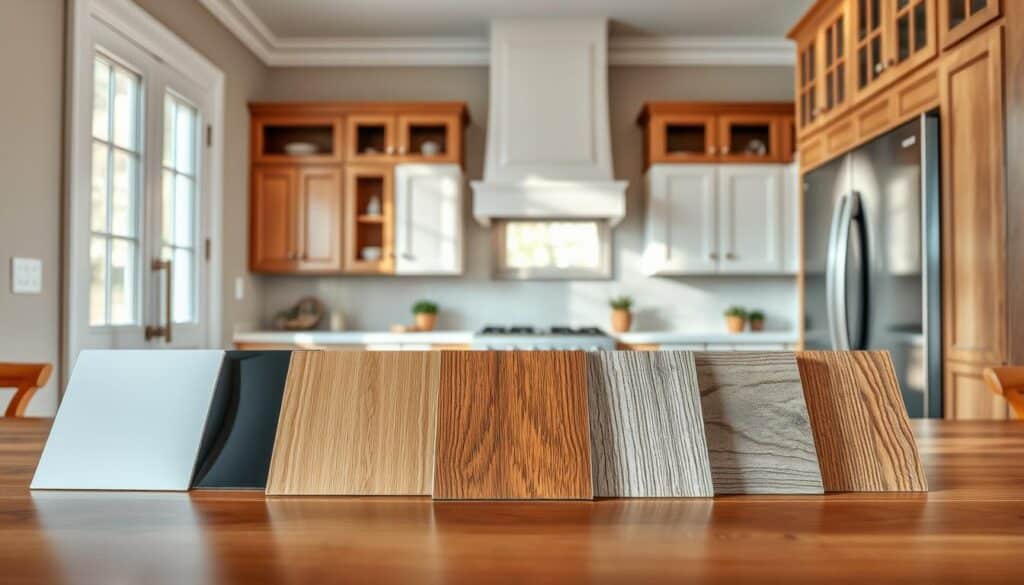
Sheen alters undertones and depth. Bright lights can make a color look cooler on gloss and warmer on matte. Always test large samples on actual cabinet faces before final choice.
- Evaluate use patterns: kids, pets, and entertaining change recommended sheens.
- Mix intentionally: pick durable sheens for drawers and sink-adjacent panels while keeping a cohesive overall style.
- Our approach: we pair creative design with technical guidance so every finish fits your home and long-term plans.
Budget-friendly durable cabinet finishes and when to upgrade
Smart, cost-aware choices can deliver lasting protection without a luxury price tag. We focus on practical options that resist stains, scratches, and moisture while keeping costs down.
Cost-effective options that still resist stains, scratches, and moisture
Laminate and thermofoil offer strong everyday resistance to stains and wear. They clean easily and hold up well in high-traffic rooms.
Thermofoil gives a uniform look and wipes clean with minimal effort. Laminate resists scratches and keeps edges tidy with little maintenance.
When premium finishes pay off by reducing repairs and refinishing over time
For busy family kitchens, upgrading select runs to conversion varnish or polyurethane often saves money over years. Those coatings deliver superior moisture resistance and scratch protection, cutting down on repairs and refinishing.
- Priority spend: protect sink runs, islands, and trash areas first.
- Cost balance: use thermofoil or laminate in lower-wear zones to save upfront.
- Long-term value: quality finish choices reduce repair cycles and preserve cabinet value.
Conclusion
A final check helps you lock in a finish plan that fits daily use and long-term care. Our short list favors conversion varnish and catalyzed lacquer for high-wear runs, polyurethane for wood beauty, and quality acrylic systems for painted doors.
Focus on four buyer factors: moisture exposure near sinks, scratch risk on high-touch areas, cleaning habits, and lighting that amplifies gloss or hides flaws.
Protecting visible surfaces and door edges extends useful life and keeps kitchen cabinets looking newer for years. Durable choices need not sacrifice beauty; we balance color, style, and performance to match your home.
To move from research to action, call American Home at (517) 349-4690 or email info@americanhomekbdesign.com for design guidance and a finish strategy that fits your budget and daily use.