Curious whether a two-basin setup will improve your morning routine or just crowd your floor plan? or How do I choose the right size double sink vanity for my bathroom? We ask this often when clients begin a remodel, because a smart pick changes daily flow and adds lasting value.
At American Home, we explain size as three linked measurements: width, depth, and height. Each matters, and each affects clearance and movement. Our goal is to help you make a confident, layout-safe decision before you buy.
We use a tape-measure approach that checks wall length, door swings, and walking paths. That way a double vanity improves function without overwhelming the room. If you want help with measurements or layout options, contact us at (517) 349-4690 or info@americanhomekbdesign.com.
Key Takeaways
- Size combines width, depth, and height plus clearance.
- Two basins change footprint and daily flow.
- Measure walls, doors, and circulation before you buy.
- Personal routines and room type guide the best selection.
- American Home offers expert design help and final checks.
Why a double vanity is worth it for shared bathrooms and master bathroom routines
Morning routines change when two people can use the sink area at the same time. We see this shift in rhythm: less waiting, fewer elbows, and faster transitions from shower to styling.
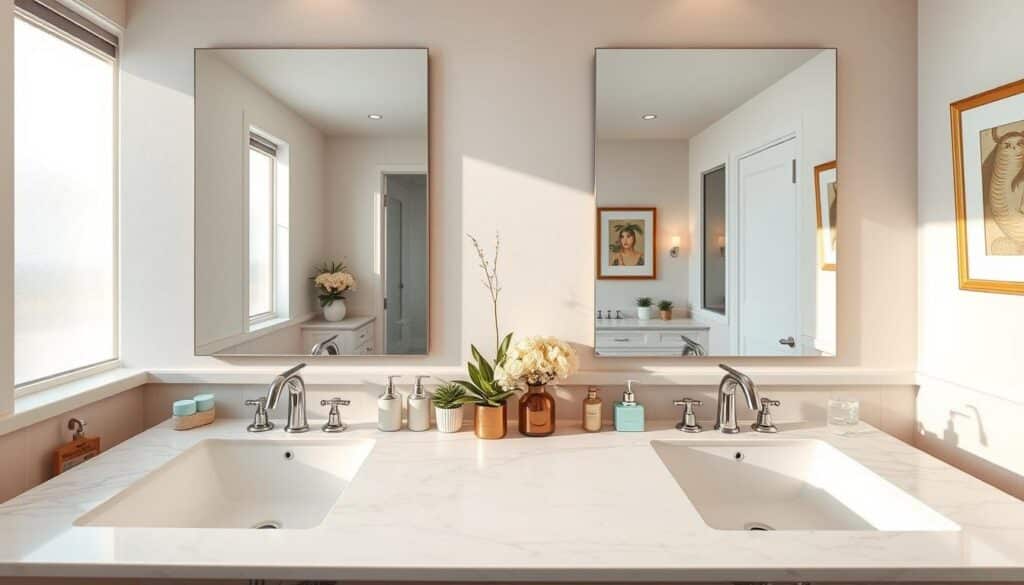
Two sinks help avoid bottlenecks by letting partners or family members prep simultaneously. That creates smoother movement from tub or shower to the countertop and keeps toothbrushes and tools from interfering.
Double sink vanity trade-offs: space needs vs. storage and counter space
- More wall length and floor space are required, so doors and fixtures must be checked.
- When sized well, a wider run gives extra counter space and opens storage options.
- Master projects often pick comfort-height and wider cabinets to support daily use.
We balance lifestyle needs—couples and busy families usually gain the most. With proper planning, the result feels custom and effortless rather than squeezed in.
How do I choose the right size double sink vanity for my bathroom
Start by mapping the room so measurements guide design instead of guesswork. We begin with a tape measure and note where doors, shower, tub, and toilet sit. This quick audit prevents surprises later.
Measure the available wall and convert that length into a realistic cabinet footprint. Mock the layout with painter’s tape so you see how much space remains for traffic and storage.
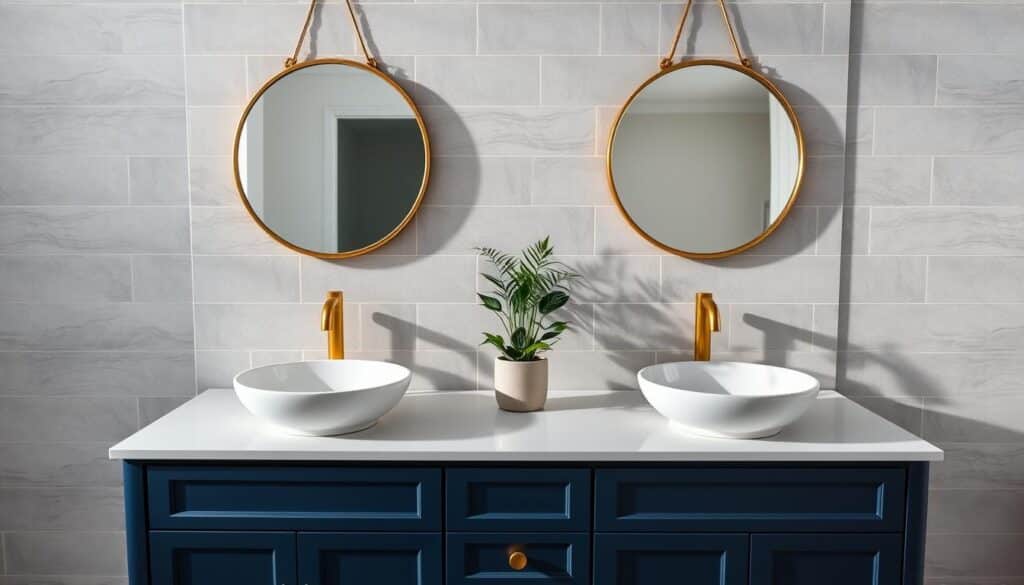
Plan for comfortable movement: allow about 30 inches of clear floor space in front so two people can step back and pass without bumping. Check depth to ensure the top and cabinet won’t block door swing or drawer travel.
- Confirm where doors open and whether shower or tub projects into the aisle.
- Add about 1/2 to 1 inch per side for countertop overhang when finalizing width.
- Mock the footprint on the floor and test drawer and door clearance.
Result: a well-measured vanity looks intentional, fits the room, and saves time and money during installation.
Standard double sink vanity sizes that fit most U.S. bathrooms
Most U.S. bathrooms fit a predictable range of cabinet widths and depths that simplify selection. We use these standards to set expectations and speed planning.
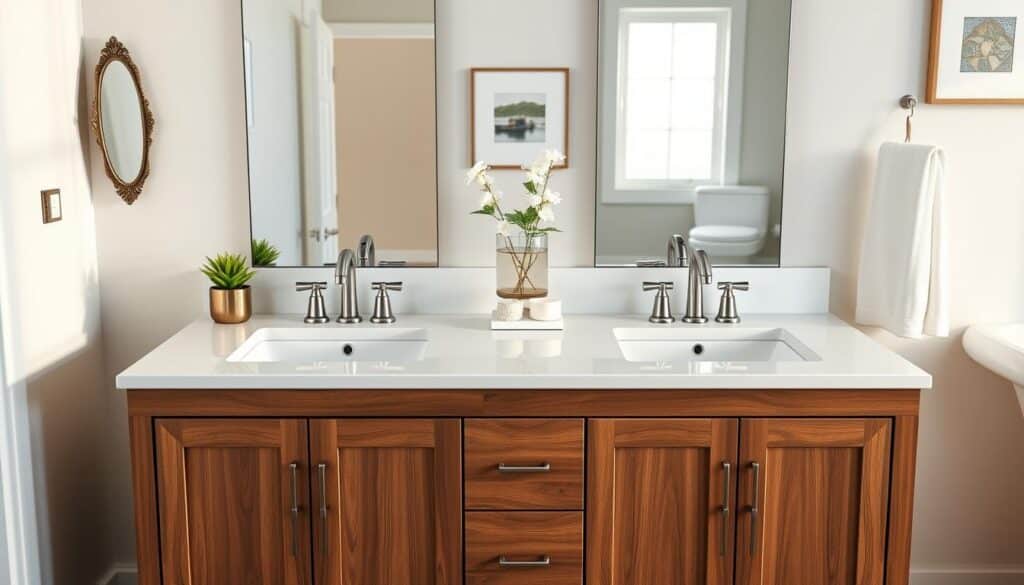
Common width ranges
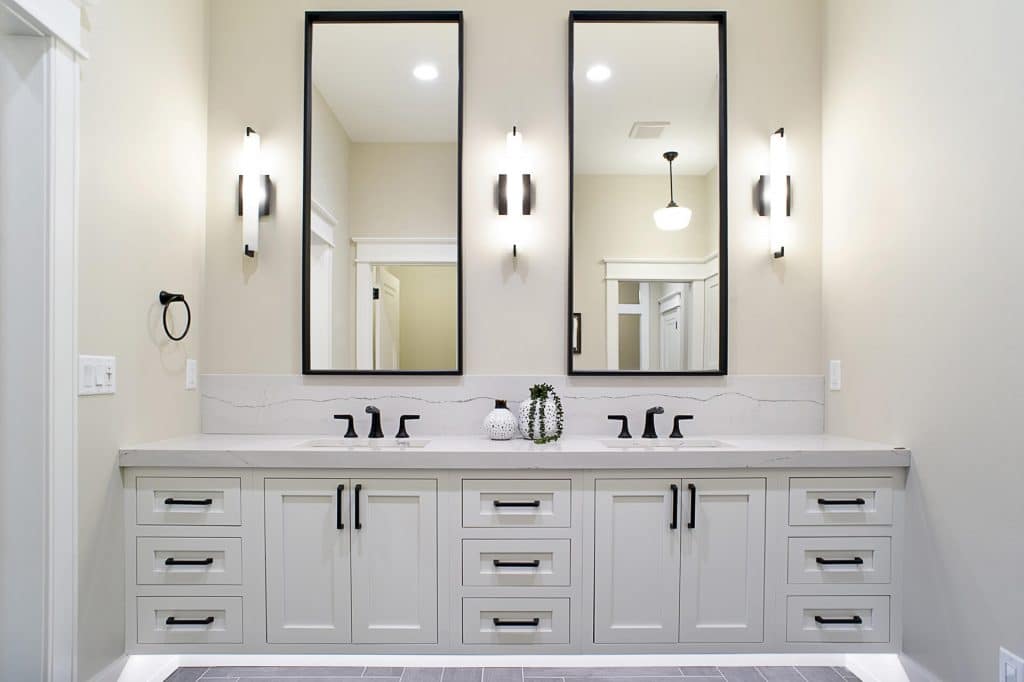
Typical widths run from 48 to 84 inches, with 60 to 72 inches the most common. At 60 inches you gain practical counter space and two usable sinks. At 72 inches a layout feels more luxurious and supports extra storage—ideal in a master bathroom.
Depth and height guidelines
Depth usually sits between 17 and 24 inches. Shallower cabinets save aisle space and ease door and drawer access. Deeper cabinets add storage but can reduce clear floor area.
Height typically ranges from 30 to 36 inches. Many homeowners prefer comfort heights around 32 to 36 inches to cut bending during daily use.
Matching scale and final checks
Compact bathrooms may need narrower or shallower vanities to keep clearances open. Spacious rooms can support wider runs and a larger cabinet footprint.
- Verify wall length, doors, and walking paths.
- Test drawer travel and fixture placement before ordering.
- Choose depths or sink placement as an option if a walkway feels tight.
Choose a layout that matches your space and daily use
A smart layout can turn the same cabinet width into either roomy or cramped real life. Layout decisions set how two people move, where items live, and how much clear counter remains for daily tools.
Side-by-side sinks for symmetry and simultaneous use
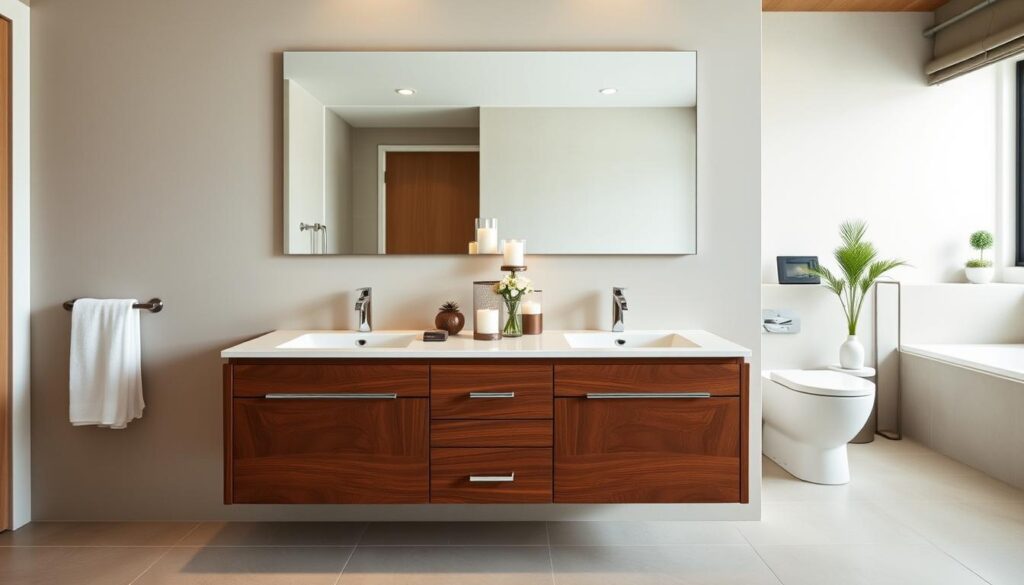
Side-by-side sinks deliver balance and true simultaneous use. This option suits couples and busy families who need parallel prep zones.
It keeps plumbing runs straightforward and preserves equal storage on both sides.
Divided storage layouts to separate personal items and boost drawers
Divided storage splits cabinets and drawers so each user keeps a private zone. That reduces clutter and speeds morning routines.
Drawers matter here: they make daily items visible and accessible, which beats digging through deep shelves.
Offset sink placement to preserve usable counter space in tighter areas
Offset placement shifts one basin slightly to free counter space for styling tools or shared toiletries. This is useful when wall length is limited.
When counter space is a priority, moving a sink can create a larger landing area without changing the overall vanity footprint.
- Layout choices affect how spacious a vanity feels within an area.
- We match options to your routines: teamwork, solo prep, or family storage needs.
- American Home evaluates layouts so the final design supports daily comfort, not just showroom looks.
Pick sinks, countertop, and fixtures that won’t sabotage your sizing plan
A sink choice can quietly change counter height, usable space, and daily comfort. We plan sinks and tops together so the finished vanity feels balanced and works every day.
Undermount, drop-in, and vessel options
Undermount sinks free up rim space and make cleaning simpler. They preserve usable countertop and keep the overall height predictable.
Drop-in sinks add a visible rim that trims landing area. They are easier to swap but reduce counter real estate.
Vessel sinks sit above the top and often require raising cabinet height. Plan for combined vanity + top + bowl height so users avoid awkward reach.
Faucet and fixture spacing for two users
Allow clear elbow room between centers and picks with suitable faucet reach. Place controls so two people can operate without bumping. We aim for comfortable clearance and easy access to water controls.
Countertop material and finish choices
Choose a countertop material that balances durability, maintenance, and style. Solid surface and quartz resist stains and suit busy households. Natural stone offers drama but needs sealing on some surfaces.
- Plan cutouts and sink spacing to protect usable counter area.
- Match faucet reach to bowl size to reduce splash and wasted space.
- Test final heights so the bathroom vanity feels polished and functional.
Storage and ergonomics that make the vanity feel “right” every day
Good storage and smart ergonomics turn a long cabinet into a calm, functional morning zone.
Plumbing cutouts under each sink can shrink usable cabinet space. We plan storage around that reality so shelves and drawers stay useful.
Balancing drawers, doors, and cabinet space with plumbing
Start by mapping what you store: bulk supplies, daily toiletries, and styling tools. That guides whether to favor drawers or doors near each sink.
- Drawers work best for small items and daily access.
- Doors suit tall bottles and bulk storage away from plumbing traps.
- Reserve the center cabinet for deeper storage since it often avoids pipe conflicts.
Counter space per user: toiletries, tools, and daily essentials
Plan landing area for toothbrushes, skincare, and a styling tool. Aim for clear counter space on both sides of each sink so two people can use the top without crowding.
Check hardware and clearances: drawer pulls and door swing must not create pinch points in narrow bathrooms. Choose smooth glides and corrosion-resistant hardware to withstand moisture and frequent use.
Result: a balanced layout keeps essentials accessible, protects cabinet life, and makes mornings calm and efficient.
Plumbing, installation, and budget checkpoints before you buy
A clear plumbing plan saves time and keeps surprises from inflating costs during install. We review water and waste locations early so layout and cabinet placement work together.
Double-sink plumbing realities
Two sets of supply lines and two drains mean two P-traps must live inside the cabinet depth without forcing odd cutouts. If pipes sit far from the planned sink centers, you may need reroutes that add labor and materials.
Standard, semi-custom, and custom options
Standard vanities speed delivery and lower product cost but limit sizing flexibility. Semi-custom gives modest adjustments in width and depth. Custom work fits odd rooms or historic homes where pipes and wall studs require special attention.
Budget categories and a contingency
Plan for cabinet or vanity cost, countertop, sinks, faucets, hardware, and professional labor. Don’t forget finish work like trim and small repair patches.
- Reserve 10%–20% of your budget for surprises: minor reroutes, floor transitions, or leveling.
- Count installed price, not just product sticker; plumbing moves and finish work are common.
- Match cabinet depth so plumbing fits but the room retains usable storage and clear space.
We’re a one-stop kitchen & bath design destination at American Home. If you want our design staff to review measurements, water and plumbing locations, and your install plan before purchase, reach us at (517) 349-4690 or info@americanhomekbdesign.com.
Conclusion
A well-planned vanity run turns a cluttered sink area into an efficient, calm zone. Start with a room map, confirm the footprint, protect clearances, and pick a cabinet size that keeps daily flow open. Keep aisles and landing space generous so two people move without bumping.
Match sink type, faucet spacing, and countertop choices early. Those details change usable counter and plumbing needs. Plan storage and counter space as everyday performance—your selection should support how you live, not just how it looks.
We built American Home to be a one-stop source in Greater Lansing. Our team offers over 60 years of combined design experience to help with layout, master bathroom planning, finishes, and budget checks. Call (517) 349-4690 or email info@americanhomekbdesign.com to get started.