Can a kitchen surface take hot pans, daily meal prep, and accidental spills while still looking great years later? How durable are granite countertops compared to other materials?
We answer that question with clear, practical comparisons. In this section we frame durability as more than toughness: it includes upkeep, repair options, and how a surface ages in a busy home.
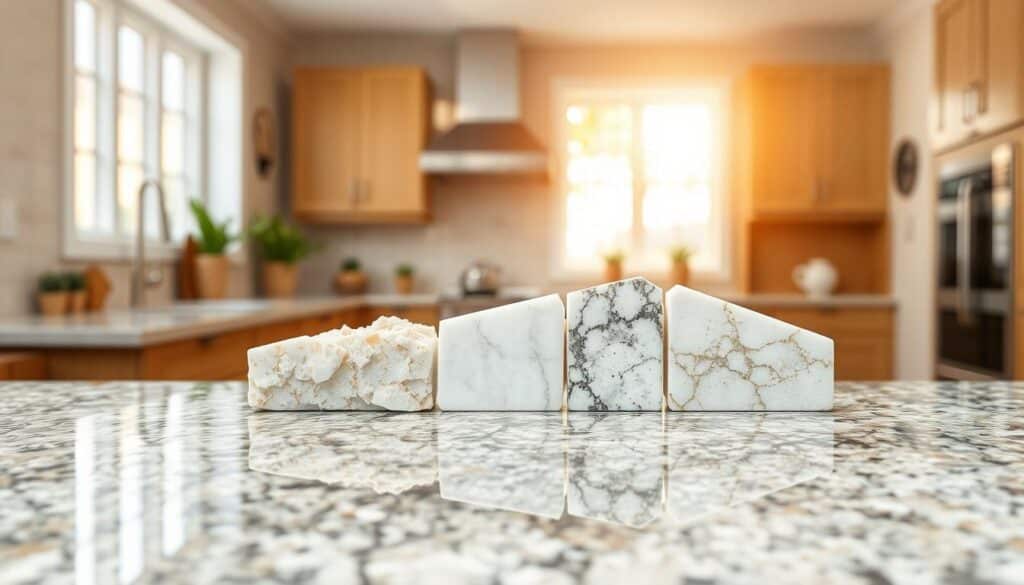
Our review will compare quartz, quartzite, marble, solid surface, and laminate across heat, scratch, stain resistance, and maintenance. We show where each option shines and where it needs care.
At American Home, we blend design expertise with hands-on guidance. Expect side-by-side facts that balance performance with the look you want. Our local team in the Greater Lansing Area helps you choose a long-lasting, beautiful surface that fits your lifestyle and budget.
Core takeaway: granite often excels at heat and scratch resistance, but sealing and edge protection make a big difference for long-term satisfaction.
Key Takeaways
- Durability includes heat, scratch, stain resistance, and upkeep time.
- Granite often leads in heat and scratch performance when sealed properly.
- Sealing and edge detail affect long-term satisfaction.
- We compare popular countertop materials across practical daily tests.
- American Home provides expert, local guidance for Greater Lansing homeowners.
What “durability” really means for kitchen countertops
When we talk about durability, we mean how a surface handles real kitchen life. That includes daily use, accidents, and the small chores that add up over years.
Scratch resistance and daily wear from cooking
Scratch resistance relates to hardness. Sliding cookware, crumbs under appliances, and rare knife contact can mark a top. We look for materials that resist visible scratches while keeping finish and polish intact.
Heat resistance from hot pots and pans
Heat tolerance tells whether a hot pan can be set down briefly. Some materials take quick contact; others scorch, discolor, or crack. Trivets protect most finishes during busy prep.
Stain resistance, water exposure, and porosity
Porosity controls how liquids behave. If a slab soaks up spills, oils and dyes can darken the area and trap odors. Proper sealing or choosing nonporous options reduces stain risk from everyday water and spills.
Chips, cracks, and impact durability at edges
Edges and cutouts are impact-prone. Even strong slabs can chip where they’re thinnest. Smart edge profiles and careful fabrication cut down on nicked corners and costly repairs.
How maintenance affects long-term performance over time
Maintenance matters: sealers, cleaners, and habits change outcomes. Regular care keeps a new look and extends useful life. Over time, small steps prevent major work.
- Resist scratches, tolerate heat, repel stains.
- Protect edges and manage porosity for lasting results.
- Simple maintenance preserves appearance and performance.
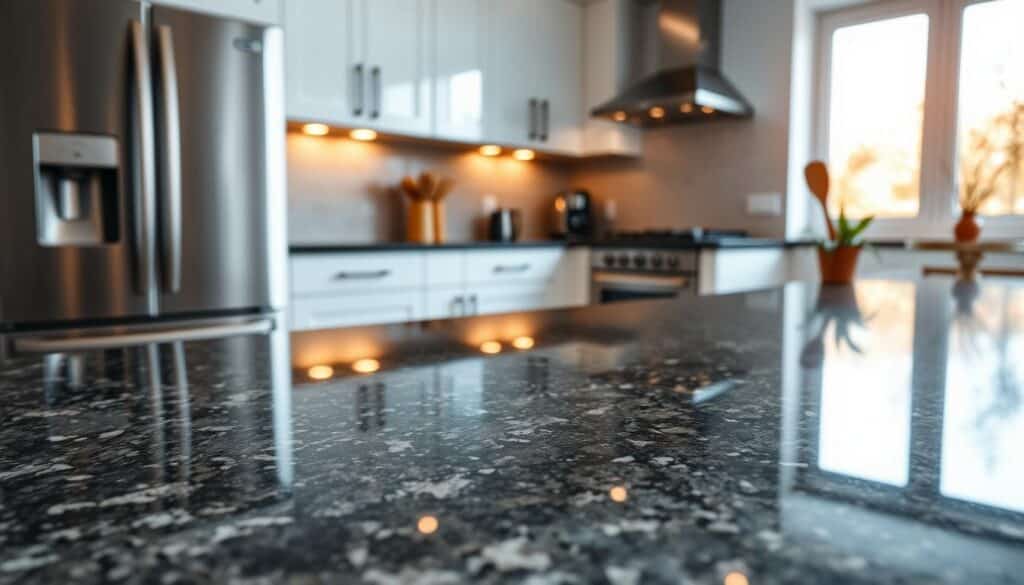
Granite countertops durability at a glance
A kitchen surface must survive daily traffic, quick spills, and the occasional dropped pan without losing its finish. We summarize why this material often sets the benchmark for long-term performance and style.
Mohs scale hardness and scratch resistance
Granite typically sits around 6–7 on the Mohs scale. That level of hardness means a granite countertop resists common abrasions that show up on softer surfaces.
Heat resistant performance in real kitchen use
In ordinary kitchens, granite is reliably heat resistant. Brief contact with a warm pan rarely harms the top, though we still recommend trivets for heavy-duty use and edge protection for daily wear.
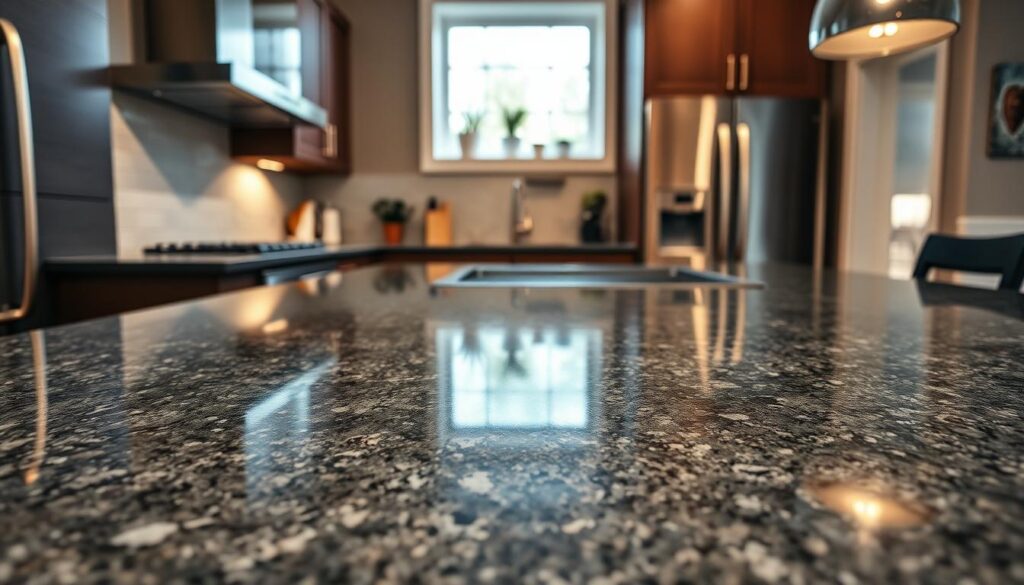
Natural stone variation: minerals and colors
Each slab is unique. The mix of minerals in natural stone creates patterns, veining, and a wide palette of colors. Those same minerals can slightly affect strength and appearance from slab to slab.
- High hardness: stands up to knives and cookware.
- Dependable heat tolerance: safe for most quick contacts.
- One-of-a-kind look: minerals drive pattern and color choice.
Realistic note: granite countertops perform well but need sealing and smart edge details to keep looking their best over time.
Where granite can fall short
Even high-performing stone has limits that matter in daily kitchen life. We want you to know the tradeoffs so you can protect your investment and enjoy the long-term benefits.
Porosity and sealing: As a natural slab, granite is porous and generally needs sealing every 6–12 months depending on use. Sealing helps liquids bead up and reduces absorption, but it does not make the surface permanently waterproof.
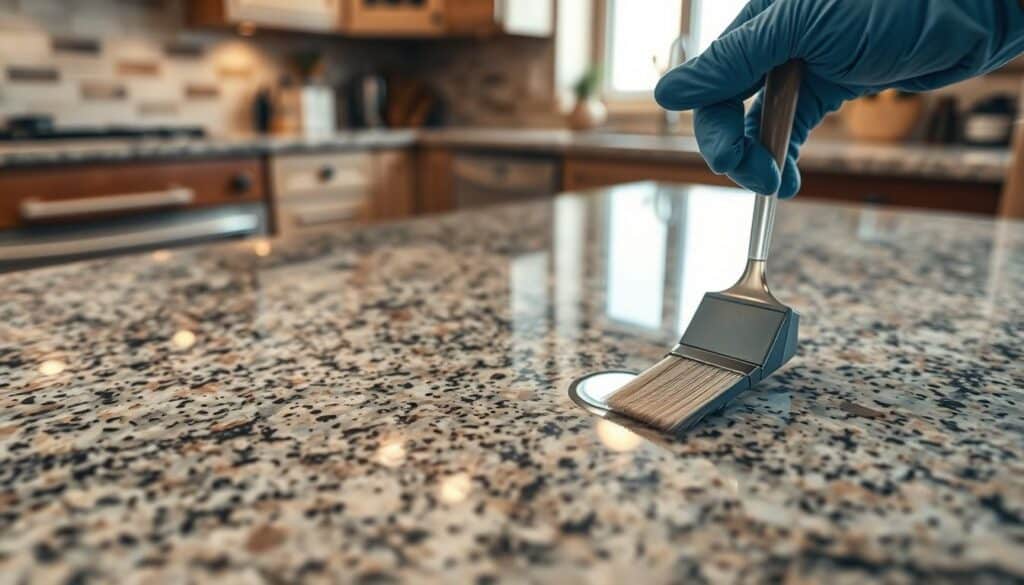
What causes stains and how to prevent them
Oils, wine, coffee, and acidic foods can penetrate unsealed or worn sealer and leave marks. Wipe spills promptly, use coasters near sinks, and avoid prolonged contact with wet containers.
When chips happen and what a fabricator can do
Edges can chip from dropped pans or hard impacts, especially on sharp profiles. A skilled fabricator can often repair small chips, refinish edges, and recommend a profile that lowers future risk.
- Main tradeoff: porosity versus natural beauty.
- Sealing cadence: roughly every 6–12 months.
- Prevention: quick wipes, coasters, and mindful edge care.
- Repair: many chips are fixable by a fabricator.
How durable are granite countertops compared to other materials
Families who cook often need a surface that handles high heat, daily prep, and quick cleanup without fuss. We offer a clear, side-by-side view so you can pick the best fit for your lifestyle.
Quick comparison: heat, scratches, stains, and maintenance needs
Granite countertops usually win for heat and scratch resistance but need periodic sealing for stain control.
Quartz countertops are nonporous and low maintenance, though they can be more sensitive to direct heat.
Quartzite offers high hardness and etch resistance, yet it still benefits from a sealer.
Marble gives classic beauty but asks for care against scratches and acidic stains.
Best-fit scenarios for busy kitchens vs. low-use spaces
- Busy cooks: choose surfaces that tolerate heat and knives — granite or quartzite often fit best.
- Low-maintenance priority: quartz is ideal for quick cleanup and consistent appearance.
- Style-first rooms: marble suits low-traffic zones where visual impact outweighs upkeep time.
Granite vs. quartz countertops for durability
Choosing the right worktop means weighing natural character against engineered consistency. Below we outline what each material is made of and how that affects everyday use.
Natural stone vs. engineered quartz: composition
Granite is quarried natural stone with unique mineral patterns in every slab. Quartz countertops are engineered — roughly 90–93% quartz mixed with resins and pigments.
Scratch resistance and surface toughness
Both stand up to daily tasks. In real kitchens, granite often edges ahead at resisting abrasion from cookware and occasional rough contact.
Heat resistance differences
Granite generally tolerates direct hot pans better. Quartz can suffer damage or discoloration if very hot items contact the resin binder.
Stain and bacteria resistance
Quartz is nonporous and does not need sealing, giving strong stain and bacteria protection. Sealed granite performs well, but ongoing sealer care is required.
Pattern consistency and design matching
Quartz countertops offer predictable, repeatable patterns that ease matching and seams. Granite delivers one-of-a-kind looks that vary slab to slab.
- Practical choice: choose granite when heat tolerance and natural character matter most.
- Practical choice: choose quartz when low maintenance and pattern consistency lead priorities.
Granite vs. quartzite: natural stone durability comparison
Both materials bring real stone strength, but subtle differences shape which fits your kitchen best. We compare hardness, spill behavior, and long‑term care so you can match looks and performance.
Hardness and scratch resistance similarities
Quartzite forms under heat and pressure, giving it a hardness close to granite. Both resist daily abrasion and hold up well under routine use.
Etching resistance with acidic spills
True quartzite often resists etching from acids better than softer natural stone like marble. That makes it a smart pick for kitchens where lemon, vinegar, or wine are common.
Sealing requirements and stain resistance realities
Both slabs benefit from sealing. Lighter quartzite can show stains if left unattended, so routine sealing and quick cleanups matter.
Style: marble-like veining without the same upkeep
Quartzite delivers bright, veined colours and a marble-inspired style with fewer etch worries. Granite brings broader tonal variety and proven performance for busy homes.
- Choice snapshot: quartzite for marble-like veining and etch resistance.
- Choice snapshot: granite for wide colour ranges and steady heat resistance.
- Care tip: seal both as advised and wipe spills promptly to limit stains.
Granite vs. marble countertops in everyday kitchen use
Choosing a work surface means balancing visual luxury with the chores of daily cooking. Below we compare two classic stones so you can match beauty with real life.
Scratch and etch risk for marble vs. granite
Marble is softer and shows scratches sooner on heavy prep zones. Acidic spills from citrus, vinegar, or tomato sauces can etch and dull the polish.
Granite resists abrasion better thanks to harder minerals. That makes granite marble pairings common: marble for style, granite for work areas.
Heat tolerance and why damage still happens in kitchens
Both stones handle routine warmth better than many budget surfaces. Still, thermal shock from sudden, extreme temperature changes can crack or discolor a slab.
We recommend trivets and short contacts with hot pans to lower risk and keep finishes intact.
Maintenance expectations for homeowners who love marble’s look
Marble demands more focused care: wipe spills fast, choose gentle cleaners, and accept a living finish that may patina over time.
- Placement tip: use marble where style matters and durable stone where daily chopping happens.
- Routine: regular sealing and quick cleanups reduce stains and etching.
- Design balance: mix marble with granite marble accents for both form and function.
Bottom line: pick marble for its timeless look, but plan habits and layout so your chosen surface keeps its beauty and durability for years.
Granite vs. solid surface (Corian®) for durability and repairability
Home cooks test a worktop not in specs but in real life: heat, knives, spills, and sticky fingers.
Quick overview: granite gives strong heat and scratch resistance, while solid surface delivers a seamless, nonporous finish that resists stains and bacteria.
Heat and scratch performance differences
Granite tolerates hot pans and everyday abrasion better. It holds up under rough prep and shows fewer visible scratches.
Solid surface can scorch or warp from direct heat. Trivets are essential for safe use.
Stain and bacteria resistance benefits of solid surface
Solid surface is nonporous. That gives it clear benefits for stain control and hygiene without sealing.
For families, that ease of cleanup often wins points where messy projects happen.
Repairability and why fabricator availability matters
Many marks on solid surface can be sanded and repaired by a trained pro. Repairs extend life and preserve looks.
Granite resists damage but usually needs a skilled fabricator for chips or edge work. Confirm local fabricator support before you buy.
- Performance feel: granite for toughness, solid surface for seamless hygiene.
- Heat handling: granite is more heat resistant; use trivets with solid surface.
- Repair path: solid surface often repairs on-site; granite needs a fabricator for refinishing.
- Final choice: pick based on daily habits and local fabricator availability.
Granite vs. laminate and other budget countertop materials
Budget surfaces often shine at first sight but can reveal weak spots under daily kitchen use. We outline where low‑cost options fail and when they still make sense for a specific home.
Where lower-cost options tend to fail: chips, burns, and scratches
Laminate and similar tops can blister from hot pans, chip at thin edges, and gather scratches in high‑traffic zones. Many of these marks are hard to truly repair.
When budget choices still make sense
For a starter rental, basement kitchenette, or short‑term remodel, a lower price point can be the right call. Planning for replacement is part of the decision.
- Common failure points: heat blisters, edge chips, visible scratches.
- Repair limits: most budget surfaces need replacement rather than refinishing.
- Smart protection: use trivets, cutting boards, and protected edges to extend life.
- Pros cons: upfront savings vs. shorter service life and lower long‑term value.
We recommend choosing an option that fits daily use. The busier the kitchen, the more you gain from investing in stronger surfaces. For heavy prep zones, consider upgrading; for light use, budget tops can work if you protect them and accept future replacement. This keeps kitchen countertops practical and aligned with long‑term durability.
Maintenance comparison: sealing, cleaning products, and daily care
Small daily habits make a big difference in how well a countertop looks and performs. We lay out simple routines you can follow weekly and seasonally for long-lasting results.
Granite sealing cadence and the quick water test
Granite commonly needs resealing about every 6–12 months. Try the water test: a bead shows the sealer is working; a dark spot that soaks in means it’s time to reseal.
Cleaning dos and don’ts for natural stone
Do use mild soap, warm water, and a soft cloth for daily cleaning. Wipe spills quickly and dry the surface to protect the finish.
Don’t use harsh or abrasive cleaners, bleach, or acidic solutions that can dull the sealer and harm the stone.
Quartz care: easy cleaning, no sealing, but heat precautions
Quartz needs no sealing and cleans easily with soap and water. Avoid direct contact with very hot pans; use trivets to protect the resin binder.
Quartzite care: stone-safe cleaners and regular sealing
Quartzite benefits from the same seasonal sealing as granite and from stone-safe cleaners. Regular care keeps it water- and stain-resistant.
- Daily: wipe with mild soap and dry.
- Seasonal: check sealing with the water test.
- Protect: use trivets and cutting boards to limit heat and scratches.
Cost and value: granite countertop pricing vs. other choices
Price tags for kitchen slabs hide a mix of slab grade, fabrication complexity, and installation labor.
Typical price ranges and what drives cost per square foot
Typical ranges: many homeowners see installed pricing roughly $35–$100+ per square foot depending on color rarity and market. Premium patterns and large island pieces push totals higher.
Key cost drivers include slab quality, thickness, edge profiles, cutouts, and travel or installation difficulty.
How tiered pricing works across countertop materials
Manufacturers and fabricators group slabs into tiers. Higher tiers reflect harder-to-source colors or limited availability.
- Tier 1: common, widely available options.
- Tier 2: popular patterns with moderate scarcity.
- Tier 3+: rare slabs or premium veining and colors.
Balancing upfront budget with long-term investment
Think value, not just price: an initial higher spend often saves on repairs and replacements later. A strong slab can reduce hassle and keep resale appeal.
We suggest budgeting more for high-use work zones and using complementary choices elsewhere for a smart, stylish result.
Resale value and return on investment for kitchen countertops
Buyers notice finishes first—surfaces signal care and value as soon as they step inside. A strong surface choice can lift perceived quality and help your home feel move‑in ready.
How granite can increase home value and buyer appeal
Granite often reads as premium and timeless. Many buyers equate natural stone with long life and solid workmanship.
This recognition can translate into higher offers or faster sales in competitive markets.
Why quartz is often seen as “maintenance-free” and trendy
Quartz is marketed as nonporous and low upkeep, which appeals to busy homeowners and those wary of seasonal care.
That perception boosts interest among buyers who prioritize easy living over traditional stone looks.
Choosing for ROI vs. choosing for personal style
Return often follows cohesive design more than a single feature. Neutral choices and consistent finishes help a kitchen read as updated.
- Quick wins: neutral tones and durable finishes.
- Sell soon: favor broad buyer preferences.
- Stay long-term: prioritize your daily enjoyment and style.
We guide homeowners toward choices that balance value, ROI, and personal style so a kitchen supports both life now and resale later.
Design versatility: colors, patterns, and style match
Design choices shape both the look and lived experience of a kitchen, so selecting the right surface matters. We balance visual impact with everyday function so your space stays beautiful and useful.
Granite’s one-of-a-kind slabs and natural beauty
Granite gives each slab unique movement and character. That one-off look creates a focal point that reads like functional art.
We guide you in picking colors and veins that work with cabinets and lighting.
Quartz color control and modern consistency
Quartz offers repeatable patterns and broad color options. This makes large kitchens easier to plan and match across islands and backsplashes.
Quartzite’s light palettes and dramatic veining options
Quartzite leans toward airy neutrals and marble-like veining for bold movement without high etch risk.
- Design + function: choose a look that supports your daily habits.
- Coordinate: pair colors with cabinets, flooring, hardware, and lighting.
- Try before you commit: we compare slabs under real lighting so the final style fits your home.
Sustainability and sourcing: what homeowners should know today
Sustainability for kitchen tops starts with where a slab comes from and how long it stays in service.
Mining a natural slab requires heavy equipment and transport from distant quarries. That extraction and shipping raise the footprint for each piece of granite.
Engineered options follow a different path. Some quartz products include recycled glass or stone and are made in controlled plants. That can lower waste and stabilize supply lines.
Longevity as a sustainability factor
Longevity reduces waste: a surface that lasts decades cuts tear‑out and replacement cycles. Repairable edges and routine care extend useful life and protect your renovation investment.
- Balanced view: sourcing, manufacturing, and lifespan all shape impact.
- Granite note: mined stone has higher transport and extraction costs.
- Quartz note: engineered paths may use recycled content and steady production.
- Whole‑home fit: choose a durable surface that matches use and reduces future disruption.
We help homeowners weigh sustainability alongside design and daily needs so the chosen surface supports both the home and long‑term value of your investment.
Warranty and support considerations by countertop material
Warranty terms often shape long-term satisfaction as much as the slab you choose. Coverage varies by supplier, brand, and installation. Confirm who handles service calls and what actions might void protection.
Why warranties vary for granite and quartz brands
Some natural-slab suppliers tie coverage to proof of proper sealing and show installation records. Quartz manufacturers often require product registration and follow brand-specific care rules.
What to ask your designer and fabricator before you buy
Ask directly who will service defects: the installer, the slab supplier, or the manufacturer. Request written warranty terms, a list of excluded causes, and approved cleaning products.
- Common exclusions: excessive heat, misuse, and installation damage.
- Service chain: know whether the fabricator or brand handles repairs.
- Documentation: save receipts, photos, and registration info.
We also note the fabricator’s role: precise cuts, seam work, and edge finishing reduce future issues. When you weigh pros cons, include support clarity and response time, not just the sample look.
Final tip: we help review warranty terms so your countertop choice is backed by clear, enforceable support and reliable local fabricator service.
Choose the right countertop with American Home’s expert design team
Move from online research to hands-on choices with guidance that focuses on your family’s routine. We help homeowners turn comparisons into confident decisions by showing slabs, testing samples, and discussing daily habits.
One-stop shopping with American Home & American Flooring in Greater Lansing
American Home was built to complement American Flooring so clients find everything in one place. Our store offers finishes, flooring, and the design support needed to complete kitchens that look and function well.
How our 60+ years of combined design experience helps you compare materials
Our expert design staff blends technical knowledge with practical advice. With over 60 years combined experience, we translate durability specs into real recommendations for daily cooking, cleaning, and family life.
- See and feel: view slabs and match edges and colors in your space.
- Compare choices: evaluate maintenance time, heat and scratch risk, and long‑term value before you commit.
- Support for choosing granite: we guide selection of colors, profiles, and sealing expectations so natural stone performs at its best.
Contact American Home
We are a 100% customer-focused kitchen & bath design retail store offering great products at excellent value. To schedule a countertop consultation, call (517) 349-4690 or email info@americanhomekbdesign.com.
Conclusion
Choose a surface that fits how you live and cook, not just how it looks. For active kitchens, a granite countertops option often leads in heat and scratch resistance while delivering lasting beauty.
We note the tradeoff: a granite countertop needs periodic sealing and simple spill care, while quartz countertops offer easy upkeep but require heat caution. Both options show strong resistance and long life when matched to real use.
Quartzite and other stone choices give marble-like beauty but also ask for sealing and regular maintenance. Your cleaning routine, cooking habits, and design goals shape the best pick.
Think of this as an investment: the right surface protects your budget and keeps kitchen countertops looking intentional for years. We help match material, style, and performance so your final surface suits your home and daily life.