What if the solution to your cluttered sink was simply a smarter wall and a single cabinet choice? How can I maximize storage space in a small bathroom with cabinets? That questions guides our approach at American Home, where we blend design and function to build calm, beautiful bathrooms.
Small rooms face the same problems: limited square footage, daily use, and too many essentials fighting for countertop room. We start by clearing out unused items, then reclaim vertical wall areas with medicine cabinets, wall cabinets, and tailored vanity options.
Throughout this guide we explain quick wins—declutter plus organizers—and larger moves like recessed storage or a new vanity. Measurements and door swing matter, so every cabinet choice supports comfort and flow.
Follow our step-by-step plan whether you update one piece or plan a full refresh. We bring 60+ years of combined design experience to help you achieve hidden storage and consistent finishes without crowding the room.
Key Takeaways
- Start by purging clutter to reveal real needs.
- Use vertical wall cabinets and medicine cabinets to reclaim room.
- Balance quick organizer fixes with higher-impact upgrades.
- Prioritize measurements, clearances, and door swing.
- Choose hidden storage and matching finishes to keep the look open.
- American Home offers expert, customer-focused design support.
Why small bathrooms get cluttered fast and how cabinets solve it
Everyday rituals make compact baths feel chaotic: counters, tanks, and tub rims become catchalls. That steady flow of use turns single surfaces into storage by accident.
Common hotspots include the sink counter, the top of the toilet, and shower ledges. At the sink, toothbrushes, skincare, and styling tools pile up. On the toilet, extra rolls and cleaning bottles collect. In the shower, bottles stack and block drains.
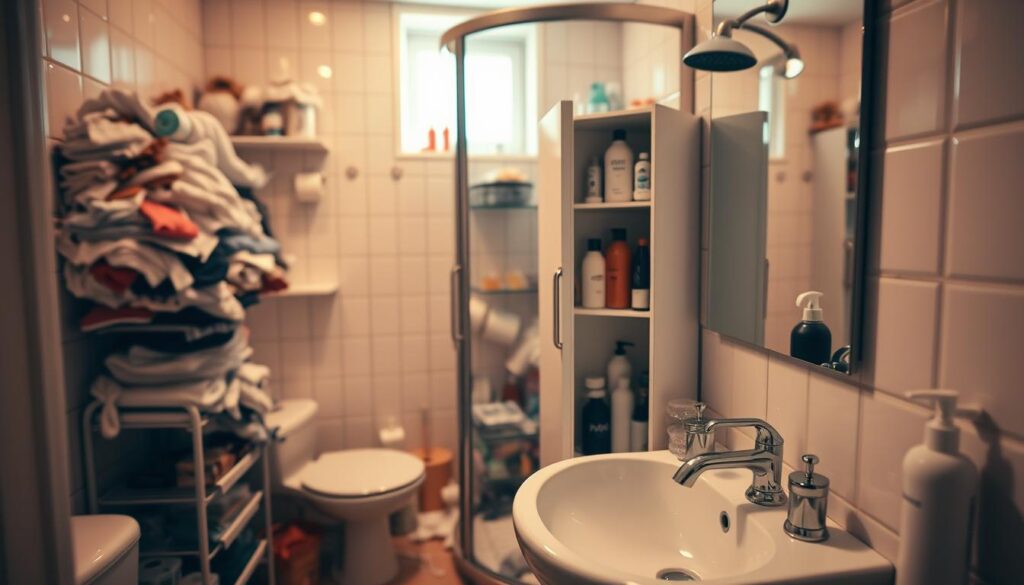
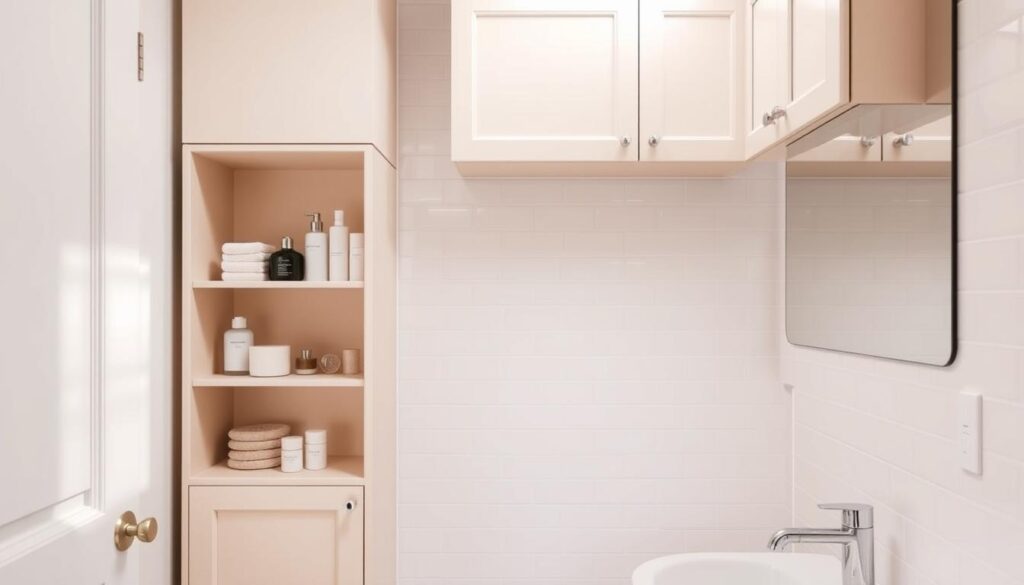
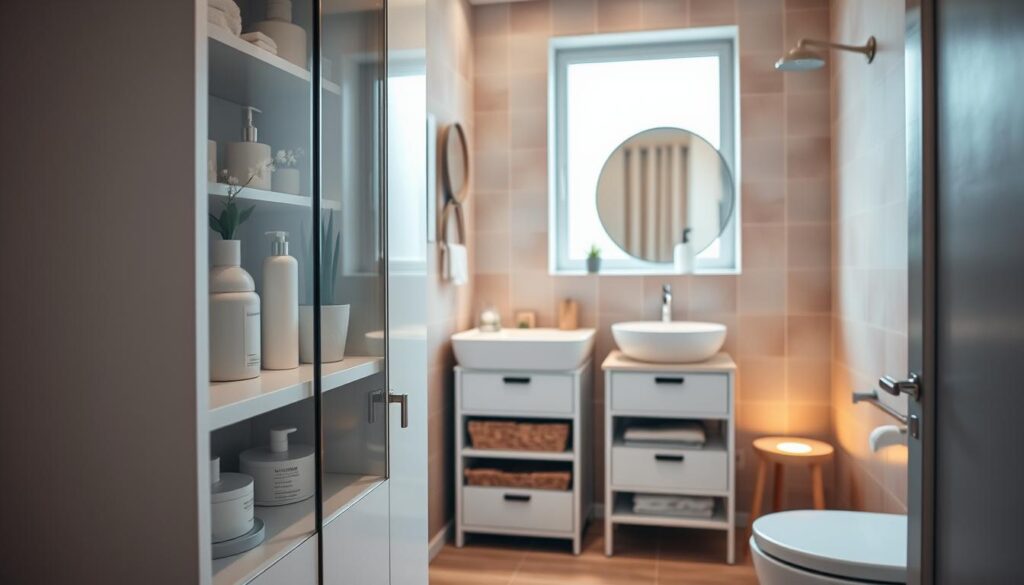
Hidden storage keeps essentials reachable but out of sight. Mirrored medicine pieces, recessed units, and door-mounted organizers turn cluttered zones into tidy zones.
- Designate homes for categories so items stop migrating onto counters.
- Use wall cabinets and recessed options to free floor area while increasing usable space.
- When every item has a place, daily cleanup takes seconds instead of minutes.
Start with a quick declutter to create instant space
A focused purge is the fastest way to free up visible shelves and cabinets. Professional organizers say removing expired toiletries and nearly empty containers reveals immediate room on shelves and in drawers.
We recommend a four-bin sort: keep, toss, donate, and relocate. Work quickly—set a timer for one focused session to avoid decision fatigue.
- Clear out expired products, duplicates, and “maybe” items that quietly consume storage.
- Separate everyday items from backstock so prime cabinet space holds what you reach for most.
- Reduce bottle clutter by keeping only the active set out and storing backups in one basket or bin.
- Do a towel triage: keep a realistic number for your household and store extras in one defined zone.
Decluttering first prevents buying organizers that won’t fit or solve the real problem. Once the purge is done, we measure the room so the products and cabinets you select match the space you reclaimed.
Measure your room to choose cabinets that actually fit
Precise measuring is the difference between a good cabinet choice and a cramped disappointment. Take time to map the room before shopping so new pieces match real clearances and flow.
Map wall, floor, and usable rectangles
Mark the usable wall area: note width, height, and depth where a cabinet will sit. Include areas above the toilet and behind the door that often go unused.
Check clearances around fixtures
Measure clearances around the toilet and vanity. Confirm there’s enough swing for the bathroom door and for drawer pull-outs to open without hitting fixtures.
Plan traffic flow in tight layouts
Think through real scenarios: two people getting ready or kids running in and out. When floor space is limited, vertical solutions usually work better than bulky pieces.
- Quick routine: width, height, depth, then sketch the “usable rectangle.”
- Wall mapping: identify upper cabinet spots above the toilet or beside the mirror.
- Door and drawer checks: ensure swings and pulls do not collide.
How can I maximize storage space in a small bathroom with cabinets
A cabinet-first approach lets you add capacity without shrinking walkways. We begin by prioritizing vertical pieces that use the wall above fixtures so the floor remains open.
Prioritize vertical storage to free up floor space. Tall wall cabinets and mirrored medicine units lift items off counters. This adds usable volume while keeping sightlines clear.
Choose cabinets that do double duty. Pick mirrored cabinets, vanities with drawers, and designs that weave shelves into the frame. These multifunctional elements replace extra furniture.
Use zones so items stay in the right place. Create a “get ready” zone at eye level, a shower zone near the tub, and a backstock shelf up high. Store daily essentials within reach and reserve upper shelves for rarely used items.
- Rule of thumb: daily items at hand height; extras above.
- Design tip: match finishes and simple lines so heavy storage reads as calm design.
Upgrade your mirror to a medicine cabinet for hidden storage
Swap your flat mirror for a slim medicine unit and gain hidden storage without changing your layout. This simple swap keeps sightlines while adding practical shelves behind the glass.
Recessed vs. wall-mounted options
Recessed medicine cabinets sit flush with the wall and feel built-in. They need wall depth and a bit of renovation but give a low profile. Wall-mounted units bolt on with no construction and work in rentals or quick updates.
Where to place one besides over the sink
Install on any free wall: above the toilet, behind the door, or beside a vanity. These spots keep the sink clear and move daily items to an accessible home.
What to store for the biggest payoff
- Toothbrushes, toothpaste, and small grooming tools
- Daily skincare and sunscreen
- Razors, travel bottles, and first-aid basics
Tip: use small bins or dividers so the cabinet doesn’t become a catchall. Mirrored fronts keep the room bright while increasing function. Next, we explore wall cabinets that capture unused vertical areas.
Use wall cabinets to maximize unused wall space
An intentional wall cabinet layout transforms awkward nooks into orderly zones. Wall-mounted pieces add capacity while leaving the floor clear, so the room feels larger and calmer.
Above-the-toilet ideas
Install a shallow cabinet over the toilet to tuck away paper goods, towels, and backup toiletries. Choose a depth that clears the tank and keeps sightlines open.
Set the install height for balance: align the cabinet top with nearby trim or the mirror edge so the piece reads as built-in, not tacked on.
Behind-the-door concepts for tight layouts
For narrow rooms, a hinge-pin-mounted behind-the-door cabinet is a clever option. Plan about 3.5″ clearance from the hinge pin center to the adjacent wall so the door and unit operate smoothly.
- Why it works: wall storage keeps the floor open and reduces clutter.
- Use shallow shelves and labeled bins to prevent “top shelf chaos.”
- Group items by frequency so daily essentials stay reachable.
These storage solutions set up the next decision: pick a vanity that adds function without crowding the room.
Pick the right vanity to add storage without crowding the room
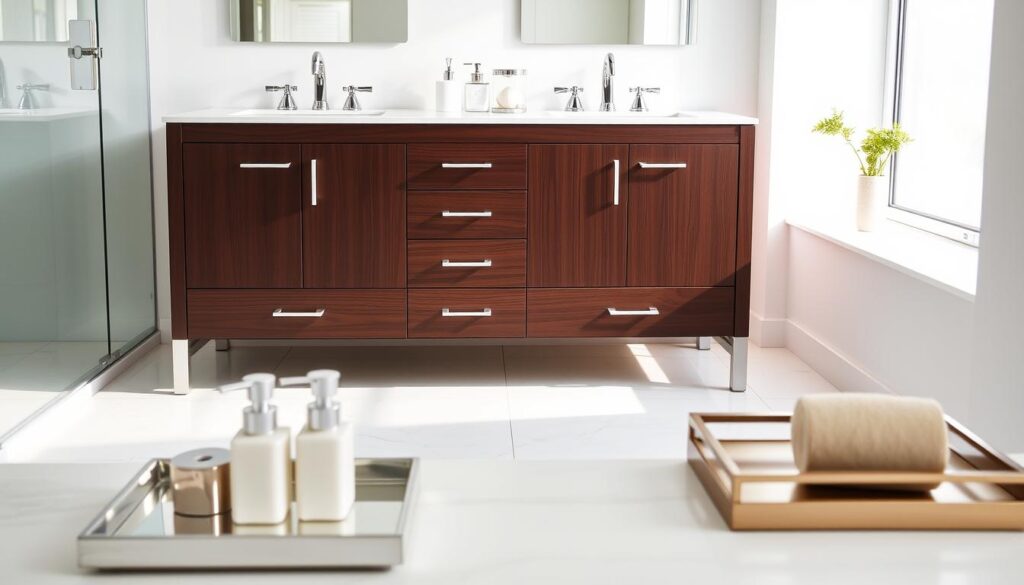
Replacing a pedestal sink with a compact vanity gives you enclosed storage and easier daily access. The swap keeps the floor open while hiding toiletries and cleaning supplies.
Vanity vs. pedestal sink for small bathroom storage
Pedestal sinks look airy but offer almost no room for extras. A narrow vanity provides a cabinet or drawer rows that hold what you use most.
Why drawers beat deep cavities for daily items
Drawers give visibility and pull-out access. You spot products immediately and nothing gets lost at the back.
Vanities with shelves for towels and baskets
Choose a vanity with an open shelf or adjustable shelving to store towels and baskets. Use top drawers for daily items, lower drawers for hair tools, and shelves for linens.
- Pick slim footprints to fit a small bathroom.
- Opt for soft-close hardware and shallow pulls to keep sightlines open.
- Zone inside the unit so morning routines are smooth.
Next, we’ll show how to make the under-sink area work harder with tailored organizers.
Make under-sink cabinets work harder
Under the sink is often the most overlooked storage real estate in a bathroom. We treat this area like prime real estate and design around plumbing so nothing is wasted.
Stackable drawers and tiered organizers create layers around pipes. Use adjustable trays that leave a cutout for the P-trap so drawers slide without hitting plumbing.
Rolling caddies for deep cabinets
For deep cabinets, a rolling caddy pulls to the front so you don’t reach to the back. Place daily products on the top shelf of the caddy and backups below.
Turntables for bottles and supplies
Turntables keep bottles visible and upright. They prevent spills and stop items from being forgotten at the back of the cabinet.
- Label bins to group products by use or person.
- Zone the floor of the cabinet: everyday extras up front; backups and bulk items in the back.
- Leave small open shelf space for frequently used tools so they are ready every morning.
These tweaks boost function and flow. Next, we’ll show how to use the inside of cabinet doors for extra organization.
Maximize bathroom cabinet doors with inside-the-door storage
Door-mounted solutions give daily items a dedicated home that’s easy to reach and out of sight. This approach adds capacity without changing the footprint of your cabinet and keeps counters clear.
Over-the-cabinet organizers for tools and hot styling items
Over-the-cabinet organizers cradle hair dryers, straighteners, and cords so hot pieces stay contained and cool safely. They prevent tangled cords and keep tools at hand for quick routines.
Hanging spray-bottle holders to clear shelf space
Hanging holders for spray bottles free up shelf space and stop bottles from tipping. Mount them low enough to avoid drawer interference and high enough so the door closes smoothly.
- Placement tip: test the door swing before final mounting so drawers and doors operate together.
- Group by task: keep hair tools, first-aid, and cleaning items on separate pockets or rails for simple access.
- Visual control: hide busy items behind the door to maintain a calm, elevated look in the room.
These inside-the-door upgrades are an easy, low-cost way to reclaim shelf space and make everyday routines faster. Next, add open shelves where a cabinet won’t fit to hold canisters and decor.
Add shelves where cabinets won’t fit
When wall width is tight, shelves often outsmart bulky units by keeping sightlines open while adding useful surface. We use shelves to solve narrow layouts and to lighten the overall design.
Floating shelves for canisters and toiletries
Floating shelves work best where clearance is limited or when you want a lighter visual weight than a cabinet. Use matching canisters to hide small accessories and keep the look tidy.
Limit each shelf to one category: towels, daily lotions, or decorative jars. Leave plenty of negative space so the display reads calm, not cluttered.
Built-in shelves for a renovation-level boost
Built-in shelves or recessed niches add custom bathroom storage without protruding into the room. They feel intentional and can make the bath appear taller when sized proportionally.
- When to choose shelves over cabinets: narrow walls, tight clearances, or lighter design needs.
- Combine open shelving for display and closed storage for essentials to balance form and function.
- Pick materials and proportions that match nearby cabinets so the overall design reads unified.
Use narrow storage pieces to capture “dead space”
Narrow gaps beside fixtures often hide easy wins for extra storage and order. We call these areas “dead space”: the thin strips next to the toilet or vanity that standard furniture won’t fit.
Slim rolling cart ideas beside the toilet or vanity
Slim rolling carts slide into gaps and hold paper, cleaners, and daily extras. Choose carts on casters so you move them for cleaning.
- Select narrow pieces with shallow shelves so they don’t steal floor space.
- Face open sides to the wall and limit visible items for a tidy look.
- Use baskets or trays on the cart to keep small items organized.
Freestanding linen cabinet options when there’s no closet
When a closet is missing, a tall linen cabinet adds vertical capacity without a built-in install. Prioritize height over width to preserve floor space and traffic flow.
Tip: reserve the linen unit for bulk and backup goods so the vanity stays focused on daily routines and reaches.
Turn the toilet area into organized storage (without looking messy)
A well-planned toilet zone keeps essentials handy without making the room feel crowded. We treat this wall as a purposeful storage blank and choose simple, repeatable elements that calm the space.
Tank-top baskets for toilet paper and small items
Tank-top baskets hold extra rolls and small items without stacking supplies on the floor. Pick one low-profile basket or a lidded option to keep the visual look tidy.
Stylish holders that store extra rolls
Choose a wall-mounted holder that includes space for backup toilet paper. This keeps spares within reach while avoiding loose piles that ruin the room’s look.
Over-the-toilet shelving that still leaves room for decor
Install shallow shelves or a slim shelf unit above the toilet. Use one lower shelf for essentials and one upper shelf for light decor or seldom-used items. Keep items grouped and wrapped to read intentional, not cluttered.
- Containment rule: use woven baskets or lidded bins to hide irregular packaging.
- Two-level approach: everyday items low, decorative or occasional items high.
- These ideas reduce clutter around the toilet and prepare us to tackle shower bottle overload next.
Create a cabinet-friendly shower setup to reduce bottle clutter
A tidy shower starts with fewer bottles and smart mounts that respect cabinet storage. Shower overflow often spills onto counters and into drawers when too many half-used containers sit on every ledge.
Wall-mounted dispensers to free shower shelves
Wall-mounted dispensers cut bottle count instantly. They fit flush to tile and simplify cleaning. Use them for shampoo, conditioner, and body wash to keep the shelf minimal and neat.
Shower caddies and corner shelves that complement cabinets
When niches aren’t possible, a slim corner shelf or stainless caddy works well. Match finishes to nearby cabinet hardware so the bath reads cohesive rather than patched together.
- Decide dispenser contents: daily products only; keep backups in cabinets.
- Place frequently used items at comfortable reach; avoid overloading small shelves.
- Limit visible bottles to maintain calm sightlines across the bathroom.
Result: fewer bottles in the shower means fewer extras stored around the room. This simple shift protects cabinet organization and keeps the space feeling intentional, not cluttered.
Make small bathroom storage look intentional, not crowded
Thoughtful styling turns functional storage into a calm, intentional room. When storage feels deliberate it supports both design and daily routines. We focus on finishes and scale so pieces read like part of the plan, not afterthoughts.
Trays, canisters, and baskets to hide small items
Use a shallow tray to corral hand soap, toothpaste, and daily tools. A single tray keeps counters tidy during busy mornings.
Match ceramic canisters or woven baskets for cotton swabs, clips, and other small items. Grouping like containers creates a unified look and reduces visual clutter.
Hooks and accessories bars to replace bulky towel bars
Swap long bars for hooks or a slim accessories bar when wall width is limited. Hooks hold multiple towels and dry faster.
An accessories bar offers staggered storage for hand towels and robes without crowding the wall.
Ladders and vertical pieces to add height and dimension
Lean a slim ladder or install a tall rack to draw the eye upward and add towel storage. Vertical pieces double as display and function.
Keep most items behind cabinet doors and show only a few curated objects so the room feels spacious and finished.
- Style as organization: deliberate groupings make storage read as design.
- Less on display: hide backups, show essentials.
- Vertical focus: ladders and narrow racks increase usable space and height.
Get expert small-bath cabinet solutions with American Home
Our team turns tight layouts into calm, usable bathrooms by pairing smart cabinet choices with thoughtful design. We translate your goals into plans that respect clearances, traffic, and daily routines.
We built American Home to complement American Flooring and deliver true one-stop shopping in the Greater Lansing area. Our mission is simple: offer customer-first kitchen and bathroom design retail backed by 60+ years of combined experience.
Work with a design team with 60+ years of combined experience
- We’ll translate goals into a cabinet plan sized to your layout and routine.
- Our design staff handles placement, clearances, and function so you avoid costly mistakes.
- We focus on long-term value: beauty, performance, and the right solutions for your home.
One-stop shopping with American Home & American Flooring in Greater Lansing
Choosing finishes and coordinating pieces is easier when flooring and cabinets come from the same partner. We guide selections so the final design feels seamless and intentional.
Contact American Home
Ready to start? Call (517) 349-4690 or email info@americanhomekbdesign.com to schedule a consult. We’ll help you pick the right mix of cabinets and storage solutions for your small bathroom.
Conclusion
Small changes, chosen well, make big differences for daily routines and overall room feel.
Start by decluttering, measure the layout, then add the right mix of cabinets and organizers that match how you use the room. This sequence protects clearances and keeps the sink area tidy.
For the biggest gains, prioritize vertical solutions: tall wall pieces, a mirrored medicine cabinet upgrade, a smart vanity, and under-sink systems that eliminate wasted gaps. Zone items so daily products are reachable and backups stay contained.
Design-forward ideas help the room read calm: unify canisters, limit what sits out, and choose open shelves sparingly. Function and style work together when a clear cabinet plan guides decisions.
If you’d like expert help selecting pieces or planning layout, we’re here to make the space both beautiful and practical.