Can a single choice of vanity material protect your investment and lift the look of a bathroom at the same time?
We start with a clear, customer-first approach. Nearly 90% of homeowners say durable choices matter when they update a bathroom. That makes the cabinet box, doors and drawers, finishes, and countertop more than parts: they form a working system that must resist steam, splashes, and under-sink risks.
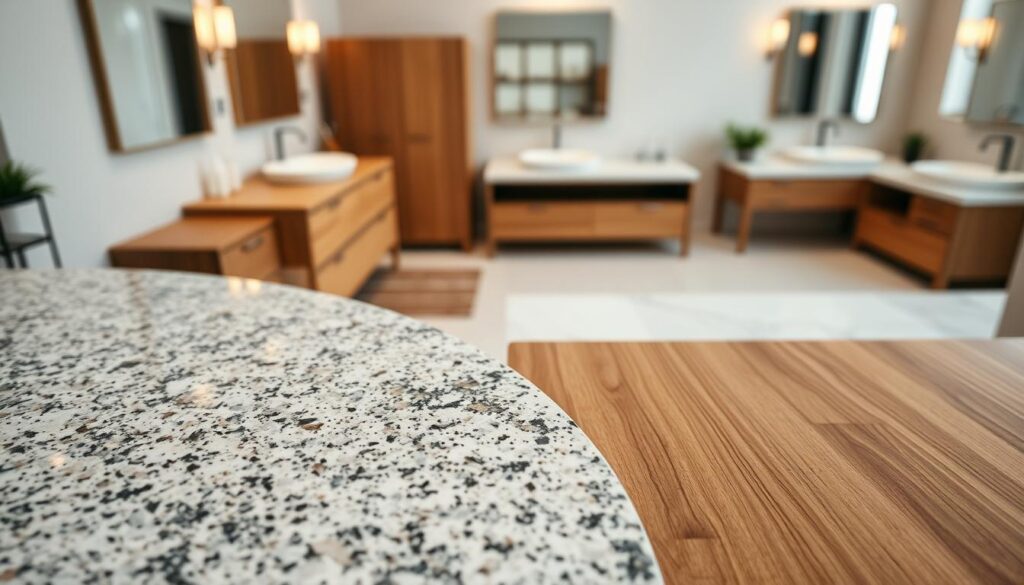
American Home guides you through the choices with practical clarity: wood and engineered wood, stone and engineered stone, metal, and ceramic. Each option balances appearance, cost, and performance differently.
Expect honest advice about budget, cleaning habits, and how long you plan to stay in your home. We treat the vanity as a daily workstation and a major design element, so the right pick boosts comfort, function, and resale appeal.
Key Takeaways
- Durability beats trend when moisture is a factor.
- Vanity components work together: box, doors, finish, countertop.
- Wood, engineered wood, stone, metal, and ceramic cover most choices.
- Budget and cleaning routines shape the best long-term option.
- We focus on U.S. conditions like steam and under-sink leaks.
- Later sections offer comparisons, a buyer checklist, and local design support.
Bathroom vanity basics: why materials matter for durability, functionality, and design
A vanity’s construction decides how well it stands up to daily steam, spills, and routine use. In humid bathroom environments, choices about cabinet panels and surfaces determine long-term performance and the overall design impact.
How a bathroom vanity handles daily moisture, steam, and splashes
We treat the sink area as a true wet zone: shower steam, faucet splashes, and accidental spills happen every day. Water reaches edges, joints, and under-sink cavities, so resistance to swelling, delamination, and water damage matters.
Storage and workflow: why cabinet construction affects real-life usability
Storage quality changes how a room functions. Stable panels, tight joinery, and smooth drawers keep toiletries organized and countertops clear.
- Strong drawer slides for repeated use
- Solid panels that resist sagging
- Thoughtful layout for door swings and traffic paths
How the right vanity becomes a focal point in modern bathrooms
Finish, edge sealing, and proper installation influence how the same material performs and the final look. We recommend planning space and clearances early so the vanity supports both form and everyday use.
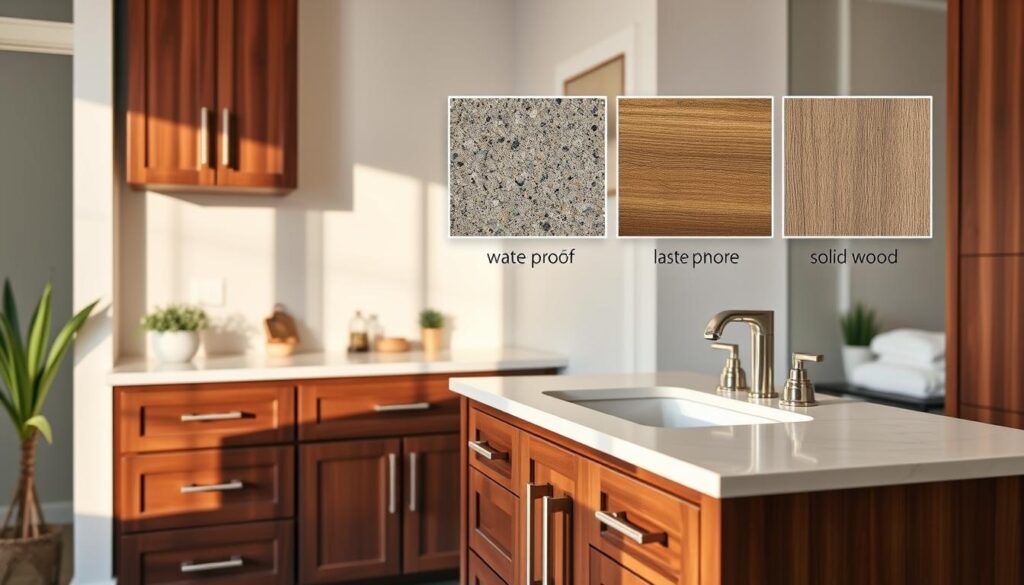
Next, we compare specific options so you can match budget, moisture exposure, and style goals to the right choice for your bathroom and vanity investment.
What materials are commonly used in bathroom vanities
A clear split between cabinet builds and countertop surfaces helps homeowners match looks with lifespan.
Wood and engineered wood options for vanity cabinets
Wood cabinets bring warmth and classic appeal. Solid pieces age well but need good sealing to resist moisture.
Engineered wood is budget-friendly. Performance varies with the core: plywood holds up best, MDF and particle board need strong finishes.
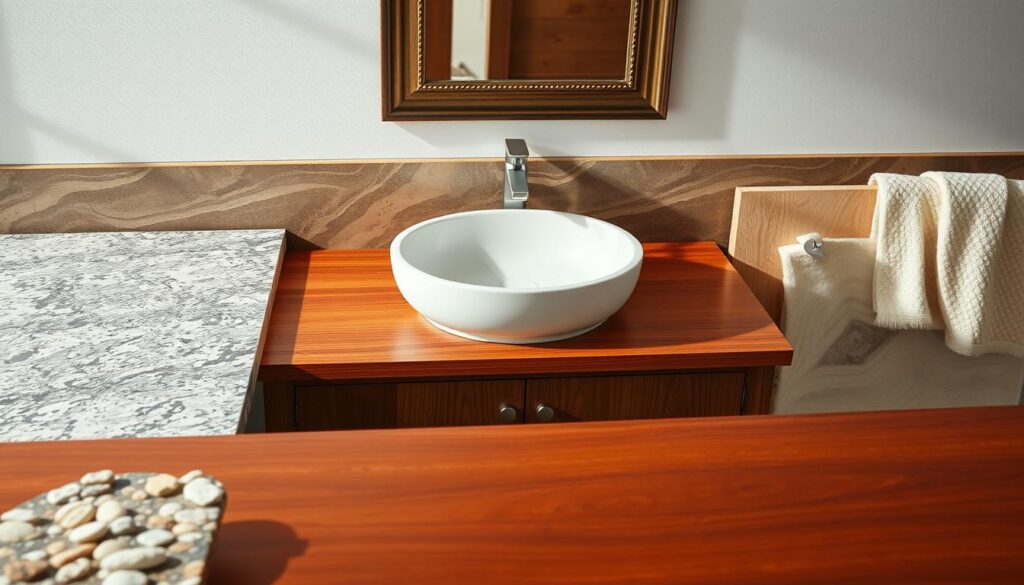
Stone and engineered stone surfaces for a luxury look
Stone tops—granite, marble, and quartz—deliver a high-end surface. Marble gives iconic veining; quartz offers low maintenance.
Metal frames and stainless steel for sleek, modern styles
Stainless frames resist humidity and wipe clean easily. This option suits modern styles and busy households.
Ceramic and other easy-clean, water-resistant choices
Ceramic tops are practical and stain resistant. They can chip and weigh more than some alternatives, but they remain an easy clean favorite.
- What we’ll evaluate: moisture resistance, longevity, cost, repairability, and overall look.
- We separate cabinet build from countertop to keep comparisons clear.
How to choose the best bathroom vanity material for your space and budget
Choosing the right surface and cabinet build starts with how you use the room every day.
Moisture resistance is non-negotiable: swelling and warping start where water lingers—sink edges, toe-kicks, and under-sink cavities. Seal edges, raise bases off a damp floor, and keep an exhaust fan running to reduce damage over time.
Cost vs longevity: higher-quality options often cost more now but save replacement money over the years. Think in service years: a better core and finish can mean fewer repairs and less time spent on fixes.
Size and layout: small powder rooms need slim storage and easy-clean surfaces, while primary bathroom setups benefit from deeper drawers and stronger cabinetry. Measure your size and plan storage before you choose.
- Practical checklist: humidity level, expected lifespan, wall condition, storage needs, and preferred style.
- Limit choices to two or three viable options before shopping to avoid impulse picks based on looks alone.
- Match finishes to use: durable topcoats for busy households and softer stains for guest bathrooms.
We guide you to the one best choice for your space by balancing performance, cost, and style—so your new bathroom fits the way you live.
Solid wood bathroom vanities: timeless warmth with humidity considerations
Solid wood brings a warm, lived-in character to a primary bath while asking for steady humidity control. We recommend it when you want a classic look that can be refreshed over the years.
Common species and what they mean for daily use
Oak rates high for strength and resistance to everyday wear. Maple offers tight grain and smooth finishes. Cherry deepens with age, while teak handles moisture better than most. Poplar is cost-friendly and paints well.
Pros, cons, and practical care
Pros: natural beauty, structural strength, and easy repair or refinishing add long-term value for homeowners.
Cons: expansion and contraction from heat and water can cause small finish cracks or edge swelling if ventilation and sealing are poor.
- Inspect edges and undersides for softening or early damage.
- Choose factory-applied finishes with strong seal at sink cutouts.
- Expect higher initial cost but better return if you plan to stay in the home.
Engineered wood vanity materials: plywood, MDF, and particle board compared
Engineered cores shape most mid-range vanity builds, trading raw grain for predictable performance. We define engineered wood as manufactured panels made to control movement and lower cost while keeping a finished look.
Plywood: layered strength and stability
Plywood uses alternating veneers that resist warping and hold fasteners well. This layered build boosts durability and makes plywood a strong value pick for cabinets that face humidity.
MDF: smooth painted finish, watch standing water
MDF sands to a flawless paint surface and suits modern finishes. It swells if standing water reaches the core, so seal cut edges and avoid wet zones.
Particle board: budget appeal, faster breakdown
Particle board keeps initial cost low but can sag under heavy tops and fail sooner when exposed to moisture.
Coatings and when to choose engineered wood
- Edge banding and quality sealants cut moisture risk.
- Well-coated panels extend service life and reduce water-related damage.
- Choose engineered wood for guest baths, value remodels, or where budget and clean looks matter.
Stone and engineered stone countertops: granite, marble, and quartz
The top layer of a vanity tells the biggest part of the style story and carries the heaviest demands.
Granite: hard-wearing patterns and heat resistance
Granite resists scratches and takes heat well. Its one-of-a-kind patterns give each vanity a bespoke look.
Marble: classic veining with higher upkeep
Marble delivers true luxury and distinctive veining. Expect more care: it stains and etches easier than harder stone.
Quartz: engineered performance for everyday life
Quartz is roughly 90–95% ground quartz bound with resins and pigments. It is non-porous and low-maintenance, though resins can soften with high heat.
Weight, cabinet choice, and lifestyle fit
Heavier tops demand stronger cabinet cores and secure joinery. Match a heavy stone surface to plywood or solid builds to prevent sag and joint stress.
- Pick granite for longevity and heat resistance.
- Choose marble for luxury looks and careful owners.
- Opt for quartz when you want low fuss and strong water resistance.
Metal and stainless steel vanities: modern, waterproof, and built for humidity
When humidity and heavy use meet modern design, stainless steel often leads the shortlist. We see metal chosen for rooms that demand a waterproof, long-lasting surface and a sleek contemporary look.
Practical benefits
Stainless steel resists mildew, rust, heat, and scratches, which cuts the risk of long-term damage in a busy bathroom. Its waterproof nature makes it a strong choice where water exposure is frequent.
Design and daily use
Metal suits many modern styles and pairs well with stone or composite tops for contrast. The reflective surface can brighten a small wall-mounted unit and add a crisp style to the room.
- Tradeoffs: fingerprints and water marks show easily and may raise cleaning frequency.
- Easy clean: quick wipes keep the finish tidy, but owners should accept more regular care.
- Comfort and workflow: metal holds shape and resists moisture swings, helping storage perform reliably over time.
Choose metal if you want a durable, low-risk way to manage water and humidity and you value a modern look more than a zero-smudge finish.
Ceramic and other easy-clean surfaces: practical options for busy bathrooms
A smooth, non-porous ceramic finish makes daily care faster and reduces staining risks. It creates a tidy, hygienic top that suits regular wipe-downs and family routines.
Advantages at a glance
Ceramic performs well against water and stains, so spills clear up with minimal effort. The glazed surface supports an easy clean routine and keeps the sink area sanitary.
Tradeoffs to consider
Ceramic can be heavy at installation and may chip or crack under impact. Temperature sensitivity means hot items can stress glazes, so avoid sudden thermal shocks.
Where ceramic fits best
This option often suits family and guest bathrooms and budget-conscious updates. It balances low cost with solid durability when paired with a sturdy cabinet core.
- Compare scratch visibility by glaze and color before you buy.
- Match ceramic tops to plywood or well-built engineered cabinets to prevent sagging.
- Inspect glaze consistency, edge quality, and seam transitions at the showroom.
Moisture-proofing and maintenance tips by material
A few simple routines stop moisture from becoming a long-term problem for your vanity. Quick actions each day protect finishes and reduce the risk of costly water damage over time.
Daily habits that prevent damage
Wipe spills immediately and dry seams after use. A fast pass with a towel around the sink and edges takes seconds and prevents moisture from creeping under finishes.
Keep countertop clutter low so splash-prone items don’t trap water. Small habits add up and save repair time later.
Ventilation strategy
Run the exhaust fan during showers and leave it on for at least 10 minutes after. This simple way cuts humidity and lowers mold and swelling risk in the room.
Cleaning do’s and don’ts by material
- Wood: mild soap, soft cloth; avoid abrasive cleaners that dull finishes.
- Stone: use pH-balanced cleaners and reseal as needed to protect the top.
- Metal and ceramic: gentle wipe-downs; remove water spots quickly to keep the look crisp.
Sealing and protective finishes
Stone may need periodic sealing every few years depending on use. Reapply protective finishes on wood and edges as recommended to extend service life and guard the surface.
Leak checks: simple routines that catch problems early
Open cabinet doors weekly to inspect under the sink and behind the unit. Look for damp spots, softenings, or musty smells—early action prevents serious water damage and preserves the vanity for years.
Buyer’s checklist: what to look for in well-built bathroom vanities today
A focused buyer’s guide points out the small details that predict long-term performance. Use this checklist at the showroom or on-site to evaluate build quality, storage, and finish choices before you commit.
Construction quality cues
Look for solid joinery (dovetails or glued and screwed assemblies), stable panels like plywood cores, and full-length drawer runners. Test drawers for smooth, soft-close action and doors for snug alignment.
Storage features that reduce countertop clutter
Choose deeper drawers, adjustable shelving, and built-in organizers to keep toiletries off the counter. Consider vanity types—freestanding, floating, single, or double—based on your space and plumbing layout.
Finish and hardware for durability and style
Prefer moisture-resistant coatings and corrosion-proof hardware. Good hinges and quality slides extend useful life and keep daily comfort and style intact.
- Bring measurements: width, depth, height, and plumbing locations.
- Match cabinet core strength to your top choice to avoid sagging.
- Prioritize function: storage beats a pretty front when daily use counts.
Design support in Greater Lansing: choosing vanity materials with American Home
We turn design ideas into a cohesive plan so your bathroom feels like a finished, thoughtful part of the home. Our approach matches style, finishes, and function so every choice supports daily use and long-term value.
One-stop shopping: American Home + American Flooring for a cohesive remodel
American Home and American Flooring work together to simplify decisions. We coordinate floors, tops, and cabinetry so the vanity, finishes, and surrounding space read as one intentional design.
Design expertise: over 60 years of combined kitchen & bath design experience
Our Expert Design Staff bring more than 60 years of combined experience. We guide Greater Lansing homeowners through viable options and the right choice of material for their bathroom and budget.
- Compare practical options for moisture exposure and upkeep
- Match paint vs stain, protective coatings, and hardware for longevity
- Plan layout and storage so the bathroom works well every day
Contact American Home
We are 100% customer-focused and ready to help you choose the best vanity materials for your project. Call (517) 349-4690 or email info@americanhomekbdesign.com for product options, layout feedback, and tailored recommendations.
Conclusion
A final material choice ties together function, upkeep, and long-term value for any vanity.
We summarize the major categories: wood and engineered cores, stone and engineered tops, metal, and ceramic. Each option affects longevity, daily use, and the room’s look.
If you remember three things: prioritize moisture resistance, verify construction quality, and pick a finish you will maintain for years. These rules help narrow your search to one best option for your bathroom and budget.
Revisit the buyer checklist, then reach out for tailored design guidance. We’ll help you select the right bathroom vanity materials and plan a cohesive update that protects comfort and reduces future replacement costs.