Could your next storage upgrade still fail at holding up to daily life in a busy home? We pose this question because long-term performance matters more than how things look on install day.
In this Buyer’s Guide we define durability as staying square, handling heavy loads, and moving smoothly through thousands of door cycles. We explain why the right choices at the frame, shelving, and hardware level set the stage for years of reliable use.
American Home brings design expertise and customer focus to the Greater Lansing Area. Our team pairs practical options—moisture resistance, screw-holding strength, shelf sag limits, and soft-close hinges—with clear cost and repair expectations. That way, the finished pantry supports daily life, not just the photo.
Key Takeaways
- Durability means strength, stability, and smooth operation over time.
- Material choice drives long-term value for tall storage units.
- Humidity, spills, and use patterns affect lifespan and finishes.
- Hardware and shelf design matter as much as the panel core.
- We match design goals and budget to practical construction options.
What “durable” really means for a kitchen pantry cabinet in today’s homes
True durability shows up when shelves hold weight and doors keep aligning after years of use. We look beyond finish choices to measure performance: load capacity, hinge strength, and long-term resistance to daily wear.
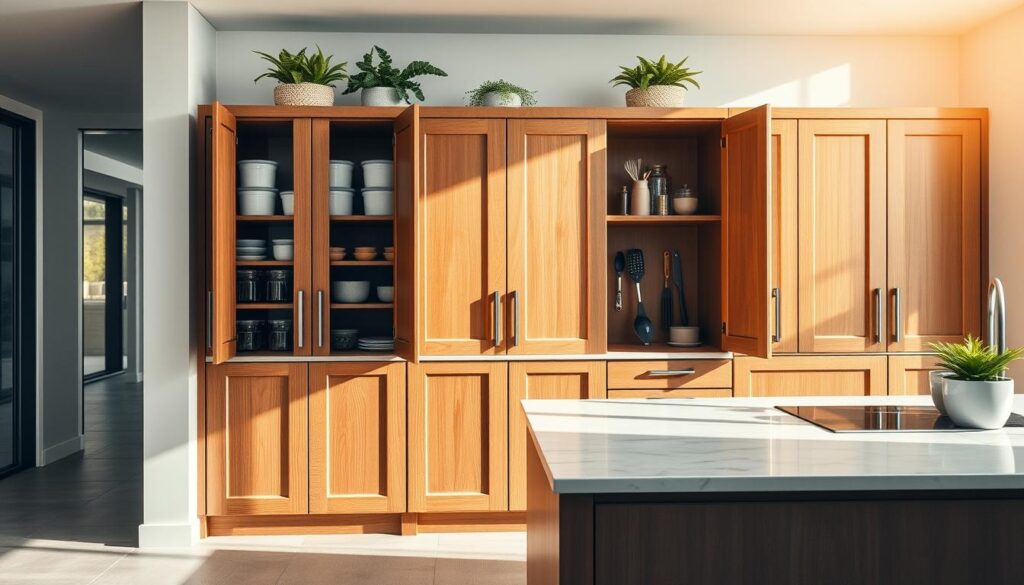
Daily wear: weight, door cycles, and shelf sag
Shelves must carry cans and small appliances without drooping. Frequent opening puts stress on hinges and fasteners. Over time, poor screw-holding leads to loose doors and misalignment.
Moisture, humidity, and temperature swings
Steam and seasonal swings reach areas beyond the sink. Sensitive cores can swell at exposed edges. We recommend sealed edges and moisture-resistant panels in humid zones.
Longevity, maintenance, and refinish potential
Some options last decades with simple maintenance; others only last a few years before replacement. Consider whether surfaces can be refinished or if damage means full replacement.
- Durability: holds load without sag.
- Hardware: hinges and screws that stay tight.
- Protection: sealed edges to resist moisture.
- Service life: realistic years and upkeep needs.
Start with your storage needs and pantry cabinet design goals
We begin by taking stock of what you keep and how you cook. Make a short inventory of heavy, tall, and frequently used items. Note appliances you want off the counters and bulk goods that need deep, stable shelves.
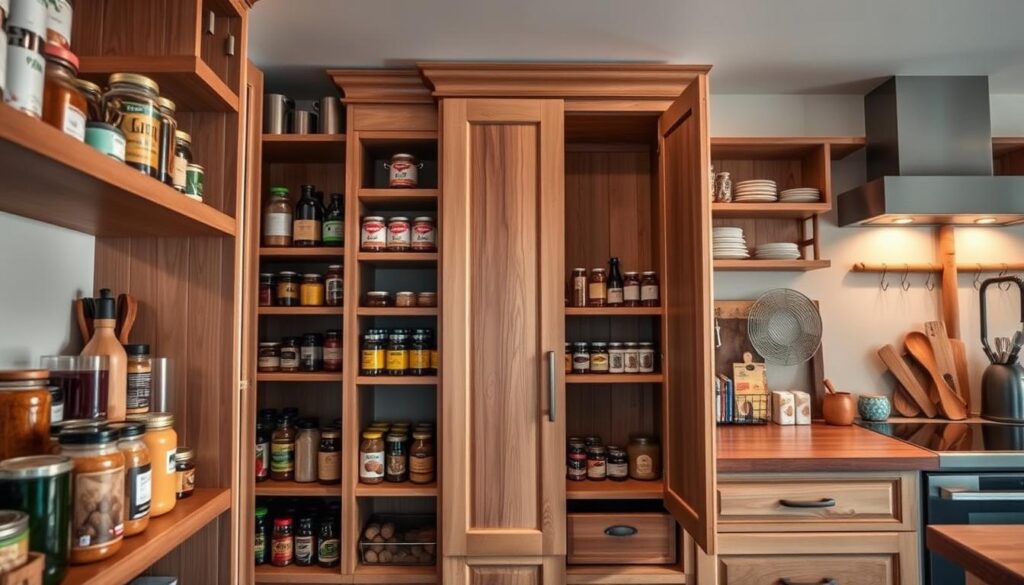
Planning for bulk items, small appliances, and tall boxes
Measure the tallest appliances and the deepest rows of cans you store today. Match shelf height and depth to those real items so nothing gets squeezed or wasted.
Adjustable shelves, pull-out trays, and full-extension access
Flexibility protects future use. Adjustable shelving lets you reconfigure space as needs change. Pull-out trays and full-extension glides improve visibility and reduce reaching.
- Start with an inventory to map storage to interior dimensions.
- Choose adjustable shelves for long-term flexibility.
- Pick pull-out trays when visibility and access matter most.
These steps keep design focused on function first. Then we match those needs to stronger shelf and box choices so your solution resists sag and stays aligned over years of use.
What materials are best for building a durable kitchen pantry cabinet
A smart build separates the load-bearing box from decorative doors and task-focused shelves. Each zone has different needs: structure, hardware anchoring, and surface wear. Choosing the right combo prevents sag, loose handles, and moisture damage.
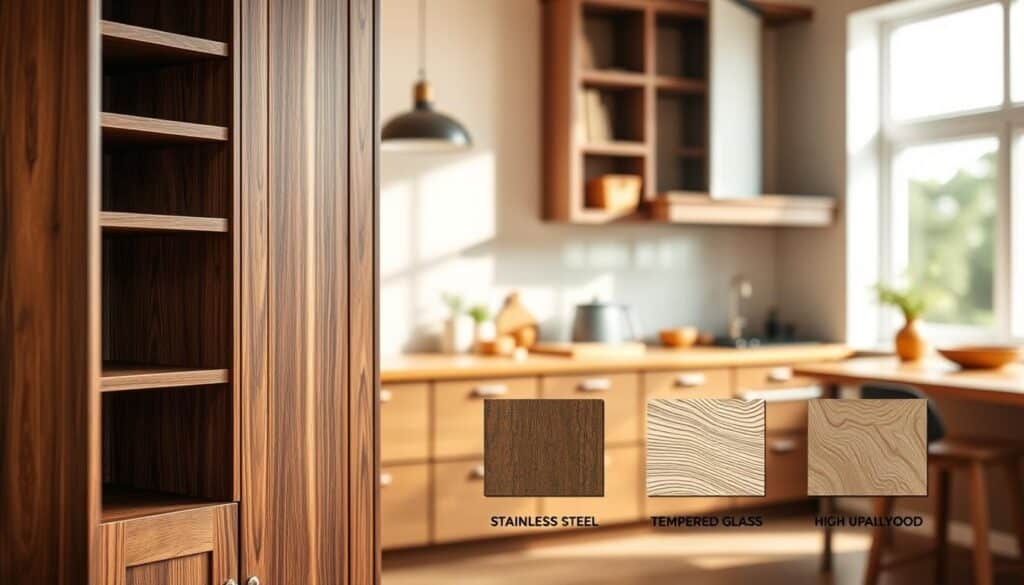
How cabinet box material differs from door and shelf material
The cabinet box acts as the structural skeleton. It should stay square under weight and humidity so doors align and drawers glide smoothly.
Plywood often wins here for screw retention and warp resistance. Solid wood works too but costs more. Particle board is least suitable for long spans.
Why screw-holding strength and stability matter for hardware and handles
Hinges, glides, and handles pull on whatever core they’re fastened into. Weak cores let screws loosen and hardware fail.
MDF holds screws less reliably than plywood. For high-use doors, pick cores that keep fasteners tight over thousands of cycles.
Moisture resistance as a make-or-break factor for kitchen cabinets
Small spills and steam can expand some engineered panels quickly. Particle board swells and deteriorates when wet.
HDHMR and certain plywood grades offer much better moisture resistance, but edges and seams still need sealing to protect performance.
- Box: prioritize strength and screw-holding (plywood or solid wood).
- Doors: choose for appearance and repairability (solid wood or painted MDF with sealed edges).
- Shelves: pick thickness and span-rated plywood or hardwood to avoid sag.
Solid wood pantry cabinets as the premium, long-term investment
When longevity and heirloom quality matter, solid wood often leads the pack. It offers a tactile presence and repair options that engineered panels cannot match. Choosing this route is as much about feel and look as it is about lifespan.
Best hardwood options for strength and timeless style
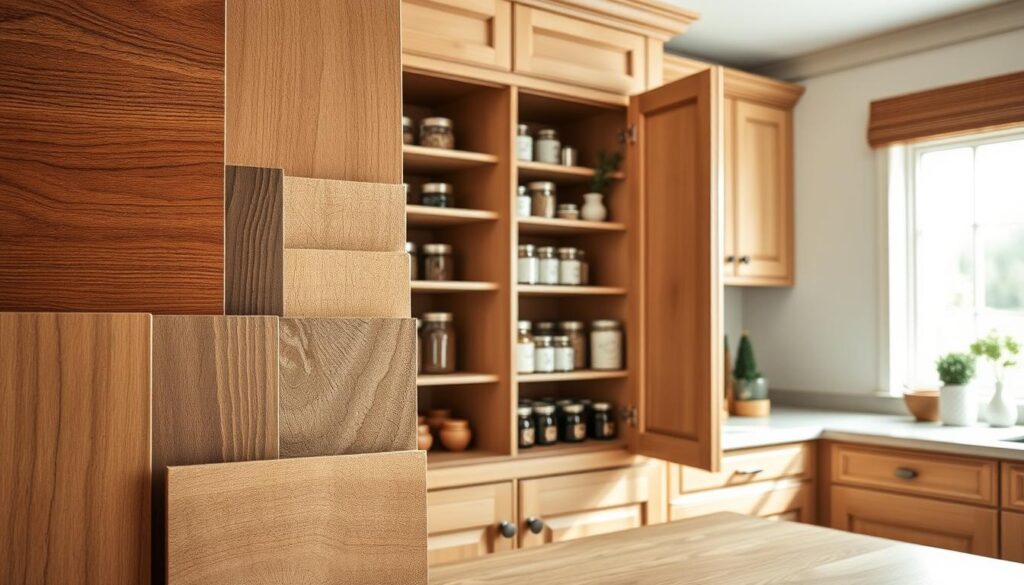
Oak, maple, and cherry are the hardwoods we recommend most. Oak gives strong grain and resilience. Maple reads smooth and durable. Cherry brings warmth and ages gracefully to a rich tone.
Pros: repair-friendly, refinishable, long lifespan
Solid wood can be sanded, repaired, and refinished. That means many homeowners get decades—often 50+ years—of service when finishes and moisture control are maintained.
Cons: higher cost, heavier weight, seasonal movement
Expect a higher upfront cost and greater weight at installation. Heavier panels may need reinforced mounting and careful cabinet design.
Wood also reacts to humidity. Seasonal movement requires proper clearances and joinery to avoid sticking or gaps.
- Investment: Ideal when long-term value and matching existing woodwork matter.
- Style: Delivers a timeless look that supports resale and refinishing plans.
- Option: Best when paired with good finishes and sensible moisture habits.
Plywood cabinet boxes for the best balance of durability and cost
For many remodels, plywood hits the sweet spot between performance and cost. We recommend it when homeowners want strength without the weight and price of solid lumber.
How layered construction improves strength and warp resistance
Plywood uses thin veneers glued with alternating grain directions. That cross-grain stack resists twisting and keeps tall panels true over time.
The result: better screw-holding and fewer alignment issues for doors and hinges during busy use.
Moisture performance in busy kitchens and pantry areas
Plywood offers good humidity resistance compared with many engineered cores. It handles normal kitchen steam and spills when edges are sealed.
Still, exposed layers and cutouts need protection to avoid long-term water damage.
Edge-banding, exposed layers, and why quality varies by grade
Grade matters: veneer thickness, core consistency, and glue quality affect flatness and how cleanly the panel accepts a finish.
Ask about edge-banding and sealed cuts so exposed layers do not degrade after installation.
Where plywood shines for shelves, tall panels, and installation
- Best use: side panels on tall units and load-bearing shelves.
- Installation: easier than solid wood—strong yet lighter—so fasteners hold without heavy lifting.
- Longevity: supports hinge anchors and shelf loads that matter to long-term durability.
HDHMR and other moisture-resistant engineered materials for humid areas
In humid homes, choosing the right engineered board can prevent early swelling and costly repairs. HDHMR is a high‑density, high moisture resistant panel with additives that slow water uptake and deter termites.
When HDHMR makes sense
Use HDHMR in zones prone to steam and seasonal dampness: backs, toe kicks, and lower side panels in laundry‑adjacent kitchens. It offers better moisture control than standard fiberboard while staying termite resistant.
Practical tradeoffs
HDHMR delivers improved moisture resistance but brings moderate strength compared to plywood. That means it suits non‑load panels and select shelving, but heavy span shelves still perform better in plywood or solid wood.
- Sourcing can be inconsistent in the United States; allow lead time.
- Edges and fastener points still need sealing—moisture‑resistant does not mean waterproof.
- Choose HDHMR where humidity matters but reserve stronger cores for major loads.
MDF for pantry cabinet doors, panels, and painted finishes
MDF gives painted doors a flawless surface that few alternatives match. Its consistent density prevents grain telegraphing, so paint lays down smooth and predictable. That makes MDF a top pick when the desired look is clean and contemporary.
Why MDF suits smooth, modern looks
MDF accepts paint evenly, producing a uniform finish and refined style. It’s also affordable compared with solid wood while delivering a premium painted look.
Weak points: moisture, weight, and hardware over time
MDF swells when exposed to moisture and rarely returns to like-new shape after water damage. It also tends to be heavier than some engineered boards, which can stress hinges over time.
Because screw-holding is lower than plywood, fasteners can loosen with frequent use. Match quality hardware to the door weight to avoid long-term sag and loose pulls.
Best-use zones and practical options
Use MDF for painted doors and decorative panels in dryer areas. Pair those doors with a moisture-tolerant box material to balance style and performance.
- What it does well: smooth paint finish, consistent surface, modern look.
- Watch for: moisture vulnerability, increased weight, and hardware loosening over time.
- Where to use: painted doors and low-splash panels; avoid high-moisture zones.
Particle board pantry cabinets and when budget outweighs longevity
For tight budgets, particle board offers an affordable route—but it brings clear tradeoffs in strength and lifespan. We recommend it only when cost constraints outweigh long-term performance needs.
Typical lifespan and sag risk
Expect 5–10 years in normal use. Long shelf spans loaded with cans, small appliances, or bulk boxes will bow sooner. Even modest weight over time causes visible sag and edge breakdown.
Moisture vulnerability
Particle core resists stains poorly. A spill or steam exposure can make panels swell and crumble. Sealing slows damage but cannot stop water once it reaches the core.
- Where it fits: tight budget projects or light-duty storage.
- Where to upgrade: use plywood or solid shelves in high-load zones.
- Best case: controlled humidity, gentle use, and planned replacement within a decade.
Building strong pantry shelves that won’t sag over time
Strong shelves start with the right wood and sensible support details. We treat shelves as the work surface of your storage: they carry weight every day, so material and support choices matter as much as the box.
Wood species to trust
Choose dense wood like oak, maple, cherry, walnut, or cedar for long life. These species resist wear and offer steady performance under loads common to pantry storage.
Stability tips
Use thicker boards and shorter spans to reduce sag. Tight-grained wood improves stability and reduces seasonal movement. Front edging and frames add stiffness without changing the design.
Support strategies and access options
Frames, cleats, and under-shelf supports distribute weight and increase strength at low cost. Consider pull-out shelves or baskets as options to improve access and reduce strain on fixed shelving.
- Practical rule: thicker shelves + shorter spans = less sag.
- Zone planning: dedicate low shelves to appliances and heavy cans to save space above.
- Smart use: pull-outs boost visibility and protect shelf surfaces over time.
Finishes, sealing, and moisture protection for kitchen pantry cabinets
A proper surface regimen extends service life more than a high-end door style alone. Finishes and careful sealing are core durability steps in any busy kitchen. They guard edges, fasteners, and joints from humidity and small spills.
Sealing edges, joints, and fastener points to improve resistance
Exposed edges on engineered panels take on moisture first. We recommend sealing cut edges, rabbet joints, and screw penetrations with a compatible sealant or edge banding.
Seal these vulnerable spots:
- All cut edges and end grain.
- Hinge and handle pilot holes.
- Back panel seams and underside joins.
- Toe kicks and bottom rails where spills collect.
Choosing a finish that fits your style, cleaning habits, and maintenance comfort
Pick a finish based on how you live: wipeable lacquer or polyurethane for heavy cooking; painted doors for a smooth look; stained wood for warmth. Each finish affects day-to-day maintenance and long-term resistance.
Realistic note: no finish makes cabinets immune to standing water. Good sealing plus sensible moisture habits buys time and keeps surfaces attractive and functional.
Hardware and construction details that boost cabinet durability
Quiet, steady operation day after day is a sign of thoughtful construction and quality parts. Small choices in hardware and joinery change how a unit performs over years. We focus on parts and installation steps that keep doors aligned and drawers smooth.
Soft-close hinges and quality glides to reduce long-term wear
Soft-close hinges stop slamming and cut impact on the frame. Quality drawer glides reduce friction and wear on slides and fasteners.
Result: fewer loose screws, quieter use, and better performance day after day.
Fasteners, joinery, and screw-holding strength by material
Screw-holding varies by core: plywood holds fasteners far better than MDF or particle board. That affects hinge stability and how well handles stay tight on tall doors.
Good joinery and glued corner blocks increase racking resistance and overall strength. Use reinforced joints where loads concentrate.
Installation basics that protect alignment and door function
Proper installation keeps cabinets level, plumb, and anchored. Correct reveals and shims prevent binding and allow hardware to work as intended.
- Level and plumb placement to protect hinge geometry
- Secure anchoring into studs or solid substrate
- Sealed fastener points and tested door gaps
These details deliver a quieter, more reliable kitchen cabinet that needs fewer repairs and feels better every day.
How to choose the best material for your home, budget, and timeline
Pick materials that match how your household cooks, stores, and lives every day. Start by noting kitchen humidity, how often you cook, and the typical loads you store. Those facts guide a smart choice that balances cost, appearance, and longevity.
Matching choice to conditions, use, and look
Match panel strength to heavy loads, and choose moisture-resistant cores where steam is common. Pair painted doors with a stronger box when style matters but durability can’t be sacrificed.
When to DIY and when pros pay off
DIY fits small projects with controlled conditions and plenty of planning. For tall units, complex hardware, or tight timelines, professional design and installation protect alignment and finish quality.
Get expert guidance from our team
We are 100% customer focused with 60+ years of combined design experience. American Home complements American Flooring to offer one-stop shopping in the Greater Lansing Area.
- Decision path: match choice to humidity, use frequency, and load type.
- Budget vs. time: invest where it prevents repairs and replacements.
- Project options: adjustable shelves and pull-outs tailor interiors to daily needs.
Ready to decide? Call American Home at (517) 349-4690 or email info@americanhomekbdesign.com for design-led solutions and installation you can trust.
Conclusion
A thoughtful finish ties function and form together, so your storage performs as well as it looks.
We recommend solid wood for long life and refinish potential, plywood as the best value, MDF for painted doors in dryer zones, and particle board only when cost rules the plan. Match the box, doors, and shelves to how your household uses the space.
Give shelves real support and seal exposed edges to limit moisture. Quality hardware and careful installation turn material choices into everyday benefits: quieter doors, smooth access, and steady alignment.
Choose the mix that fits your look, maintenance comfort, and long‑term goals. We’ll help you create a cabinet and kitchen storage solution that works the way you live.