Are small swaps or a full remodel the best route to reduce water use and shrink your footprint? We ask this because simple choices add up fast, and good design need not mean giving up comfort.
At American Home, we guide homeowners toward bathrooms that feel luxurious and perform better every day. Our design staff brings over 60 years of combined experience to help balance style, durability, and long-term value.
Bathrooms have an outsized environmental impact from water use, hot-water energy demand, and packaging waste. Meaningful improvements start with low-cost swaps, then move to water-saving fixtures, energy-smart lighting, and sustainable remodel materials.
We set a clear goal: help you create a bathroom that looks elevated, runs efficiently, and reduces strain on the environment—without upending your routine.
Key Takeaways
- Start with quick, low-cost changes to save water and energy.
- Upgrade fixtures next: durable, efficient choices pay off over time.
- Focus on lighting and hot-water systems to reduce energy use.
- Choose sustainable materials when you remodel for long-term value.
- American Home offers expert guidance to keep design cohesive and luxurious.
Why an eco-friendly bathroom matters right now
Daily routines in the bathroom create steady demands on water and energy that matter for the planet and your bills. Small choices add up: every shorter shower, long-life bulb, and refillable bottle reduces the room’s overall footprint.
The bathroom’s outsized environmental impact: water consumption, energy use, and waste
Bathrooms are major centers of household water consumption. Hot showers, frequent flushing, and constant handwashing drive ongoing energy use for water heating and lighting.
- High water use from showers and toilets increases utility costs and the room’s environmental impact.
- Energy use for hot water and lights compounds over time and affects long-term bills.
- Waste appears as single-use plastics and hard-to-recycle packaging that quietly accumulates.
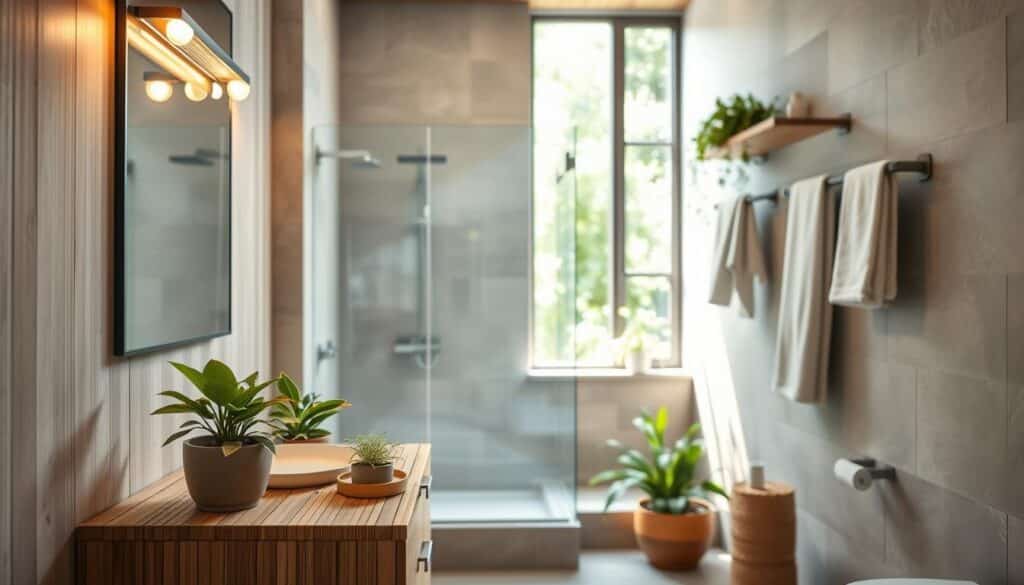
What you gain: lower bills, better indoor air quality, and a healthier home
Making thoughtful swaps yields immediate returns: lower water and energy bills, fewer replacements, and a smoother daily routine. Choosing low-tox cleaners and low-emission finishes improves indoor air and overall air quality, especially for sensitive households.
We guide homeowners to practical, beautiful solutions that reduce impact without sacrificing style—helping you protect the environment while enjoying a better, healthier home.
How can I make my bathroom more eco-friendly with quick, low-cost changes?
Start with simple, low-cost changes that cut plastic and lower running costs without a remodel. These easy updates give immediate benefits and set the stage for bigger upgrades.
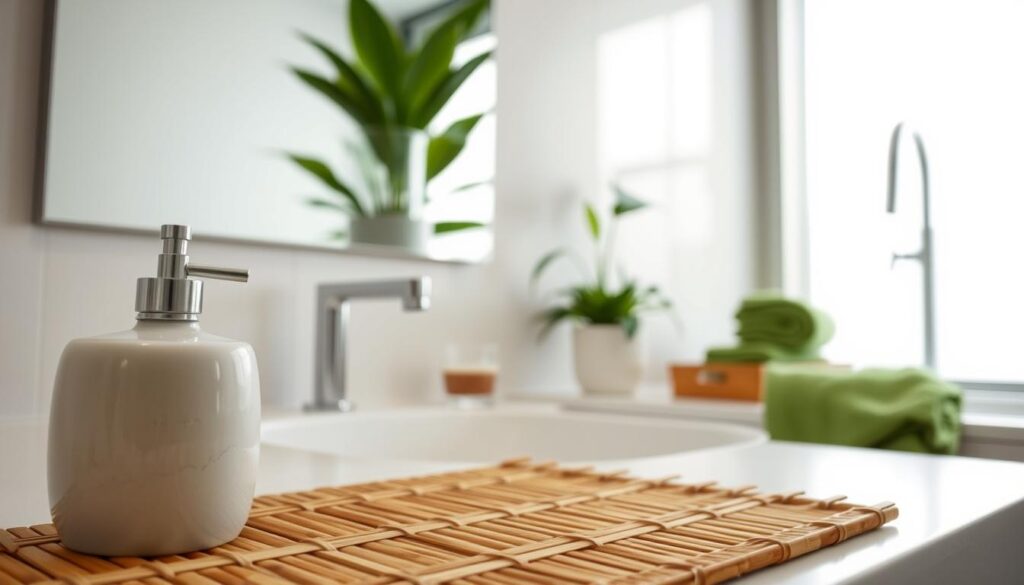
Swap single-use items for reusable and refillable products
Identify single-use items—sample bottles, wipes, disposable pads—and replace them with reusable options. A small set of durable containers plus refill packs reduces packaging and repeat shipping.
Choose non-toxic, biodegradable cleaning products
Pick cleaning products with biodegradable formulas and minimal fragrance. Avoid bleach, ammonia, and synthetic fragrances to keep waterways safer and indoor air cleaner.
Small habit shifts that really stick
- Turn off the tap during routine tasks to cut water use.
- Buy larger refills less often to reduce waste and packaging.
- Switch plastic toothbrushes to bamboo toothbrushes and replace them thoughtfully.
These quick changes are practical solutions we recommend at American Home. They lower waste, save money, and make longer-term fixture or material upgrades feel achievable.
Cut water usage without sacrificing comfort
A few practical fixes and smart fixtures help reduce water use and bills with no loss of comfort. We prioritize fixes that deliver the most savings first, then suggest refined fixtures that look and perform like high-end choices.
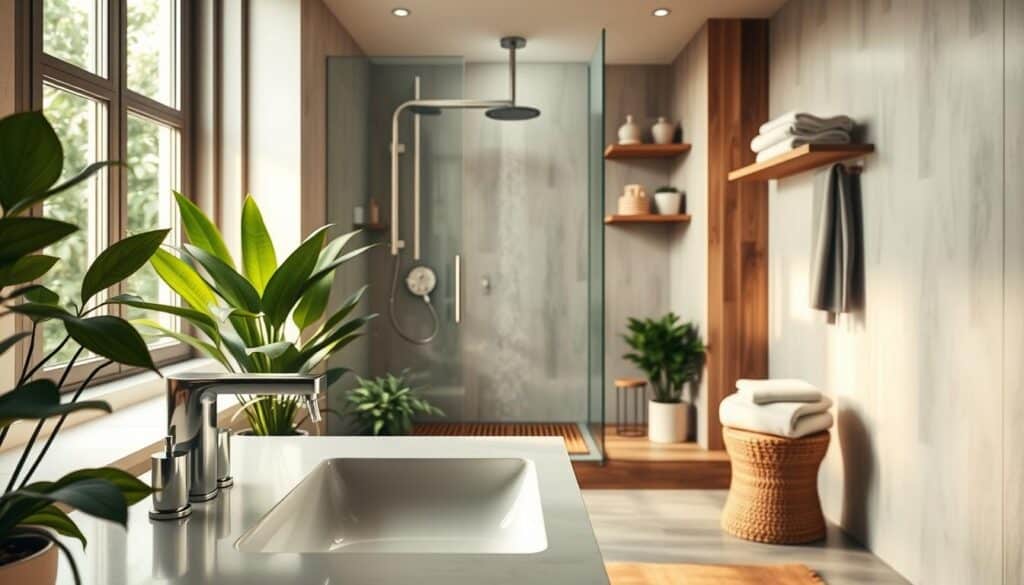
Fix leaks to stop hidden water waste from faucets and toilets
Start with leaks: a small drip can waste over 3,000 gallons per year. We recommend a simple leak-check routine: listen for running toilets, test flappers with dye, inspect faucet aerators for seepage, and watch for unexpected usage spikes.
Install low-flow fixtures like showerheads and faucet aerators
Modern low-flow showerheads and faucet aerators reduce water consumption while keeping pressure. Choose reputable internals and finishes that match your design so the fixtures feel premium and last longer.
Upgrade to dual-flush toilets to reduce gallons per flush
Dual-flush toilets give a light flush for liquids and a full flush for solids, cutting toilet water use without changing habits. For a low-cost option, consider safe tank-displacement devices that lower per-flush consumption without affecting mechanics.
Shorten shower time to lower water usage and hot-water energy demand
Trimming shower time by a few minutes reduces both water and the energy needed to heat it. Small daily changes add up quickly and pair well with low-flow showerheads for a two-for-one benefit.
Simple water-saving tricks for everyday routines
- Turn off water while brushing and use captured warm-up water for plants.
- Avoid unnecessary flushes and opt for refills over single-use bottles.
- Specify serviceable fixtures so repairs, not replacements, handle future waste.
Reduce energy use with smarter lighting and heat choices
Thoughtful lighting changes are one of the fastest ways to cut energy use while upgrading a bathroom’s look. Efficient fixtures reduce daily costs and improve how surfaces and finishes read in natural and artificial light.
Switch to LED bulbs for efficient, long-lasting bathroom lighting
LED bulbs use about 80% less energy than traditional bulbs and have far longer lifespans. Choose LEDs with warm color temperatures (2700–3000K) for flattering vanity light and cool whites for task zones.
Use dimmers, motion sensors, and better placement to avoid wasted light
Controls cut wasted wattage: dimmers for evening routines, motion sensors for quick trips, and zoning that lights only what you need. These simple additions lower overall energy use and extend bulb life.
Maximize natural light with mirrors, window treatments, and layout tweaks
Mirrors bounce daylight into darker corners and make a room feel larger. Select translucent shades or frosted glass to protect privacy while keeping natural light flowing. Small layout changes and thoughtful mirror placement can reduce reliance on electric lighting.
- High-ROI: better light improves tasks and saves energy every day.
- LED strategy: pick color temp for a spa-like feel and prioritize long life.
- Controls: dimmers, sensors, and zone switches prevent “all-on” waste.
Finally, apply the same efficiency mindset to heat: reduce unnecessary run time for radiant heaters and match settings to household patterns to keep overall energy use under control.
Choose sustainable materials for an eco-friendly bathroom remodel
Choosing the right surfaces and finishes sets the foundation for a lasting, sustainable remodel. Start with performance in wet zones, then refine aesthetics so the solutions last.
Recycled and reclaimed surfaces
Recycled and reclaimed surfaces add character and cut demand for virgin resources. Use reclaimed vanities, tile accents, and countertops to lower embodied waste and add visual interest.
Natural options that perform in wet spaces
Pick bamboo for cabinetry and accessories where moisture is controlled. Choose porcelain for wet-floor durability and sealed stone or responsibly sourced wood where appropriate.
Low- and no-VOC products to protect indoor air
Use low- and no-VOC paints, adhesives, and sealants to improve air quality. These choices matter most in small rooms with limited ventilation.
Durable, low-maintenance finishes and local sourcing
Durable finishes resist staining and cut repeat remodels. Sourcing locally reduces carbon from shipping and supports regional suppliers.
- Design priority: performance first, style second.
- Coordination: material choices, grout, and fixture pairing reduce failures.
- Guidance: American Home helps select materials and fixtures that fit your lifestyle and budget.
Reduce waste and plastic in your bathroom (packaging, toiletries, and paper goods)
Reducing single-use items in the bathroom is one of the easiest ways to cut waste and keep counters tidy. We recommend swapping high-volume items first so changes stick and the space still feels luxurious.
Go plastic-free where you can: bars, tablets, and refill stations
Start with soap and shampoo: bar soap and shampoo bars drastically reduce packaging and shipping weight. Refill stations and concentrated tablets keep bottles off the shelf and look intentional on open shelving.
Upgrade everyday essentials
Choose bamboo toothbrushes and reusable cleansing pads to replace single-use items. These small swaps feel premium and are easy to store in a neat tray or drawer.
Rethink “flushable” products and paper choices
Avoid flushing wipes; they rarely break down and cause sewer blockages. For toilet paper, choose recycled content or bamboo options to lower tree loss and water use during production.
Set up bathroom recycling
- Simple system: a small, attractive bin for rinsed packaging.
- Plastic-free order: prioritize soap, shampoo, and body wash, then move to razors and dental care.
- Keep it calm: store backups in baskets so the room retains a spa-like look.
These steps cut plastic and packaging without sacrificing a premium routine. Less waste means a lighter load on the environment and a cleaner, easier-to-maintain bathroom.
Improve air quality with cleaner scents and healthier products
Fresh, breathable air transforms a bathroom into a calming, healthier space. In small, humid rooms, what you spray or burn becomes part of the room’s air.
Choose cleaner scent strategies
Skip synthetic air fresheners that add unnecessary chemicals to the air. Instead, use essential oils sparingly or cleaner-burning candles for short periods to create ambiance without overwhelming the room.
Link scents to smarter cleaning
Pick low-odor, non-toxic cleaning products so you don’t need to mask smells. When surfaces are truly clean, scent becomes a choice, not a cover-up—a simple way to protect indoor air quality.
Use plants and ventilation for natural benefits
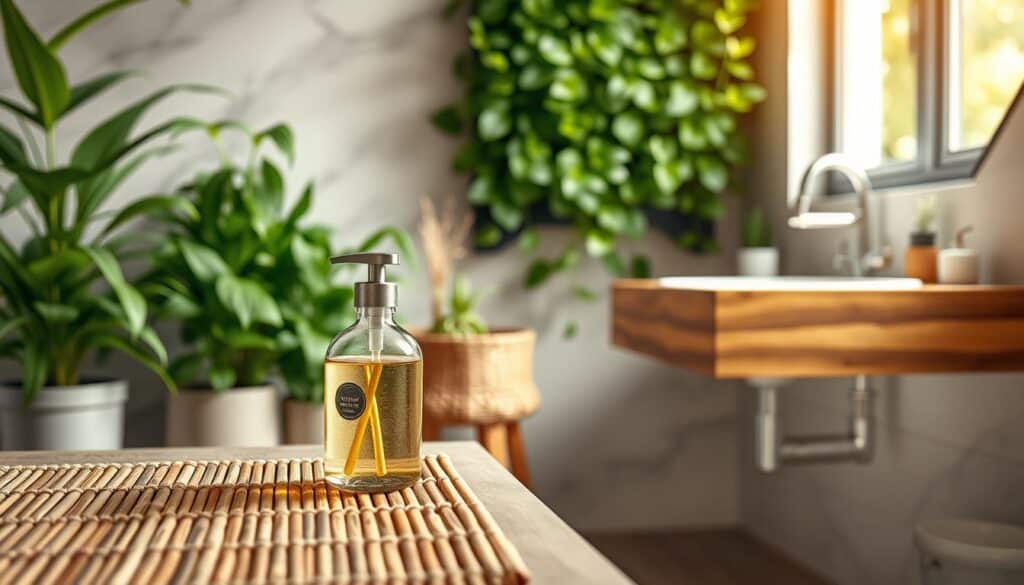
Add humidity-friendly plants to soften hard surfaces and bring a spa-like feel. Place greenery where it won’t be splashed and use trays to protect finishes.
- Routine tip: ventilate after showers and towel-dry surfaces to prevent musty odors.
- Placement: keep plants near natural light or mirrors for added brightness and to support growth.
- Long-term gain: these solutions improve comfort and help finishes last longer.
Conclusion
A clear sequence—quick swaps, leak repairs, water-saving fixtures, efficient lighting, and durable materials—delivers the best results.
Start with two small changes this week, schedule one water upgrade, and set a remodel goal that prioritizes long-life selections and thoughtful lighting. These steps save utilities and reduce waste while keeping comfort intact.
We help homeowners select fixtures and finishes that look luxurious and perform reliably. American Home complements American Flooring to offer one-stop shopping in the Greater Lansing area.
We’re 100% customer focused with over 60 years of combined design experience. Call us at (517) 349-4690 or email info@americanhomekbdesign.com to talk through your goals for a better home and a smarter room.