Do you ever open a cupboard and wish things were easier to find? We ask that because small changes make daily cooking calm and quick.
At American Home, we treat organization as a design choice. That means we plan zones, use vertical space, and remove duplicates so the cabinet feels larger and works better.
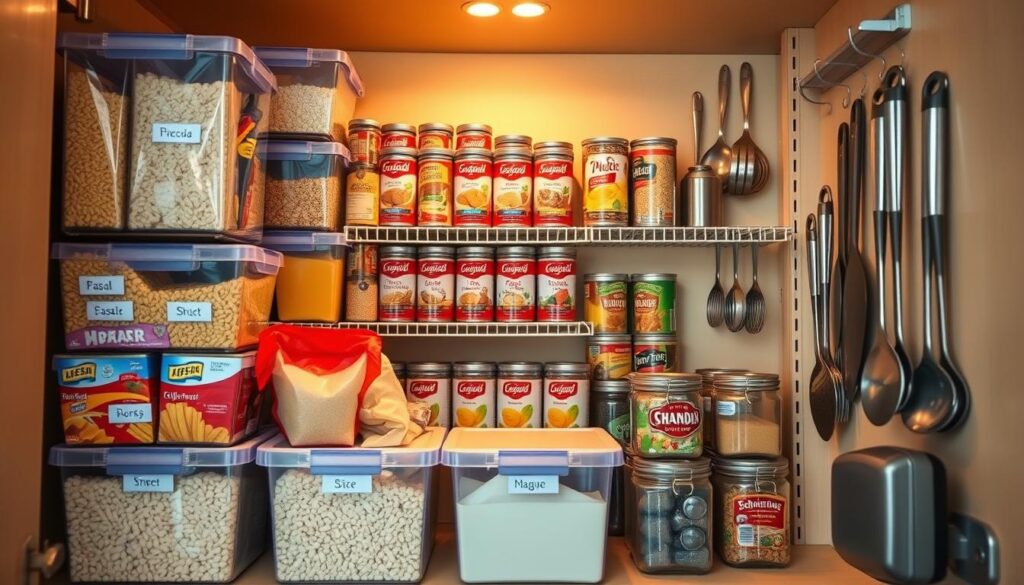
Start with a reset: measure shelves, sort items, and choose a system you will keep. With shelf layering, door storage, pull-outs, clear bins, and lighting, a modest set of cabinets can behave like a custom pantry.
Result: fewer forgotten items, faster meal prep, and a calm, beautiful kitchen that fits how we live.
Key Takeaways
- Define what usable space means before buying organizers.
- Use vertical zones and clear containers to improve access.
- Plan for routines: shopping, snacks, and prep.
- Small upgrades—pull-outs and door racks—yield big gains.
- Design organization so the kitchen looks calm and functions well.
Why pantry cabinet storage gets messy in the first place
Little habits turn shelves into chaos before we notice. We put groceries on the nearest shelf, then another bag follows. Over time, crowded rows and mixed categories make the whole space harder to use.
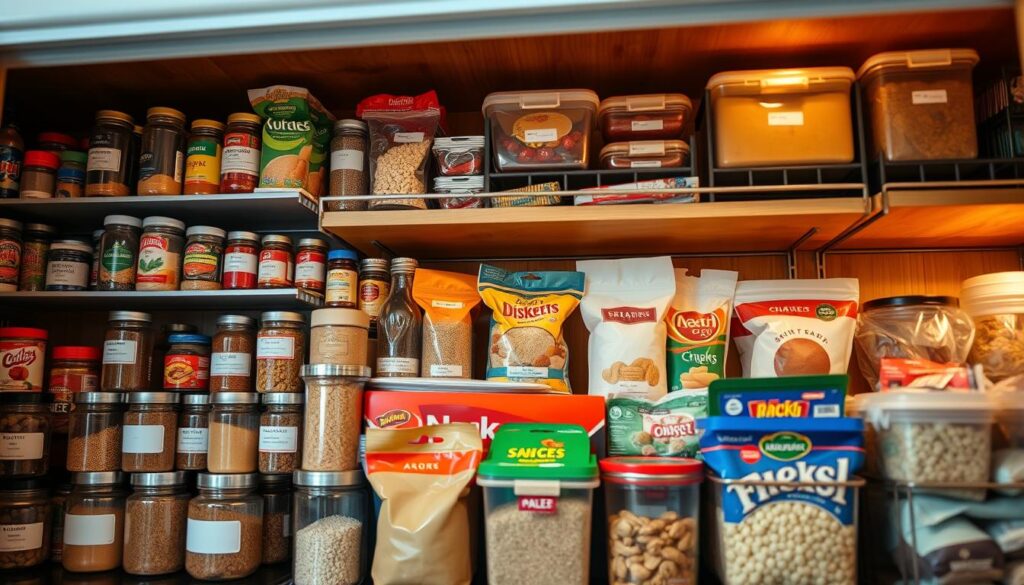
Overcrowded shelves and wasted vertical space
Short containers leave tall gaps above them, so the cabinet holds less than it could. That wasted vertical space is one of the easiest losses to fix with simple shelf inserts or stackable organizers.
Hard-to-reach items pushed to the back
Stuff gets shoved to the back and becomes a “black hole.” Expired items pile up and we double-buy because things are out of sight. Better access reduces waste and saves money.
Systems that are too complicated to maintain
We often try systems that look great but take minutes to use. If it slows routine tasks, people stop using it. The best way is a low-effort design that people will actually reset on busy days.
- Keep categories together so snacks, baking, and cans don’t constantly reshuffle.
- Use vertical layers to double usable shelf space.
- Prioritize access so everyday items sit up front and rarely used things stay higher or deeper.
Start with a quick reset before you buy organizers
Start with a single sweep: remove everything and sort into keep, toss, and donate piles. This fast reset helps us avoid spending on containers that don’t match our real needs.
Pull everything out and wipe down shelves
Empty the entire space so you can see shelf surfaces and corners clearly. Wipe shelves, handle sticky spills, and note any liners that prevent tipping. A clean surface makes later organization simpler and keeps food fresher.
Toss expired food and donate what you won’t use
Check dates and toss anything past its prime. Set aside sealed, usable items for donation. This step frees up room for foods we actually reach for and saves money by preventing duplicate buys.
Group like items together to see what you really have
Group baking, breakfast, snacks, and canned goods so duplicates become visible. Consolidate partial packages and reduce extra bags that quietly take space. Grouping helps us decide which items deserve prime shelf real estate and which belong on occasional-use shelves.
- Empty the space completely for an honest evaluation.
- Clean shelves and address sticky spots.
- Donate unopened items and consolidate partial packages.
- Group similar items to expose duplicates before buying organizers.
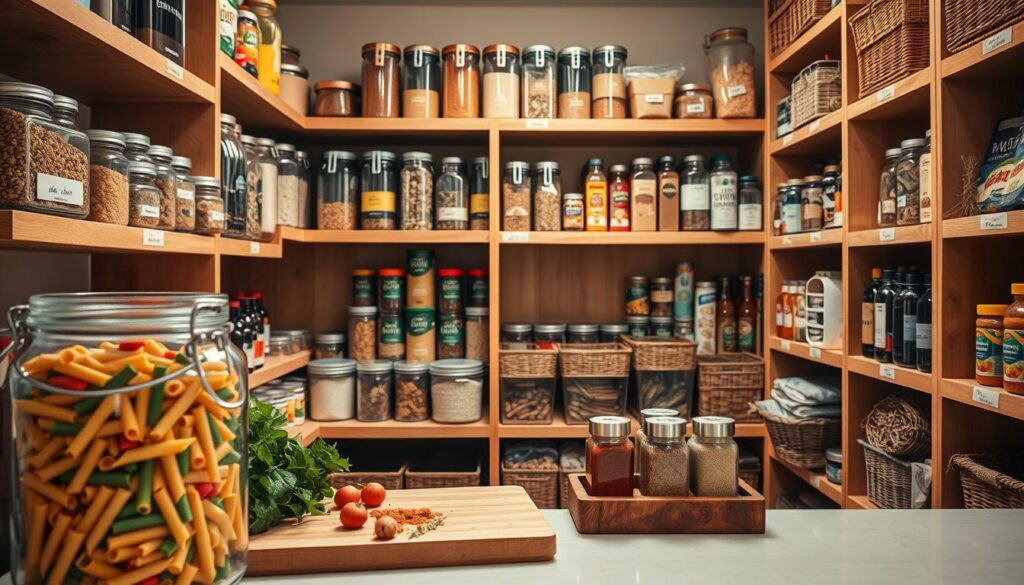
Measure your pantry cabinet like a designer
A few careful measurements turn guesswork into a plan that fits and lasts.
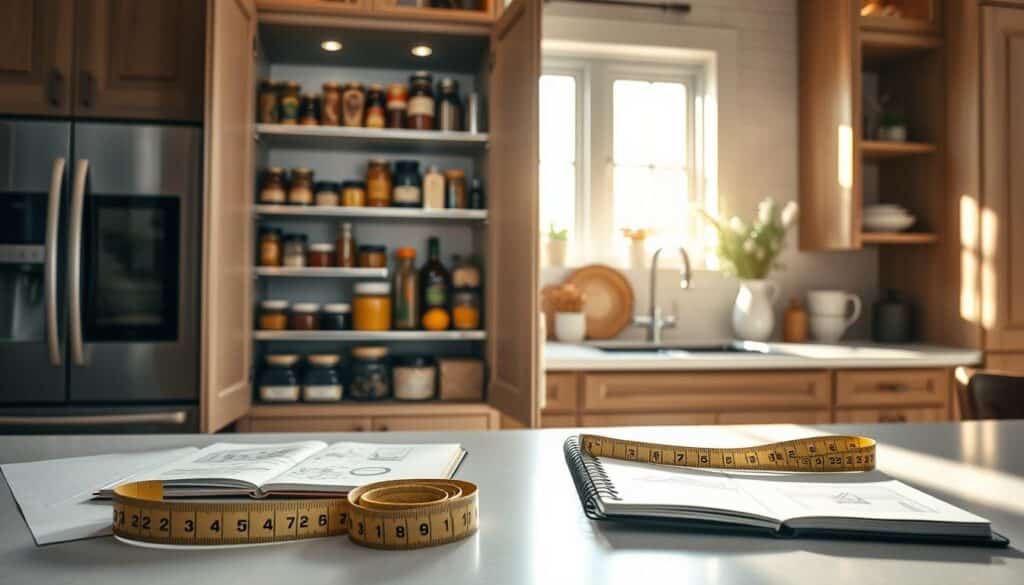
Capture shelf width, height, and usable inches between shelves
Measure each shelf width and shelf depth, then note the usable inches between shelves. Record the clear vertical space, not just the overall cabinet height.
Note door clearance for racks, bins, and jars
Check the door swing and measure the door frame so racks, bins, and jars won’t hit shelves or stop the door from closing.
Match container sizes to the foods you actually store
Choose containers that match cereal, pasta, rice, snacks, and baking staples. Consistent sizes create a calm look and use storage space well.
- Designer move: measuring prevents returns and frustration.
- Write measurements down and sketch each shelf layout.
- Confirm the tallest items you keep—oils, vinegar, boxes—have a dedicated spot; make sure they fit.
- Use matching containers to keep the pantry intentional and tidy.
Create zones that match how you cook and shop
A pantry organized by routine helps meals flow and shopping stay simple. We treat zones as a functional design strategy that supports how you live and work in the kitchen.
Sort by use so everyday snacks and staples stay at eye level
Place daily snacks and everyday items where hands reach first. Keeping snacks at eye level speeds prep and lowers spills during busy moments.
Dedicate each shelf to a purpose to reduce clutter
Assign a clear role to each shelf: baking, breakfast, meal helpers, or extras. When every shelf has a purpose, decision fatigue drops and putting groceries away takes seconds.
Keep beverages and bulk items in a defined “room” or section
Create a beverage room inside one area so heavy bottles don’t wander across shelves. Use one or two bins to hold drinks or bulk food together for easy restock and carry-out.
- Zones reflect how we cook, snack, and restock.
- Label shelves lightly to support lasting organization.
- Bin grouping prevents loose items from scattering.
Use vertical space to double your pantry cabinet storage
A few smart inserts let us create whole new shelves inside the same footprint. This approach increases usable vertical space without a remodel and keeps the cabinet tidy and intentional.
Add stackable shelf organizers to create extra layers
Use stackable organizers to split tall stacks into neat tiers. Boxes, plates, and canned goods stay stable and visible on divided shelves.
Install adjustable shelving for tall bottles, small packets, and pans
Adjustable shelving gives each group its own height so tall bottles and small packets don’t fight for room. Set one shelf lower to store pans flat without wasting vertical space.
Try under-shelf baskets for quick-grab snacks and packets
Under-shelf baskets free the main surface and keep snack packets within reach. They add a slim secondary shelf that keeps categories defined and tidy.
Go higher safely with a step stool for top shelves
Use a stable step stool so top shelves stay usable instead of becoming a dumping zone. Good reach tools preserve order and reduce wasted purchases.
- Designer principle: add structure, not clutter.
- Vertical upgrades create new storage without expanding the footprint.
- Better access means fewer expired items and easier restocking.
Make cabinet doors work harder with built-in storage
The inside of a door is one of the easiest spots to reclaim for smart storage. Installing purpose-built racks gives us more usable space and keeps the main shelves calm and tidy.
Add door organizers for spices, measuring cups, and small items
Door-mounted racks hold spice jars, measuring cups, and small jars that otherwise scatter across shelves. This move frees shelf room for larger boxes and bulk goods.
Use the back of the door for a vertical spice rack approach
A vertical spice rack on the door offers quick scanning and easy access while cooking. It uses vertical space efficiently and brings frequently used items to eye level.
Store cutting boards, lids, or wraps flat to free up shelf space
Flat carriers attached to doors keep boards, lids, and foil rolls neat and reachable. Check clearance so doors close without hitting protruding jars or tall items.
- Doors are prime real estate for lightweight items and transform wasted space into storage.
- Choose shallow organizers so the door closes smoothly and offers easy access.
- This is a high-ROI idea: more capacity with minimal cost and a clean, built-in look.
Turn shelves into drawers for easier access to the back
Turning fixed shelves into glide-out drawers changes how we reach every shelf. A simple retrofit makes the farthest row as easy to grab as the front.
Pull-out drawers to prevent “lost” items behind front rows
Pull-out drawers let us slide the shelf forward and see everything at once. For deep cabinets, this is a practical solution that cuts searching time and reduces waste.
Drawer dividers to stop bottles, cans, and bags from toppling
Use dividers to create neat lanes for bottles and cans. Dividers keep items upright and stop snack bags from slumping into a pile.
- Organize each drawer by category so restocking is fast.
- Choose drawer depth and side height based on what you store (cans vs. pouches vs. bags).
- Well-chosen drawers and dividers save time, reduce expired goods, and simplify refills.
Choose the right containers, bins, and baskets for food storage
The right mix of containers, bins, and baskets turns clutter into calm. We select types that protect food and create a repeatable structure so the shelf stays orderly week after week.
Pop-top airtight containers for dry goods you want to stack
Pop-top airtight containers keep flour, pasta, and cereal fresh and stack cleanly. They improve visibility, seal out pests, and create tidy lines on shelves so restocking is simple.
Open bins with handles for fast grab-and-go organization
Open bins with handles work well for kids’ snacks, breakfast bars, and baking packets. Pull the whole bin forward to grab items, carry them to the counter, and return them quickly.
Woven baskets to hide visual clutter while keeping categories together
Woven baskets soften the look of open shelving and hide mismatched packaging. Use them for single-use items or seasonal goods so the cabinet reads calm without losing access.
Flat, stackable containers to maximize shelf height
Flat stackable containers make the most of tight vertical gaps. They are ideal for grains, breadcrumbs, and bulky snack packs that otherwise waste usable inches.
- Two jobs: protect food and create a repeatable system.
- Label containers and keep a simple refill plan so organization stays useful.
- Choose sizes based on the foods you truly buy, not an idealized pantry.
Keep things visible without sacrificing a clean look
Seeing everything at a glance saves time and prevents repeat purchases. Good visibility is a purposeful strategy: when we scan shelves quickly, we use what we have and stop buying duplicates.
Choose glass doors or clear bins for quick scanning
Glass doors bring a refined look and make the pantry read like a curated display. They work best on upper or less-used sections where items stay tidy and aesthetic matters.
Clear bins deliver the same visibility inside a standard door or shelf. They keep packets and jars readable without hiding the contents behind solid fronts.
Face labels forward and group duplicates
Face labels so text is readable at eye level. This small habit makes the shelf behave like a neat store aisle and speeds up meal prep.
Store duplicates together so restocking feels automatic. Grouped items free up mental space and reduce impulse buys.
- Why it works: visibility reduces waste and saves money.
- Make sure the most-used categories sit in the clearest line of sight.
- Design tip: a clean look is about consistent rules, not perfection.
Use smart dividers and tension-rod hacks for awkward items
Flat, awkward pieces are some of the quickest ways to waste useful shelf space. They slide, stack poorly, and turn neat rows into toppled piles.
Tension rods to separate baking sheets, pans, and cutting boards
Install tension rods side-to-side to create instant slots for baking sheets and cutting boards. This simple trick keeps pans upright and easy to pull without unbalancing the whole stack.
Space the rods so items don’t pinch when removed. That prevents scratches and makes grabbing one pan quick and safe.
Vertical dividers for trays, bags, and boxed foods
Vertical dividers turn loose trays and boxed goods into tidy, visible lanes. Use them to hold bags upright and stop stacks from collapsing.
- Why it works: awkward flats become organized channels that save time.
- Plan divider placement from side-to-side so each slot fits the item you store.
- These low-cost solutions are fast to install, durable, and gentle on finishes.
Fix corner and deep-cabinet problems with rotating and pull-out solutions
A few rotating and sliding upgrades turn awkward corners into reliable reach zones. We treat these as simple design moves that improve daily flow without overbuilding the room.
Lazy Susans for condiments, jars, and small containers
Lazy Susans bring items at the center to the front so nothing disappears at the back. They are ideal for condiments, jars, and small containers that otherwise get buried.
Choose the right diameter and shelf clearance so bottles don’t tip. Use two tiers or divided trays to keep categories separate and tidy.
Narrow pull-out cabinets to unlock tight spaces in a small kitchen
Narrow pull-out units convert slim gaps into efficient reach zones. For a small kitchen, these pull-outs provide clear access to oils, baking supplies, and tall bottles.
They slide items forward so you no longer unload the front to reach the back. Match width and shelf depth to the containers you actually use, not a photographed ideal.
- Identify problem zones: corners and deep cabinets where items vanish.
- Choose rotation or slide: Lazy Susans for rounding access; pull-outs for linear reach.
- Size to fit: pick diameters, heights, and widths that prevent tipping and clutter.
- Daily payoff: faster prep, less waste, and a calmer pantry that feels bigger.
Add lighting so every shelf is easy to use
Dark shelves hide the best-laid plans; a small lighting upgrade makes everything visible and usable. We recommend lighting as a functional design upgrade—small change, big impact—consistent with American Home’s focus on beautiful, functional spaces.
Simple task lighting to reduce digging and double-buying
Better visibility increases usable storage because we can actually spot items and read labels from the front. That clarity prevents duplicate purchases and keeps food from expiring unseen.
- Choose battery or plug-in task lights to eliminate shadows on deep shelves.
- Place lights high and aim them toward the back so labels read clearly from the front.
- Use strips or puck lights with warm white LEDs for consistent color and low heat.
- Combine lighting with pull-outs and clear bins for true easy access, not just reach.
Tip: install switches or motion sensors so lights come on only when you need them. Good lighting is a low-effort upgrade that pays back in faster prep, fewer wasted items, and a calmer kitchen storage experience.
Keep the floor clear for a pantry cabinet that stays organized
A clear floor is the simplest trick that keeps a pantry tidy and safe. Bulky drinks, overflow cases, and loose bags are usually the first things to spill into the base area. That clutter creates a trip hazard and undoes careful shelf work.
Use bins for drinks and bulk items instead of loose bags and cases
Place beverages and bulk items into sturdy bins so each product has a defined room. Bins make carrying full cases easier and keep labels facing forward for quick grabs.
Maintain a “nothing loose on the floor” rule for long-term order
We follow a simple rule: nothing loose on the floor. Loose items multiply and create visual chaos fast. When everything belongs in a bin or on a shelf, monthly cleaning becomes a five-minute task.
- Why floors clutter: heavy bottles and overflow boxes get left down low.
- Bin benefit: preserves usable space and prevents cases from toppling.
- Cleaning payoff: a clear base speeds wipe-downs and monthly resets.
Make your system easy to maintain week after week
We build systems that survive the real pace of life: busy mornings, snack raids, and one-handed grocery stashes. A sustainable approach means choosing solutions you will actually keep using, not just admire for a day.
Choose organizers you can reset in seconds, not minutes
Pick simple organizers that slot back quickly. Open bins, labeled containers, and one-step baskets let everyone return items without thinking.
Plan for refills and keep backstock neatly contained
Designate a single back row or a high shelf for reserve boxes and extra packs. Keep a small, visible stash so backstock doesn’t wander and duplicates stay obvious.
Schedule a quick monthly reset to prevent overflow
Make a short checklist: toss expired food, wipe sticky spots, realign labels, and confirm zones still match routines. Repeat this in ten minutes each month to avoid big cleanups later.
- Maintenance-friendly rule: organizers should reset in seconds.
- Use drawers or pull-outs for high-turn items to prevent pushing goods to the back.
- Keep consistent containers so categories don’t drift and items remain visible.
When custom kitchen cabinet solutions make the most sense
When reach and visibility remain stubborn problems, a fitted design often clears the way. Custom work turns repeated frustrations into a tidy, usable plan that fits how you cook and live.
Signs you’ve outgrown off-the-shelf organizers
If overflow returns after every reset, or if tall bottles, odd boxes, and loose bags still claim prime shelf real estate, store-bought fixes are no longer enough.
Look for: recurring overflow, wasted vertical storage space, and items that remain hard to reach despite decluttering.
Design ideas that blend storage with kitchen flow
Custom-sized cubbies, integrated pull-outs, and purpose-built zones solve persistent access problems. Tailored shelving heights and dedicated drawers keep daily items where you need them.
- Fitted shelving tailored to your tallest bottles and boxes.
- Integrated drawers that slide out so back rows are usable.
- Purpose-built zones that align pantry storage with prep and cooking areas.
Custom doesn’t mean complex: it means intentional, easier to maintain, and designed to add lasting value. We bring practical design expertise so your kitchen cabinets look better and work harder every day.
Get expert kitchen storage guidance from American Home
Expert planning turns ideas into cabinets that suit real routines. We pair design experience with practical choices so your pantry and shelves work for how you cook and shop.
Customer-focused kitchen & bath design with over 60 years of combined experience
We listen first: how you shop, prep, and live determines shelving heights, pull-outs, door racks, and lighting. Our design team brings more than six decades of combined experience to every plan.
A one-stop shopping experience with American Home & American Flooring in Greater Lansing
Built to complement American Flooring, our showroom offers everything needed to realize a dream remodel. That one-stop approach saves time and ensures choices match across finishes and function.
Contact American Home
Ready to translate organization ideas into durable cabinet decisions? Call us at (517) 349-4690 or email info@americanhomekbdesign.com to schedule a design visit.
- What we offer: tailored kitchen storage solutions that balance form and function.
- Planning based on measuring, zoning, vertical use, pull-outs, door storage, and lighting.
- Designs that fit routines so the result stays tidy long after installation.
Conclusion
A clear plan lets every shelf and cabinet work together to support meal prep.
Start with a reset, measure with purpose, and build zones that match how you live. Use vertical layers and door solutions to reclaim unused space. Add pull-outs so items no longer get pushed to the back.
Keep visibility high with consistent faces and lighting, and make maintenance simple with a brief monthly reset. The best system is one people actually keep using: simple rules, repeatable spots, and easy access for daily use.
Upgrading a pantry or cabinet improves the whole kitchen: less clutter, fewer duplicates, and faster prep. When you’re ready to plan tailored solutions, we at American Home will help design cabinets and storage that fit your space and goals.