Can a tight kitchen feel generous without adding square footage? We ask this because every inch counts when layout limits move freely and cooking flow matters.
Storing up, not out transforms cramped counters into usable work zones and keeps items visible rather than forgotten. A few budget-friendly organizers and a simple system make daily cooking easier and safer.
At American Home, we combine 60+ years of combined design experience with one-stop shopping to help homeowners create beautiful, functional kitchens. We focus on practical design: faster access, less clutter, safer movement, and more usable work surfaces.
We’ll define what effective storage means in a small kitchen, show how vertical thinking and right-sized products beat random buys, and preview a step-by-step list: planning, vertical solutions, cabinets and drawers, counters and walls, pantry alternatives, sink and fridge zones, and when a layout upgrade makes sense.
If storage challenges point to a bigger design opportunity, call us at (517) 349-4690 or email info@americanhomekbdesign.com to get started.
Key Takeaways
- Think vertical to reclaim counter and floor space quickly.
- Choose products sized to your cabinets; measure before you buy.
- Make items visible and reachable to reduce clutter and wasted time.
- Small investments in organizers yield big daily benefits.
- When limits persist, professional design can reveal smarter layouts.
Small kitchen storage starts with a plan, not more stuff
Good kitchen planning begins with daily routines, not racks and baskets. We map how you cook, clean, and move so every inch of space works for you.
Identify “have-to” items and the only places they can fit
Start by listing bulky or frequently used items: large pans, mixer, baking sheets. Assign each item to the single place where it fits and is easiest to grab.
Store items close to where you use them most
Follow a simple proximity rule: cookware near the stove, towels by the cooking zone, cleaners under the sink. This reduces steps and keeps the kitchen calm.
Measure cabinet space, drawer depth, and counter space before buying organizers
Measure first: interior cabinet width/height, drawer depth, and usable counter space. The wrong organizer wastes room twice — by occupying space and forcing extra stacking.
- Map routines, not store aisles.
- Assign each big item one realistic place.
- Measure before you buy to avoid returns.
At American Home we use this planning-first method to protect workflows and sightlines while keeping design beautiful and functional.
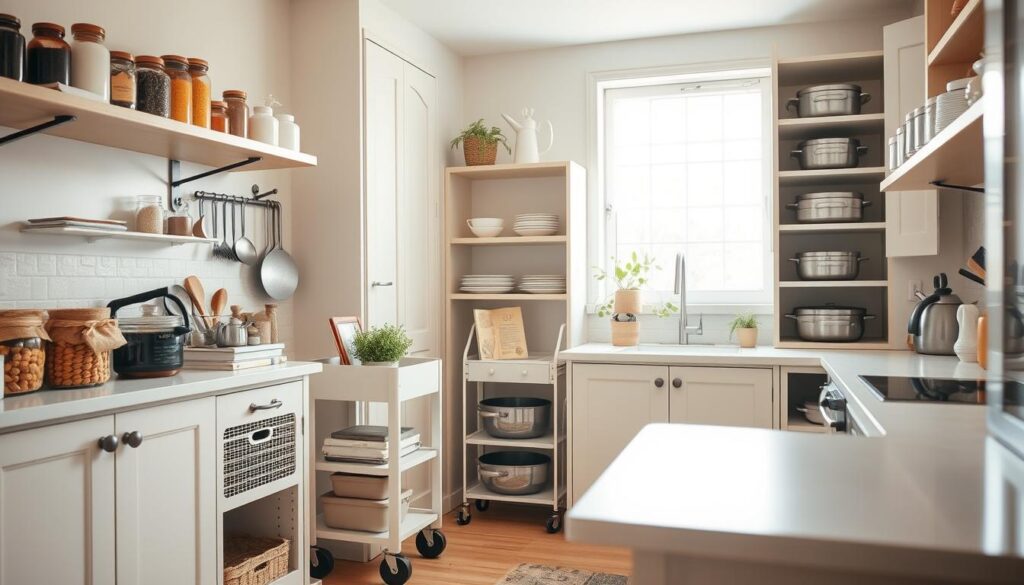
What are effective storage solutions for small kitchens that maximize vertical space?
Maximizing vertical space turns overlooked air above counters into usable, calm zones. We prefer small, reversible changes that raise storage rather than expand footprint.
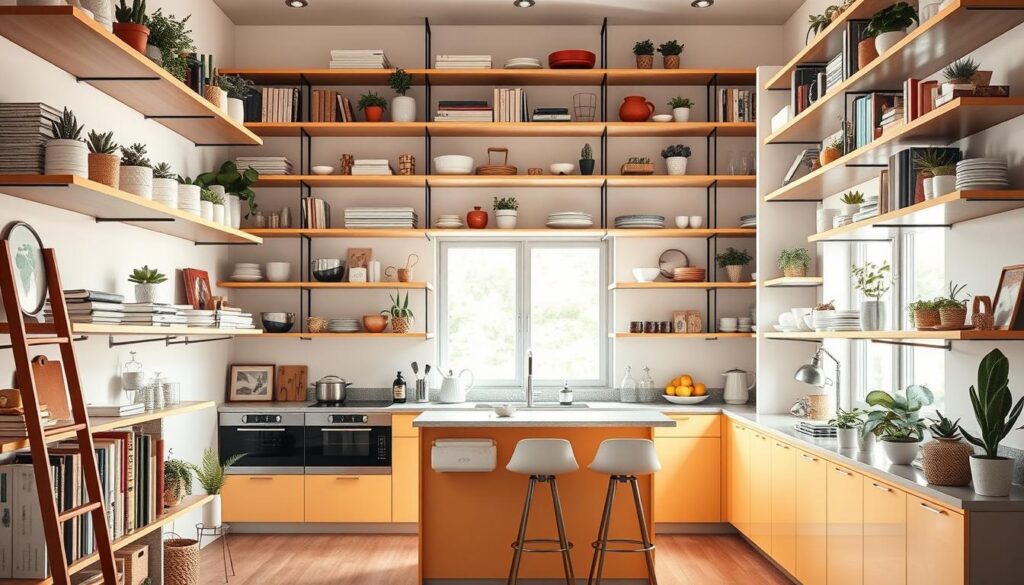
Use cabinet risers and tiered shelves to create a second level
Cabinet risers and tiered shelves double usable height with a clean, simple approach. They make plates, spices, and pantry items visible and easy to reach without extra stacking.
Add under-shelf baskets to capture wasted air space
Under-shelf baskets fit into the dead air inside cabinets and under open shelves. They hold light items and free up drawer and counter room fast.
Try over-appliance racks to store mugs and coffee supplies
Over-appliance racks create a tidy zone above microwaves or coffee machines. Measure appliance width and the space above it so vents stay clear and the rack fits comfortably.
- Best use: keep mugs and coffee supplies on the rack to free a cabinet.
- Tip: choose adjustable shelves when height varies.
- Design win: vertical choices open counters and make the kitchen feel larger.
Make cabinet space work harder with adjustable shelves and organizers
Cabinets can do more than hide clutter; they can present an organized, usable toolkit for daily cooking. We focus on changes that fit the cabinet and your workflow so opening a door feels like a calm, quick step in a recipe—not a scavenger hunt.
Pan shelf organizers stop unstable stacks. They create defined levels so pots and pans sit upright, visible, and easy to grab. That reduces noise, re-stacking, and time lost hunting for the right lid.
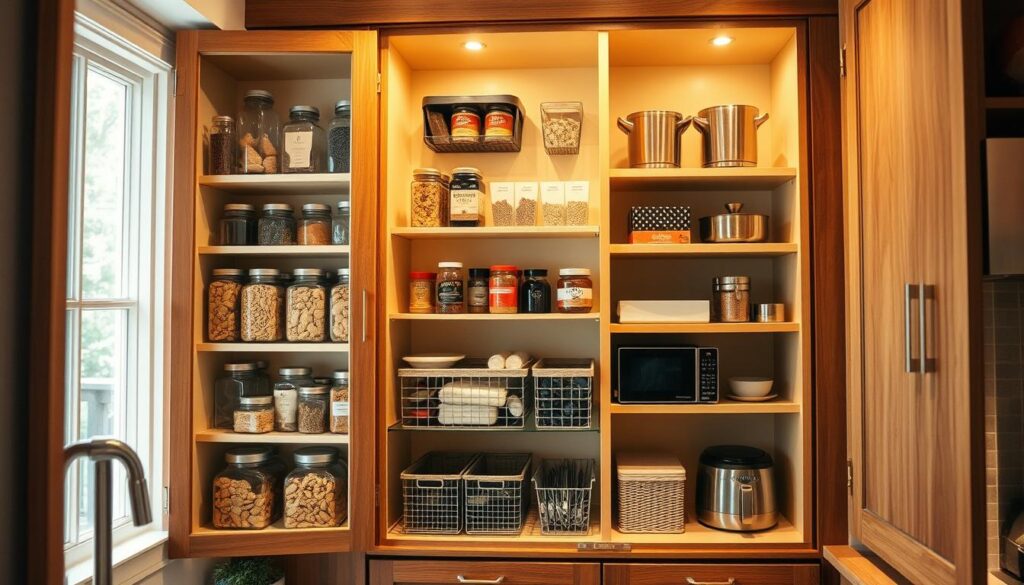
Extendable shelves for deep cabinets
Extendable shelves pull out to bring the back forward. For deep cabinets, this prevents wobble and makes heavy cookware reachable without bending or tipping.
- Decide top vs. bottom by weight and frequency: heavy, daily pots below; lids and light pans above.
- Measure cabinet height and handle clearance before buying any organizer.
- Adjustable units adapt to cabinet depth and protect your workflow while giving a premium, designed feel.
Turn cabinet doors into hidden storage space
We view the inside of a cabinet door as inexpensive real estate that works hard for you. With a few tidy additions, doors offer a neat, intentional place to stow daily tools and keep the main cabinet interior calm.
Self-adhesive hooks for measuring cups, spoons, and oven mitts
Self-adhesive hooks hold lightweight items like measuring cups, spoons, and oven mitts where you reach for them most. Use three hooks across a door to group sets by size and reduce drawer digging.
Tea towel holders to keep textiles off counters and out of drawers
Mount a tea towel holder inside a door to keep towels tidy and ready. This keeps the counter clear and prevents towels from ending up in random drawers or on worktops.
Door-mounted racks for cutting boards and flat items
Install a slim rack to store cutting boards and other flat boards vertically. This approach makes cutting prep faster, protects board edges, and frees shelf space.
- Place organizers high enough so towels allow doors to close.
- Choose adhesive rated for the cabinet surface and the items’ weight.
- Design payoff: door storage preserves interior cabinet order and keeps the kitchen feeling intentional.
Store pots, pans, and lids vertically for faster access
A simple shift from stacking to filing makes pots and pans instantly usable. This file, don’t pile approach reduces clutter, noise, and time spent hunting for the right piece.
Expandable pan-and-lid racks that “file” cookware like folders
Expandable racks let cookware stand upright so you slide one item out without disturbing the rest. Use a rack that adjusts to your largest pans to prevent tipping and rubbing.
Use dividers for baking sheets, pans, and cutting boards
Dividers work in a deep drawer or a tall cabinet. Place baking sheets, pans, and cutting boards on edge so each piece is visible and easy to grab.
- Keep everyday pots and pans nearest the cabinet opening for quick access.
- Space dividers to match your largest items so nothing wedges or falls.
- Design win: upright filing prolongs cookware life and makes the kitchen feel effortless.
Upgrade small kitchen drawers with smart dividers
Drawers often become catch-all zones that steal space and calm. We design systems so a drawer truly supports daily work instead of hiding clutter.
Expandable utensil organizers that fit different widths
Expandable trays adapt to the exact drawer width, so no gaps are wasted and trays stay steady. Adjustable dividers prevent the common problem of an organizer that doesn’t fit, keeping utensils upright and visible.
Dedicated zones for tools, gadgets, and everyday utensils
Zone a drawer into front and back areas: everyday utensils at the front, specialty tools grouped together, and less-used items tucked toward the back. This layout saves time because you grab what you need without searching.
- Everyday utensils front-and-center for quick access.
- Group similar tools and gadgets so items stay put.
- Weekly reset: spend two minutes returning each item to its home.
Design note: tidy drawers protect a calm, luxury feel. When everything has a place, the kitchen stays ready and you reclaim small moments of time.
Clear the counter by getting knives and tools off the wall
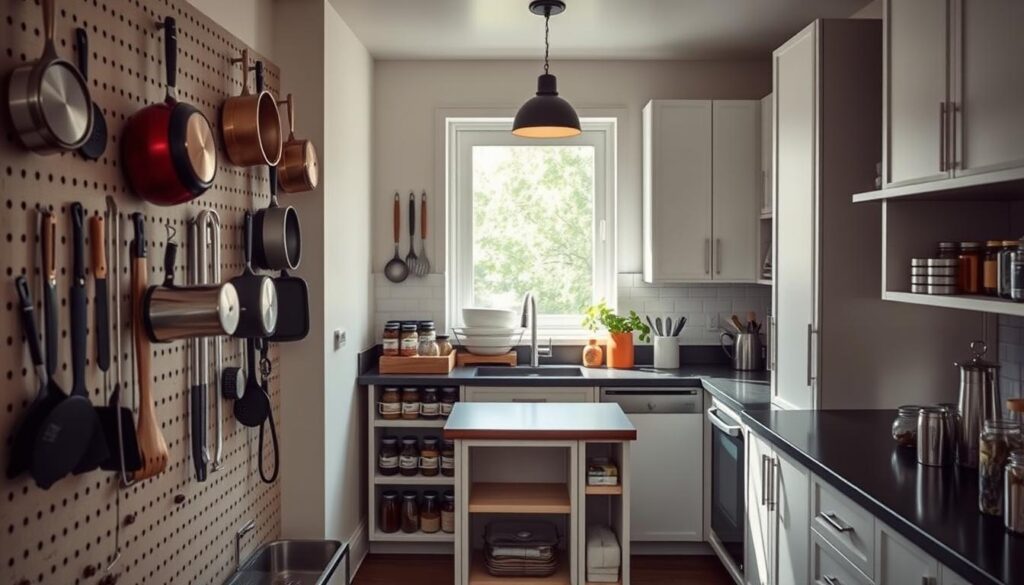
A tidy prep zone begins when we lift knives and frequent-use tools up from the counter and into view. This simple swap protects prep space and cuts visual clutter in a busy kitchen.
Magnetic knife strips replace bulky blocks with a slim, modern option. Mounted on the wall, a strip keeps blades visible and within reach while freeing valuable counter real estate.
Magnetic racks for metal utensils and small tools
Magnetic racks hold scissors, frequently used metal items, and other tools so they sit where you work. A single rack near the stove or prep zone keeps the most-used pieces close at hand.
- Why it matters: clearing the counter increases usable prep space and reduces spills.
- Safety tip: mount magnets out of children’s reach and away from hot surfaces.
- Design bonus: a curated group of tools on the wall reads like art, not clutter.
Create pantry storage even if you don’t have a pantry
You can create pantry-like order inside a single cabinet with a few smart choices. A small, system-based approach keeps food visible, reduces waste, and makes the kitchen feel intentional.
Turn one cabinet into a dedicated food zone
Pick one or two cabinets and assign categories: baking, snacks, breakfast, and weeknight cooking. Labeling helps everyone return items to the right place.
Use clear bins as pull-out drawers
Clear bins act like shallow drawers inside cabinets so you can reach the back without unloading the front. They prevent goods from getting lost and speed up restocking.
Choose stackable, square containers and tiered spice organizers
Stackable, square containers pack more food into the same space and create clean sightlines. Use matching containers to track quantities and reduce waste.
Tiered spice organizers make jars visible at a glance. They save time and cut down on duplicate purchases.
Two-tier turntables and a simple category map
A two-tier Lazy Susan captures vertical room for condiments and small items. A quick spin reveals what you need.
- Baking: flours, sugars, leaveners.
- Snacks: grab-and-go packs.
- Breakfast: oats, cereals, spreads.
- Weeknight cooking: canned goods and sauces.
Use narrow gaps and awkward corners with slim rolling carts
Narrow gaps beside a fridge or range often hide a high-value chance to add usable space. A slim rolling cart fits a 5-7 inch opening and acts like a compact pantry on wheels.
Store oils, vinegar, spices, and canned goods in a tight slot
What to keep: oils, vinegar, spice jars, and a few canned items stay close at hand but off the counter. This keeps the main work surface clear while the cart serves as a mini pantry.
Pick a cart that pulls easily and tucks away
Choose smooth casters so the cart slides out during cooking without effort. Aim for a model with firm rails so it glides straight and returns flush to the gap.
- Stability tip: place heavier bottles on the bottom tier.
- Group similar items so the cart never becomes a “junk shelf.”
- Sliding the cart out of sight keeps the kitchen cleaner while adding useful room.
Make the sink area do double duty without losing room
The sink zone can become a high-performance workbench when we add flexible, tucked-away tools. In a tight kitchen, that area often offers the best chance to expand usable space without crowding the countertop.
Over-the-sink roll-up drying racks create a temporary drying platform that disappears when you need the counter. Many roll-up racks fold into a compact tube that fits into a drawer so the basin gains a functional top and the counter stays clear between meals.
Heat-resistant racks that do more than dry
Stainless versions rated to 400°F double as a trivet and a cooling surface. Pull one across the sink to protect a wood counter or to cool a hot pan without hunting for extra room.
Measure so the rack sits secure
Measure the sink width and rim depth before buying. A properly sized rack should rest evenly and not wobble when you set a heavy pot on it. This simple step prevents slips and preserves the refined feel we aim for in design.
- Why this matters: multi-use sink tools keep the kitchen agile and uncluttered.
- Store smart: roll-ups tuck into a drawer for a clean look after use.
- Design payoff: flexible pieces make the room feel capable, not cramped.
Choose collapsible and nesting kitchen tools to free up storage space
A thoughtful edit of what you own often yields more usable shelf space than a new organizer. We recommend swapping rigid pieces for collapsible versions and nesting sets so the cabinet holds what you need without crowding.
Collapsible colanders, bowls, and steamers that flatten when stored
Collapsible colanders and steamers compress flat and reclaim vertical shelf room. Choose silicone with a rigid rim so they pop open easily and clean without trapping food.
Nesting mixing bowls and stackable sets to reduce clutter
Nesting mixing bowls and stackable containers cut the number of visible items and keep counters calm. Match sizes so each piece fits the next and the set occupies minimal space.
- Selection tips: favor durability and easy cleaning.
- Verify collapsed size fits your cabinet depth before buying.
- This swap saves storage over time and reduces the urge to buy duplicate ones.
Smart, long-term choices in kitchen tools let us keep essential items at hand while preserving precious storage space and time during meal prep.
Keep countertops functional with intentional “drop zones”
A clear counter invites cooking—intentional zones keep that clarity all day. We define a “drop zone” as a small, deliberate area where daily items live so the rest of the counter stays open for prep and serving.
Use a tray to corral daily items: place oils, salt, a coffee setup, or your keys on a single tray. A tray makes the group feel curated and easy to move when you need counter space.
Trays speed cleaning because you lift one object instead of moving many. They also create a tidy visual anchor that elevates the kitchen’s look while keeping essentials at hand.
Limit countertop appliances to those you use weekly. Store extras in cabinets or on higher shelves so the counter remains an active workspace, not a showcase for rarely used machines.
- Define one small drop zone for daily items so the rest of the counter space stays clear.
- Choose a shallow tray that fits the counter depth to avoid crowding your prep area.
- Adopt a “store up, not out” habit: move appliances into vertical storage when not in use.
Organize under the sink so supplies stop taking over
The space beneath the sink often hides more chaos than plumbing. Pipes and uneven shelves make usable room limited, and small bottles slip to the back. Left unchecked, this area becomes a daily frustration.
We recommend a reliable setup that feels professional, not temporary. Start with sliding or pull-out organizers so cleaners and spray bottles stay visible and reachable. Pull-outs bring the back forward and cut the bending and rummaging that wastes time.
Group by task and keep textiles tidy
Group items by task: dishwashing, surface cleaners, and trash-bin supplies. Use small baskets or trays on the pull-out to keep similar items together. This makes restocking quick and predictable.
Hang cloths inside the door using simple hooks so towels dry and don’t end up in drawers. A few hooks create a neat, accessible place for rags and gloves without crowding the main shelf.
- Why it works: visibility reduces duplicates and wasted space.
- Place heavier bottles at the front for balance and safety.
- Safety note: store harsh cleaners separated and secured away from food or soft items.
Make a small fridge feel bigger with zones and bins
Smart zoning turns fridge chaos into a clear, usable system that saves time and reduces waste. We group like items so you stop searching and start retrieving.
Create zones for like items so food is easier to find
Pick three to five zones and keep them consistent. Example zones: breakfast, leftovers, produce, cheeses and condiments, plus ready-to-grab snacks.
Each zone should hold related food so the eye tracks quickly. This simple map makes the fridge behave like a small pantry.
Use a few bins strategically without crowding shelves
Choose shallow bins that fit shelf depth and leave air space for proper cooling. Use only a couple per shelf so visibility and airflow stay intact.
- Why it works: grouping small items prevents jars and packets from getting lost.
- Bins speed restocking after grocery day and keep open shelf space.
- Quick routine: reset zones once a week so the system holds over time.
When items have a clear home, the fridge feels larger and the storage works harder. We prefer calm, practical changes that keep the kitchen efficient and reduce food waste.
When to consider a custom cabinet or kitchen layout upgrade
When clever organizers stop helping, the kitchen’s layout usually signals it’s time for a deeper change. You can spot the tipping point by watching how the room performs during real use.
Signs your current ideas can’t overcome layout limits
Hard signs: counters stay crowded, deep cabinets hide items, and zones for cookware or pantry staples never fall into place. If small fixes feel temporary, the plan—not the products—is the constraint.
How expert design adds storage without expanding space
Design-level changes rework cabinet layout, introduce adjustable shelves, and reclaim unused vertical space. We focus on cabinet configurations and access features that cut steps and save time.
- Reconfigure tall cabinets to serve as a true pantry.
- Add pull-outs, tilt-out trays, and deeper but reachable shelves.
- Match storage location to daily routines so the right ones sit closest.
Partner with us: American Home brings 60+ years of combined design experience and one-stop shopping alongside American Flooring. Call (517) 349-4690 or email info@americanhomekbdesign.com to discuss cabinet options and a layout plan tailored to your home.
Conclusion
A clear plan lets every inch of your kitchen work harder and feel larger. Start by mapping routines, then choose vertical shelves, door hooks, drawer dividers, and pantry-style bins that match your measurements.
Small kitchen storage wins come from matched tools, not more stuff. File cookware upright, use cabinet doors, and pick organizers sized to your exact space to avoid wasted room.
If tweaks still leave counters crowded, decide between continued optimization and a layout upgrade. We help you weigh quick fixes against cabinet or design changes that add lasting value.
At American Home, we guide homeowners toward beautiful, functional kitchens. Call (517) 349-4690 or email info@americanhomekbdesign.com to get started — we save you time and deliver better space.