Could a small change in your kitchen hardware make the whole room feel calmer and more expensive?
We open with a problem every homeowner knows: doors and drawers that slam and rattle through daily life. Soft-close systems use a simple mechanism that catches a door or drawer near the end of travel and guides it to a gentle, controlled close.
At American Home, we see this feature transform how cabinetry feels. It adds quiet, reduces wear, and gives a premium touch without a full remodel. This buyer’s guide will walk through how the hardware works, cost considerations in the United States, upgrade options, and what to prioritize for real life.
Key Takeaways
- Quiet hardware improves daily life in busy households.
- Soft-closing mechanisms protect doors and drawers from damage.
- Upgrading existing units is often possible and cost-effective.
- Consider function, budget, and long-term value when choosing features.
- American Home helps pair design with practical decisions for your kitchen and home.
Soft-close cabinets explained for today’s kitchens and bathrooms
Quiet, controlled closing is one of those upgrades you notice the moment you start using it.
In plain terms: cabinet doors and drawers move as normal, then a built-in hydraulic or damper mechanism slows the final inches so they finish gently and without a slam.
This matters during morning prep, late-night cleanups, and busy family routines. In a kitchen or bathroom, quieter finishes reduce disruption and protect fragile items.
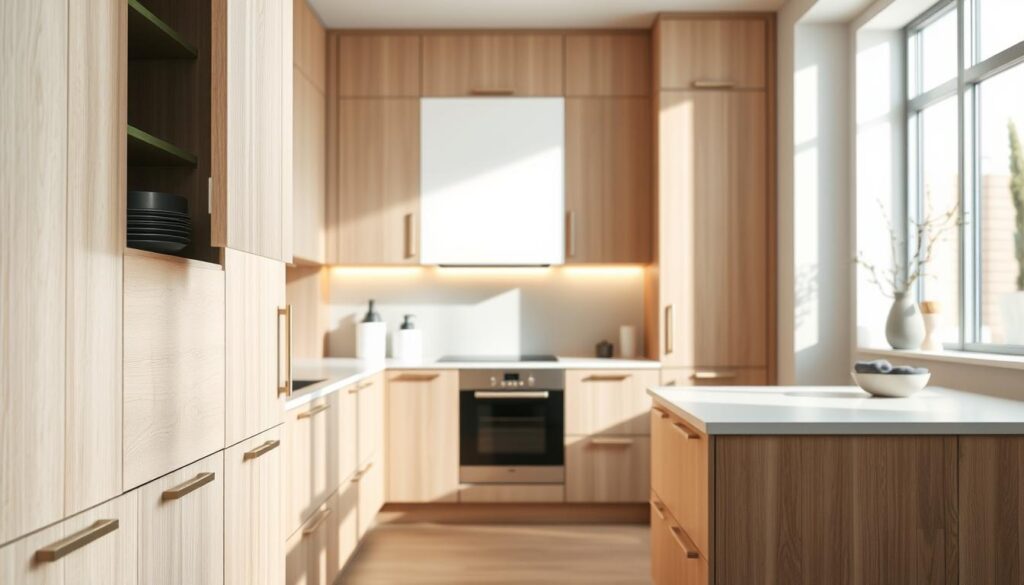
- Applies to both doors and drawers — homeowners often choose the full-room upgrade for consistent feel.
- Feels like a luxury: reduced noise, smoother motion, and a more intentional design experience.
- Practical convenience: fewer re-closes, less bouncing, and fewer accidental slams when hands are full.
The key difference isn’t thicker panels or heavier knobs. It lives inside the hinge or slide. In the next section we’ll look at the hardware that makes the quiet finish possible.
How soft-close mechanisms work inside hinges and drawer slides
The hidden system inside hinges and slides turns abrupt pushes into smooth, controlled motion. We’ll walk through the parts that do the work and why they matter for long-term durability.
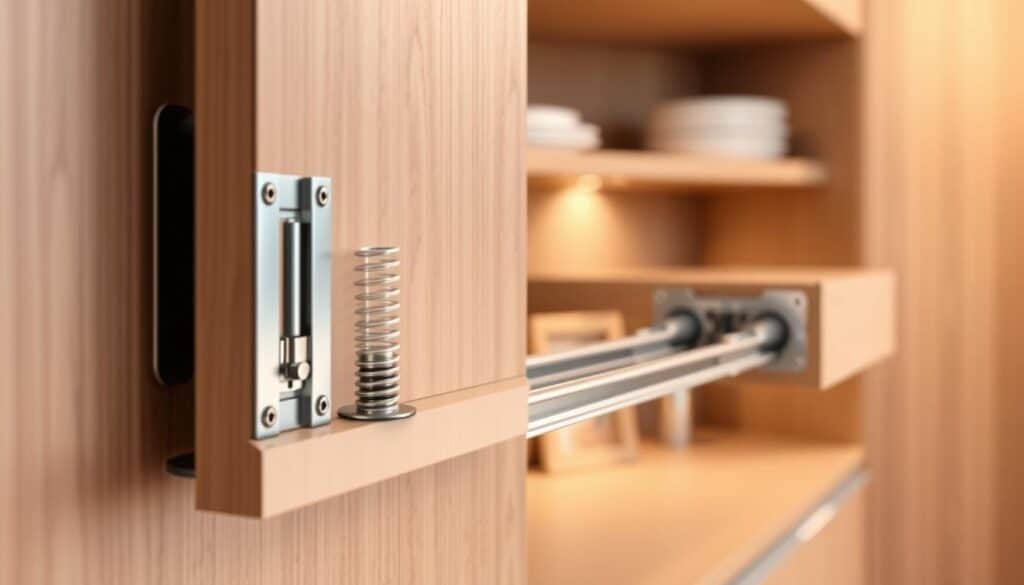
Hydraulic dampers that slow closing and prevent slamming
Hydraulic dampers act like a built-in shock absorber. Fluid-filled chambers convert sudden motion into steady resistance, reducing impact on the cabinet box and hardware.
Springs that guide alignment and pull doors fully closed
Springs add tension and pull-in force. They help doors and drawers seat correctly so nothing stays ajar and edges don’t catch.
Integrated hardware types
Homeowners commonly see concealed hinges for doors and soft-close drawer glides for drawers. Choice of hardware affects performance: weight ratings, door size, and drawer load all matter.
Soft-close versus self-close
Soft-close mechanisms cushion the final inches for a quiet finish. Self-close mainly pulls a panel shut without the same damped, silent effect.
- Less slamming means less long-term damage and fewer loose screws.
- Proper selection and installation determine whether the mechanism feels smooth or sticky.
What are soft-close cabinets, and are they beneficial for homeowners?
A subtle tweak to drawer and door hardware often delivers an outsized boost to daily comfort.
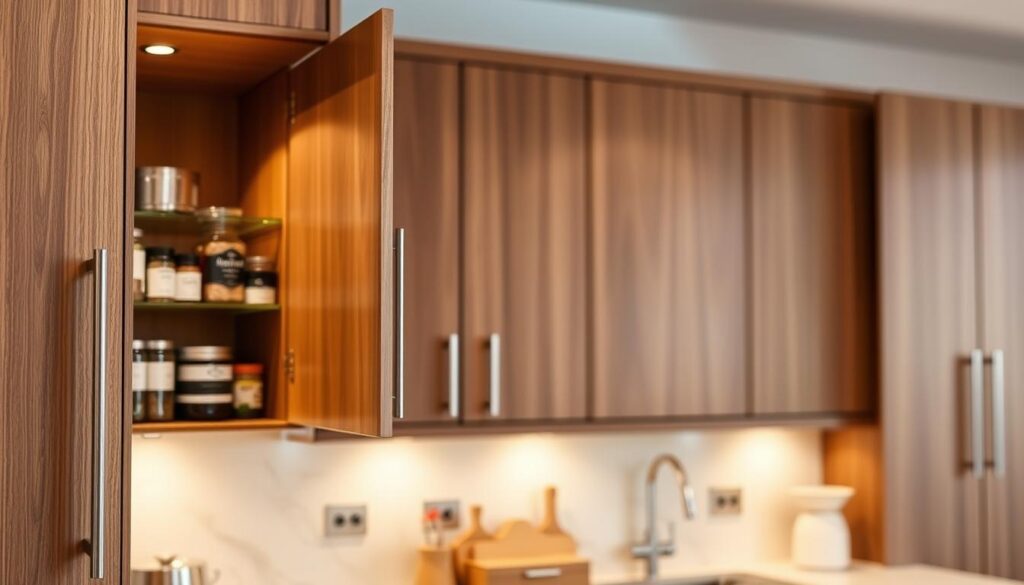
Who benefits most: families, light sleepers, and open-plan living
Homeowners with busy kitchens and open layouts notice the change fastest. In an open-concept home, sound travels into living areas and bedrooms.
Families with children gain a safety edge: slower motion lowers the chance of pinched fingers during hectic moments.
Light sleepers appreciate the peace quiet that keeps late-night snack trips from waking others.
When the upgrade matters in daily use
Soft-close gear shows value during meal prep, dish unloading, and entertaining when doors and drawers open repeatedly.
- Practical benefits: fewer slams, less wear, and smoother daily handling.
- Safety: reduced pinching risk for small hands in tight pathways.
- Investment value: a modest upgrade that can raise perceived room quality and resale appeal.
In short, soft-close cabinets fit homeowners who value quiet, safety, and long-term value. Whether cabinets worth the cost depends on hardware quality, installation, and how often the kitchen is used.
Key benefits of soft-close cabinets
Small hardware choices can change how a kitchen sounds and feels every day. We see the biggest benefits as a package: quieter rooms, safer operation, and longer-lasting finishes.
Peace and quieter rooms
Peace comes from reduced slamming; lower noise helps open-plan homes stay calm during prep or late-night snacks. That peace quiet is immediate and noticeable.
Safety for busy households
Safety shows up when doors slow before closing. Slower motion lowers the chance small fingers get pinched, which matters most in family kitchens.
Less impact, longer life
Reduced impact means less wear on hinges, screws, and door edges. That lower damage rate improves durability over years of use.
- Protection for contents: dishes and glassware rattle less, reducing chips and breakage.
- Perceived value: smooth closure reads as subtle luxury, supporting resale value when paired with quality design.
- Combined benefits: quiet plus safety plus durability deliver the kind of everyday improvement homeowners notice first.
Potential downsides to consider before you buy
Before you commit, it helps to weigh practical trade-offs alongside the perks.
Higher upfront cost: Quality hardware and premium hinges cost more than basic options. That higher price is part of the investment when upgrading a full kitchen suite.
Installation and adjustment: Small alignment errors change closing feel. Tight or loose fit makes doors stiff, uneven, or inconsistent. Fine-tuning is common as pieces settle; usually simple screw adjustments fix this over time.
Maintenance and longevity: Moving parts collect dust and grease, which can speed wear. Lower-grade mechanisms may need replacement sooner, causing extra service time and expense.
- Preference: Some people dislike slower motion or extra resistance during fast tasks.
- Damage risk: Poorly matched hardware can stress frames and cause finish issues.
- Value lens: Paying more makes sense when quiet, safety, and durability matter most.
We design selections to avoid fussy performance. When chosen and installed well, the benefits usually outweigh these trade-offs.
Soft-close vs standard cabinets: what changes in real-world use
The way a door finishes its travel tells you a lot about quality and thought in a kitchen. We compare everyday outcomes so homeowners can picture the difference before choosing hardware or a full cabinetry upgrade.
Noise, durability, and convenience compared side by side
Noise: Standard cabinets often slam when pushed. That echo fills open-plan living during early mornings and late nights.
Durability: Repeated impact stresses hinges and wears edges. Soft-close cabinets reduce that force, preserving alignment and drawer slide performance.
Convenience: Controlled closing cuts bounce and accidental re-opens. It makes busy kitchens easier to use when hands are full.
What “premium cabinetry” signals through hardware and design
- Consistent reveals and smooth operation signal purposeful design.
- Quality hardware matched to cabinet build shows long-term value.
- When kitchen cabinets and hardware work as a system, the room feels intentional and closer to luxury.
Installation matters: careful hinge adjustment and matching parts to door weight make the improvement last. We recommend choosing components that fit your kitchen traffic and design goals.
How much soft-close cabinets cost in the United States
Knowing hinge and slide prices lets you plan upgrades by priority and room. We break costs into simple units so you can compare options fast.
Typical hinge price ranges and what they mean for a full kitchen
Standard hinges run about $2–$3 each. Soft-close hinges typically cost $5–$8 each. For example, 20 hinges at standard prices total roughly $40–$60 versus $100–$160 for soft-close.
Why the number of doors and drawers drives total cost
Each door needs a hinge. Drawers usually require a full slide set, which raises the price per opening. More openings mean higher totals, so count doors and drawers before you buy.
Budgeting for kitchens vs bathrooms and high-traffic rooms
Kitchen upgrades often cost more because kitchens have many openings. Bathrooms usually have fewer pieces, so upgrades give strong value for less money.
- Priority strategy: focus on busy zones first—dish storage, trash pull-outs, daily-use drawers.
- Room choices: add hardware where time savings and quiet matter most, like mudrooms and laundry.
- Investment note: weigh upfront cost against longevity, daily comfort, and resale value.
Can you add soft-close hardware to existing cabinets?
A retrofit can quiet noisy doors and drawers in a single afternoon with the right parts and a little patience.
Retrofitting options for cabinet doors
Many cabinet door upgrades start by swapping out old hinges for soft-close versions when the mounting pattern matches.
If hinge holes differ, we recommend adding small dampers that catch the panel near the end of travel. This gives a quieter finish without changing face frames.
Retrofitting options for drawers
For drawers, replacing slides with soft-close drawer sets is the most reliable path to smooth motion.
Some slide systems accept retrofit dampers; others require full slide replacement to get consistent performance.
DIY vs hiring a pro: time, tools, and best-fit scenarios
DIY is often feasible for handy homeowners. Typical tools include a drill/driver, screwdriver, tape measure, and sometimes a 35mm Euro hinge bit.
Most single-door or drawer swaps take a few hours; a full kitchen may take several weekends depending on scale and our available time.
- When to DIY: boxes square, doors in good shape, basic tools on hand.
- When to hire a pro: misaligned frames, mixed hinge types, or when time is tight.
- Best practice: avoid mixing hinge types on the same door to prevent uneven stress and closing behavior.
With careful selection and fitting, a retrofit delivers most day-to-day benefit. We focus on matching parts to the cabinet build to preserve convenience, function, and long-term performance in the kitchen.
What to look for when choosing soft-close cabinetry and hardware
Good design starts with parts that perform: well-made mechanisms and sturdy cabinet materials shape everyday use.
Hardware quality and brand reliability for years of use
Choose hardware with a proven cycle life, consistent soft close action, and clear warranty terms. We look for tested hinges and slides that hold up under heavy kitchen traffic.
Cabinet materials that impact durability and value
Solid wood and quality plywood resist moisture and warping better than cheaper engineered board. That stability improves durability and long-term value in both kitchen and bathroom environments.
Design considerations for kitchens and bathrooms: style, function, and space
Match door style and drawer layout to how you cook, clean, and entertain. Plan storage so every inch of space earns its place and keeps daily routines smooth.
Installation quality: alignment, adjustability, and consistent performance
Installation is the make-or-break step: precise alignment and adjustable hardware ensure even gaps and reliable closing across the run. We combine expert design guidance with experienced installers so your cabinetry looks cohesive and performs for years.
- How we evaluate hardware: steady action, strong cycle life, and reliable performance.
- Material advice: choose wood or plywood for longevity; pick finishes suited for moisture in bathrooms.
- Design to function: prioritize kitchens first for heavy use, then bathrooms for moisture protection.
Where soft-close cabinets make the biggest impact beyond the kitchen
Across the home, quiet hardware makes routine tasks feel more considered and less disruptive.
These upgrades fit many spaces. They reduce noise, limit wear, and boost perceived durability over years. We recommend thinking by use: where doors open most often, the payoff is biggest.
Bathroom vanities for quieter mornings and longer life
In the bathroom, soft-close cabinets calm busy mornings. A gentle finish keeps early routines peaceful for light sleepers.
Durability matters here: moisture accelerates wear, so choose durable construction plus reliable hardware to protect the vanity for years.
Home offices, laundry rooms, and closets: everyday convenience
Home offices gain a quieter backdrop for calls and focus time. Laundry rooms and closets benefit from high-frequency use where quick open and close actions add up.
Prioritize spaces by noise and use. If budget is tight, start where repetitive motion causes the most wear.
- Consistency across rooms creates a refined feel without a full remodel.
- Bathroom and kitchen bathroom zones need moisture-resistant builds.
- High-traffic spaces repay investment in both function and style.
Conclusion
A well‑matched set of hinges and slides can lift a room’s feel without a full remodel. The mechanical blend of dampers and springs turns rough slams into quiet, controlled closing. This change protects a cabinet finish, reduces damage, and keeps drawers and door motion smooth for years.
Benefits include less noise, improved safety for small hands, and a subtle luxury that adds long‑term value. Downsides are higher upfront cost, the need for proper installation, and occasional part replacement over time.
If your kitchen sees heavy use or you plan a long renovation, this investment often pays off. We guide design, choose matching hardware, and handle installation so the result works as a system.
Contact American Home at (517) 349-4690 or info@americanhomekbdesign.com to discuss kitchen cabinets, bathroom cabinetry, and the right soft-close options for your home.