Have you ever picked a vanity that looked flawless at installation but failed within a few years?
We answer that question up front so you can invest with confidence, not hope. At American Home, we guide homeowners toward solutions that blend strong performance with lasting style.
Vanity units face constant water, humidity, cleaners, and daily wear. Durability comes from the right mix of cabinet materials, topcoats, edge sealing, and tight seams. A poor choice can fail in about five years; the correct system can last decades.
In this guide we preview major surface groups: paint and enamel systems, catalyzed clear coats, laminates and foils, real wood with protective topcoats, and metal options. We’ll explain how use patterns affect the best pick and what to prioritize when balancing look and long-term performance.
Our approach at American Home blends practical performance with inspired design so your space looks great and works flawlessly for years.
Key Takeaways
- Choose a finish as part of a system: material + coating + sealing.
- Match the surface choice to how the sink area is used daily.
- Catalyzed clear coats and well-sealed wood often outlast simple paints.
- Edge sealing and seam protection prevent most common failures.
- We balance durability with design so your home feels both beautiful and functional.
Bathroom conditions that destroy vanity finishes over time
Every day a vanity faces a relentless mix of steam, splashes, and styling tools that quietly shorten its life. We’ll walk through the real bathroom stresses so you can plan smart maintenance and pick the right materials.
Moisture, humidity, and standing water around sinks
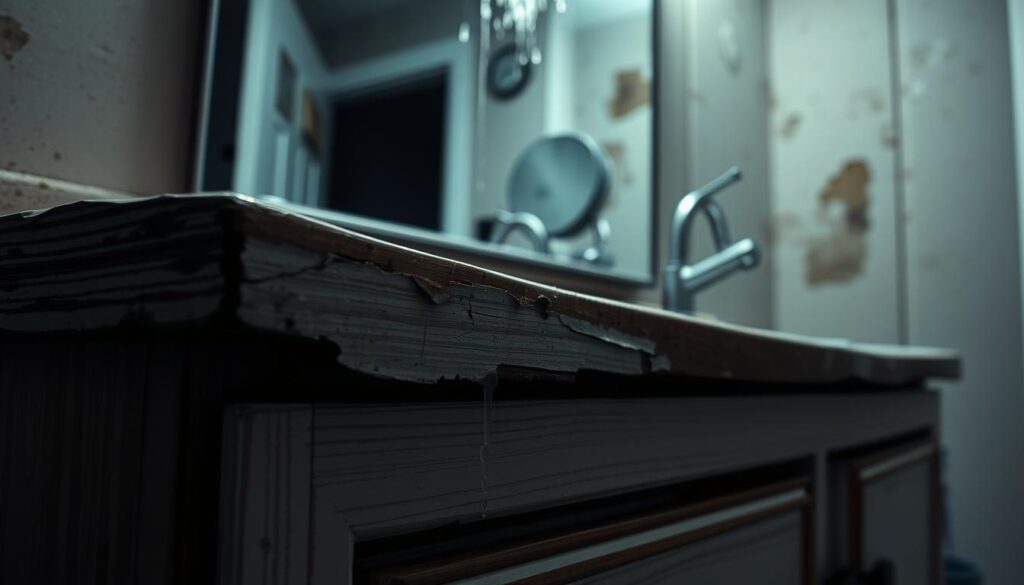
Humidity and pooled water drive swelling, warping, and seam failures. Water that sits at the faucet base or along the backsplash finds seams and pinholes first.
Once water penetrates laminate or unsealed edges, delamination accelerates—especially in chipboard and standard MDF.
Heat from styling tools and steam
Repeated heating and cooling cycles stress coatings and soften some top layers. Over time, corners and edges show wear as coatings fatigue under heat.
Cleaning products, abrasion, and daily wear
Abrasive pads, gritty cleaners, and harsh chemicals dull sheen and thin protective layers. Soap scum, cosmetics, and hard-water deposits create stains that invite rough scrubbing, which speeds abrasion.
- Humid air after showers shortens surface life.
- Standing water attacks seams and cutouts first.
- Poor cleaning habits remove protection over years.
Resistance isn’t marketing: it’s what keeps a bathroom vanity looking crisp over time.
What “durable” means for a bathroom vanity finish in today’s homes
A truly long-lasting vanity finish protects edges and hides daily messes, not just looks good on opening day. Durable means a surface that handles water, resists swelling at cut edges, avoids peeling, and stays simple to clean without constant care.
Cabinet finish durability vs. countertop surface durability
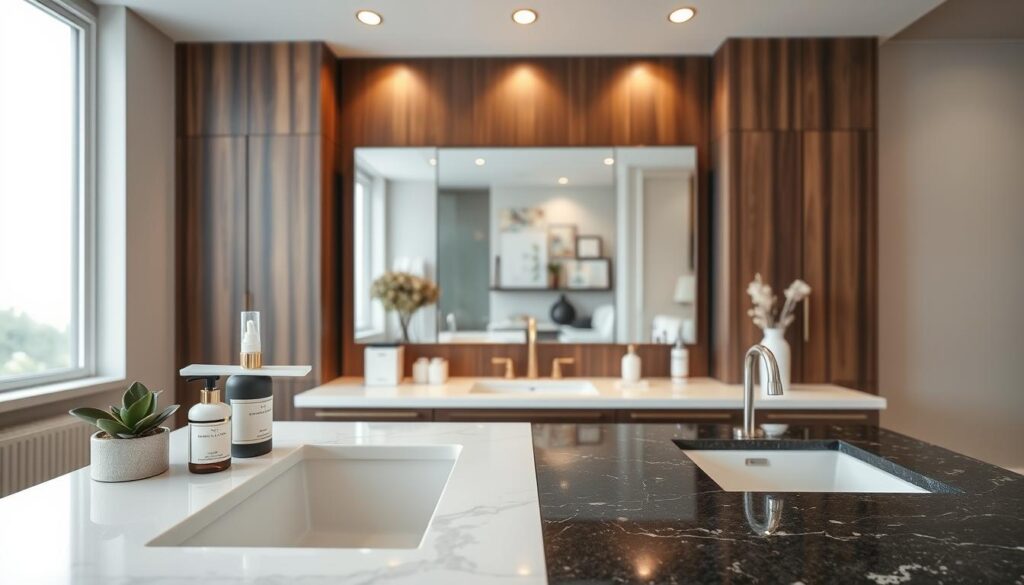
Cabinet boxes and tops face different threats. A sturdy countertop may resist stains and heat, yet a weak cabinet will fail first if seams or edges let moisture in.
Never assume one high-performance surface protects another: choose both with compatible materials and sealing.
Non-porous surfaces and sealed edges
Non-porous surfaces block water penetration, reduce staining, and simplify cleaning—quartz is a prime example and needs no sealing. In contrast, many stones and woods must be resealed to stay protected.
The real failure point is seams and unsealed edges. Where two materials meet, water finds gaps and begins swelling, delamination, or peeling.
Balancing durability with look and design
Durability should match how you use the space. A busy family bathroom calls for tougher, low-maintenance options. A guest powder room can favor a delicate look if you accept more upkeep.
- Match material choices to ventilation and daily use.
- Prioritize sealed edges and quality seams over trendy surface appearance.
- Pick a finish that fits your style while meeting practical needs.
What are the most durable finishes for bathroom vanities
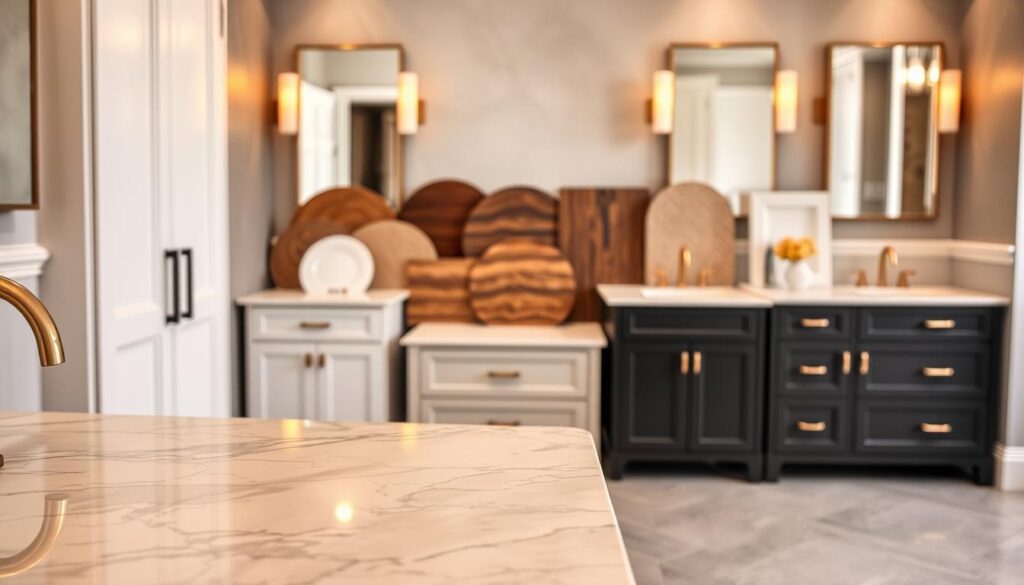
A smart finish choice starts with how a sink area is used every day and what hazards it will face. We organize four clear directions so you can pick the right bathroom vanity with confidence.
Best overall: moisture resistance and low maintenance
Non-porous surfaces and factory-applied topcoats lead here. Engineered quartz tops, stainless-steel faces, and catalyzed clear coats on sealed boxes resist water and need little maintenance.
Best for busy family bathrooms
Choose impact-tolerant laminates, powder-coated metal, or thermoform systems with reinforced edges. These options stand up to frequent cleaning, splashes, and kids without showing wear fast.
Best for luxury appearance with long-term performance
Real wood with a multi-layer, hard-cure finish or high-quality painted cabinetry with catalyzed lacquers keeps a premium look while protecting edges and color over time.
Best budget-friendly option when cost is the priority
Laminate-faced boxes or MDF doors can work if you prioritize edge sealing and a moisture-resistant core. Watch for thin veneers and weak seams—those are red flags that shorten life.
- Match choice to use: low maintenance, high traffic, luxury, or budget.
- Prioritize edge sealing: it prevents most failures.
- Pick the right bathroom vanity based on cost, durability, and design.
Top cabinet finish options and how they hold up to water
Selecting a cabinet finish means weighing everyday moisture against the look you want to keep. We compare common options so you can match style with long-term performance.
Baked enamel and quality painted finishes
Baked enamel and properly applied paint form a hard film when prep, film build, and curing are correct. They resist cleaning and eye-level wear well.
Edges and cutouts remain the weak points. Spot sealing and gentle cleaning extend life.
Catalyzed lacquer and factory-applied clear coats
Factory-cured lacquers provide superior chemical and water resistance. Controlled application reduces pinholes and cures harder than many on-site coatings.
Thermofoil and foil-wrapped doors in humid rooms
Thermofoil offers an easy-to-clean surface and consistent look. Performance depends on edge integrity: heat and steam can lift panels if edges are not sealed well.
High-pressure laminate cabinet surfaces
Laminate resists abrasion and staining. Still, core protection and edge banding determine true resistance to swelling and delam over time.
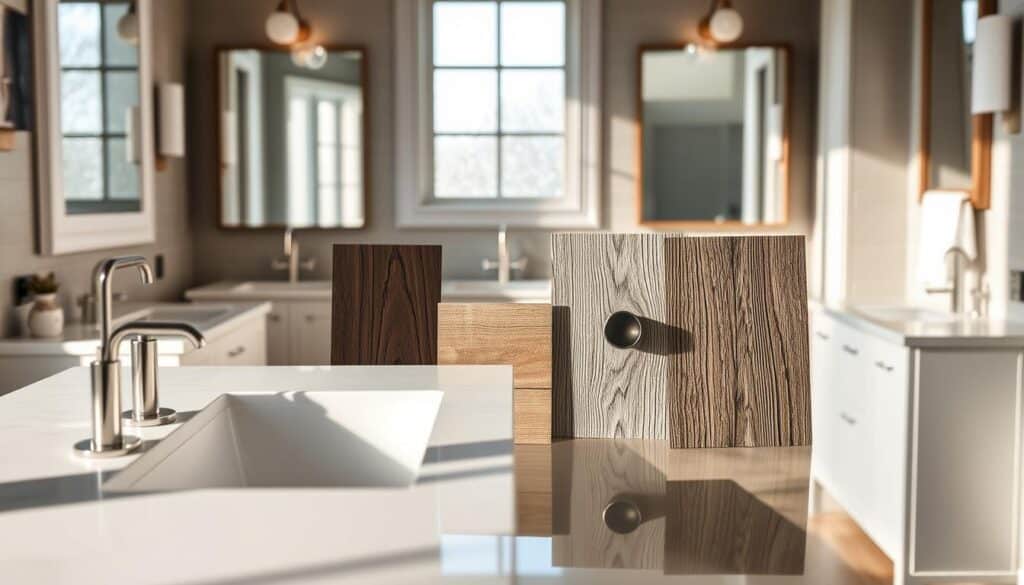
Wood stain plus protective topcoat on real wood
Stain gives color and grain; the protective topcoat does the real work against water. Unsealed or thin finishes let solid wood absorb water and warp or rot.
- Summary: Choose sealed, factory-finished surfaces for lower maintenance.
- Guard edges and seams—those determine long-term durability more than surface choice alone.
- Match material and finish to ventilation, cleaning habits, and daily use.
Durable vanity cabinet materials that support the finish
Cabinet cores decide long-term performance more than surface sheen ever will. A good finish helps, but the underlying material controls resistance to steam, spills, and daily wear.
Properly sealed solid wood and why sealing is make-or-break
Properly treated solid wood can last 20+ years when every cut and end grain receives a durable seal. Hardwood species resist indenting and hold fasteners well.
Neglected sealing lets grain absorb water and shortens life, even on premium builds.
Bathroom-grade MDF vs. standard MDF that swells
Standard MDF swells irreversibly in humid rooms. By contrast, bathroom-grade MDF uses moisture-resistant additives and sealed edges to survive repeated humidity.
Marine-grade plywood for improved moisture resistance
Marine-grade plywood uses waterproof adhesives and better veneers. It resists warping and holds up to occasional splashes far better than typical plywood.
Laminate-faced chipboard and the edge-sealing risk
Laminate-faced chipboard is a cost-friendly option that may last about 5–8 years. Its weakness is edge failure: once water reaches the core, delamination follows quickly.
- Bottom line: match material to use and ventilation; spending more up front often saves replacement cost and time later.
Most durable countertop surfaces and finishes for bathroom vanity tops
We compare common countertop choices by stain risk, heat tolerance, scratch resistance, and ongoing maintenance so you can pick a top that fits daily life.
Quartz: low-care, high performance
Quartz is non-porous, resists stains, abrasion, and modest heat. Consumer Reports (2020) ranks it highly for everyday use.
No sealing is required, which makes quartz a smart pick for a busy bathroom vanity.
Granite: natural beauty with reseal needs
Granite offers classic stone looks and strong wear. It usually requires periodic resealing to avoid stains and bacteria near sinks.
Typical pricing runs lower than quartz, often around $50 per square foot versus about $75 for quartz.
Marble and care trade-offs
Marble gives a timeless appearance but is porous and scratches more easily. It can need resealing as often as every six months.
Many homeowners choose quartz for a similar look with less maintenance.
Laminate, glass, and ceramic options
Laminate is cost-friendly and resists many stains and heat, yet it scratches more easily and can fail if water reaches the core.
Glass is non-porous and sleek but shows fingerprints and can chip. Ceramic tile is durable, but grout maintenance affects long-term cleanliness.
- Quick guide: choose quartz for low maintenance, granite for natural stone, and laminate or glass when cost or style drive the decision.
Metal and stainless steel vanities for maximum durability
For homeowners focused on longevity, metal and stainless steel bring unmatched resistance to water and wear. These options avoid swelling, peeling, and delam that plague organic materials when wet.
Stainless steel: water resistance and cleaning-product tolerance
Stainless steel is impervious to water when proper grades are used. It resists rust and handles common cleaning products without softening or discoloring.
This material is ideal in high-traffic bathrooms where frequent cleaning and spills are routine.
Powder-coated metal frames as a structural choice
Powder-coated frames deliver structural durability and a consistent finish. They pair well with stone tops or wood doors to soften the industrial look.
Check coating adhesion, weld quality, and finished edges before buying to avoid chips and long-term wear.
- Best use: busy family bathrooms and rigorous cleaning routines.
- Design options: modern, minimalist, or industrial looks that we can temper with warm hardware and surfaces.
- Buyer’s checklist: grade of stainless steel, powder-coat specs, fastener integrity, and edge finishing.
Maintenance and cleaning habits that extend finish life for years
A few simple routines can add many years to a vanity’s life without heavy upkeep. We focus on small steps that pay off over time and keep surfaces looking sharp.
Daily wipe-downs and controlling standing water
Wipe water away after use, especially around faucets and sink rims. Prompt drying prevents moisture from seeping into seams and edges.
Check countertop joins and backsplash junctions daily. A minute or two of care reduces repairs and preserves stain resistance.
Cleaner selection by material to protect surfaces and appearance
Match cleaners to surface type: mild soap and water for quartz; pH-neutral cleaners for stone; gentle, non-abrasive solutions for painted or wood surfaces.
Avoid harsh acids and scouring pads that strip protective layers or dull finishes. Proper cleaning protects color and long-term resistance to stains.
Resealing schedules for stone and touch-ups for wood finishes
Stone needs periodic attention: granite often benefits from resealing every 1–3 years, while marble may need care as often as every six months depending on use and stains.
Solid wood doors and trims gain from annual reseal or oil treatments. Small touch-ups at high-contact spots stop peeling and swelling before they spread.
- Practical plan: daily wipe, weekly inspection, yearly reseal or touch-up as needed.
- Quick wins: control standing water and use the right cleaner to extend life by years.
- Value: a little maintenance saves replacement time and expense down the road.
How to choose the right bathroom vanity finish for your space and budget
Start by mapping how your bathroom breathes, how much water hits surfaces, and who uses the room most.
Match finish choice to size, ventilation, and moisture: small or poorly ventilated rooms need non-porous surfaces and strong edge sealing. In humid spaces, favor bathroom-grade engineered wood, quartz tops, or metal faces that resist swelling and staining.
Cost vs. longevity: pay more now to avoid repeat replacements
Investing in quality materials and a robust finish often saves money over time. A higher upfront cost for quartz or sealed hardwood beats replacing a budget chipboard vanity that fails at exposed seams.
Design compatibility: coordinate finish, countertop, and hardware
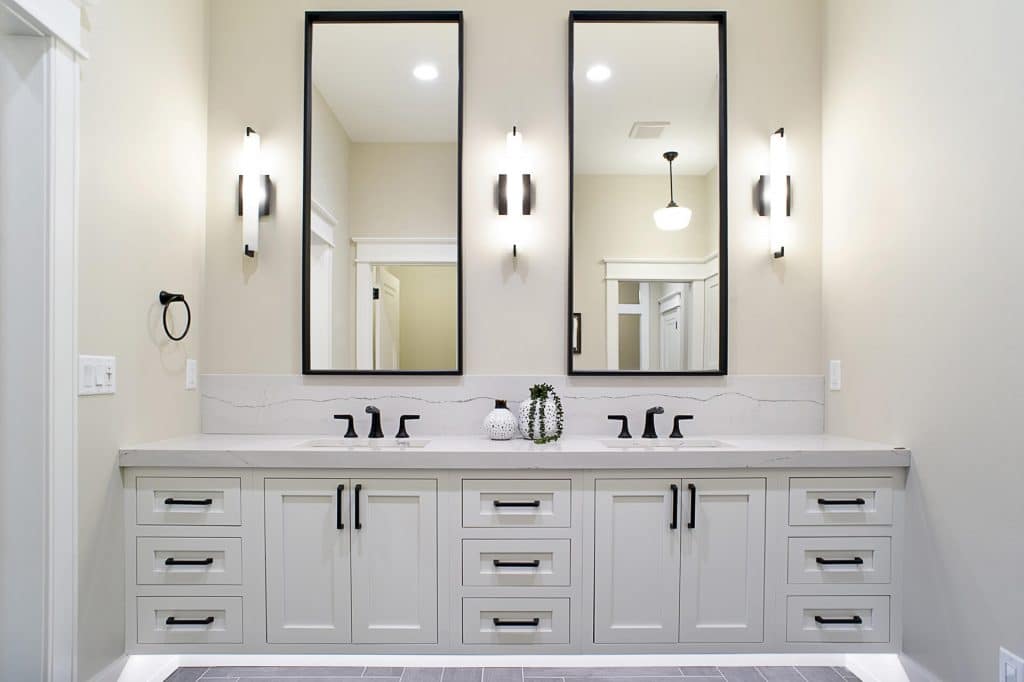
Choose a finish that complements your countertop and hardware so durability doesn’t sacrifice appearance. Matte, gloss, and metal tones affect how well a piece wears and how easy it is to clean.
Red flags to avoid when shopping
- Unsealed edges or exposed core material.
- Weak seams, thin coatings, or visible glue lines.
- No specification for bathroom-grade materials or edge banding.
We recommend a simple selection order: assess moisture and use, pick materials that match those needs, then confirm edge sealing and seam quality before you buy. That way you choose the right bathroom vanity finish for your space and budget with confidence.
Why Greater Lansing homeowners choose American Home for kitchen & bath design
When a project must blend beauty with everyday resilience, local families turn to experts they trust. We built American Home to be that partner: a 100% customer-focused kitchen & bath design retail store that listens first and guides clearly.
Customer-focused design retail store with expert design staff
We prioritize your needs: we compare options across budgets while keeping long-term performance top of mind. That means helping you select products and materials that deliver lasting durability and style.
Over 60 years of combined design experience
Our expert design staff brings more than 60 years of combined experience. We help you avoid costly mistakes in layout, finish selection, and material use so your space performs day after day.
One-stop shopping in the Greater Lansing Area
American Home grew from a long-held dream and complements American Flooring to offer an unmatched one-stop experience. Coordinate surfaces, fixtures, and finishes in one place for cohesive results.
Ready to talk? Call (517) 349-4690 or email info@americanhomekbdesign.com to discuss your project and schedule a design consultation.
Conclusion
A clear plan helps your vanity look great and perform well for many years.
Durable bathroom performance comes from three linked things: core material, a proper finish system, and well-sealed seams and edges. Start by assessing moisture exposure, then choose non-porous or well-sealed surfaces that fit your style and budget.
For most homes, quartz tops, factory-cured coatings, and sealed wood or metal cabinets deliver the best long-term results. Some options need extra care: porous stone and thin laminates ask for more frequent touch-ups and careful maintenance.
Simple routines—daily dry-offs, gentle cleaners, and yearly inspections—add real years to any piece. If you want expert help selecting materials and finishes that match your bathrooms and lifestyle, call or email us at American Home to schedule a design consultation.