What design elements can enhance the functionality of a small kitchen? Can a compact layout feel roomy, calm, and truly effortless to use? We believe it can.
At American Home, we draw on hands-on kitchen and bath experience to make tight footprints work hard for daily life. Smart storage, layered lighting, and clear work zones turn limited square footage into a reliable, beautiful kitchen that supports weeknight meals and casual hosting.
We define functionality as flow, storage capacity, prep room, and visibility so each choice supports how you cook and live. Our road map previews planning, storage and layout upgrades, then lighting and finishes that make small kitchens feel larger without sacrificing durability.
Many improvements are phaseable—organization and lighting first; layout and full-height cabinetry during a remodel. Our guidance aims for calm counters, intentional focal points, and solutions that let every inch pull double duty.
Key Takeaways
- Functionality equals flow, storage, prep space, and good sightlines.
- Prioritize storage and layout before cosmetic finishes.
- Layered lighting and neat zones make tight spaces feel larger.
- Phase upgrades to spread cost and disruption.
- American Home focuses on high-quality, usable results for U.S. homeowners.
Start with a space-smart plan for your small kitchen
Start with accurate measurements and a clear plan to make your kitchen work harder. We begin by measuring walls, windows, door swings, and appliance clearances so every drawing is buildable and reliable.
Measure for flow:
Measure the room and map the work triangle for better flow
We map the sink-range-refrigerator triangle to reduce steps and avoid traffic jams in a tight room. This simple sketch shows walk paths and landing zones and helps set aisle widths that feel comfortable.
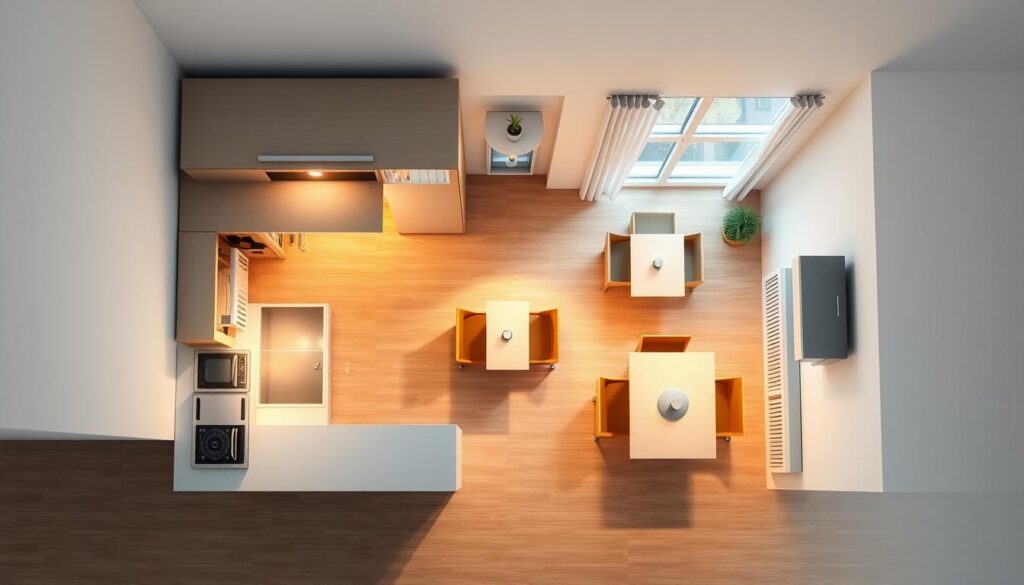
Choose a layout that matches how you cook and entertain
We evaluate galley, L-shape, and one-wall layouts against how you prep, cook, and seat guests. Opening a wall or adding a peninsula often improves conversation and dining without sacrificing work zones.
- Check clearances for appliances and cabinet doors.
- Define zones: prep, cook, clean, pantry/beverage.
- Decide where counters must stay clear for daily use.
Working with our expert design staff ensures plans match your lifestyle and set the stage for storage and lighting choices that keep counters organized and items within easy reach.
What design elements can enhance the functionality of a small kitchen
Great kitchens thrive on choices that save space and make daily chores easier. We favor durable, high-impact upgrades—smart storage, integrated solutions, and layered lighting—that improve everyday life and offer strong value.
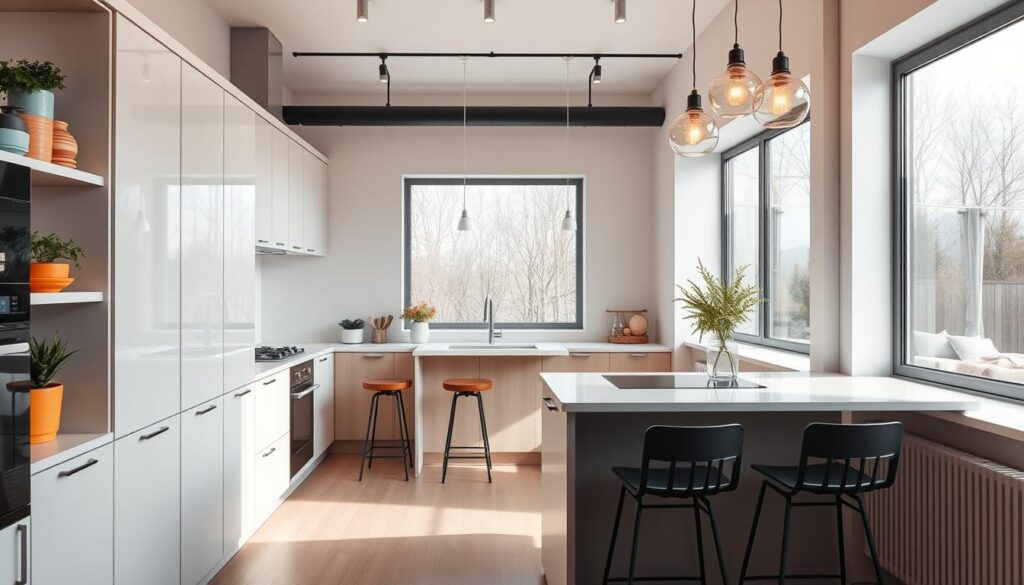
Prioritize vertical storage, clear counters, and layered lighting
Go vertical: Tall cabinets, deep drawers, and appliance garages increase usable room without expanding the footprint. Place daily items at waist or eye level and store rare items up high for safe access.
Keep counters clear: Clear countertops speed prep and make the space read larger. Stash small appliances in built-in niches so the counter becomes a true work surface.
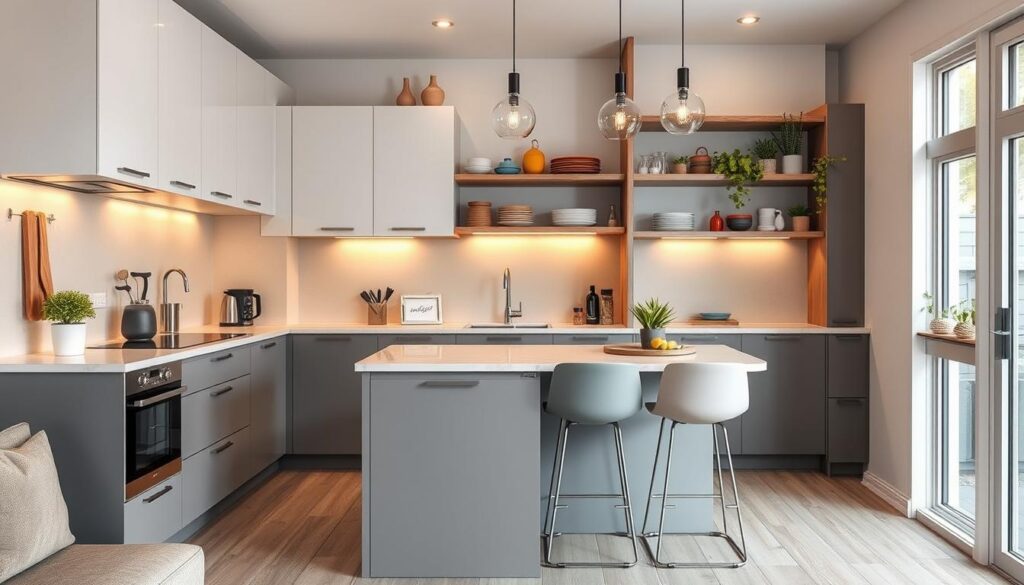
Layer lighting: Use under-cabinet tasks lights, recessed spots, and small pendants to balance work and mood. Multiple smaller sources deliver better visibility than one big fixture.
Reduce visual clutter with integrated, built-in solutions
Panel-ready appliances and appliance garages hide hardware and make a room feel custom. These choices cost less visually while keeping function close at hand.
- Quick wins: add under-cabinet lights, declutter counters, and install a few deep drawers.
- Remodel moves: extend cabinetry to the ceiling or add panel-ready appliances for a cohesive look.
- Where it matters: cabinetry, shelving strategy, and appliance placement decide whether you truly maximize space.
Maximize storage by taking cabinetry to the ceiling
Tall cabinetry that reaches the ceiling turns wasted space into practical storage without changing your footprint. Full-height cabinets capture seasonal serving pieces and specialty appliances while keeping daily dishes within easy reach.
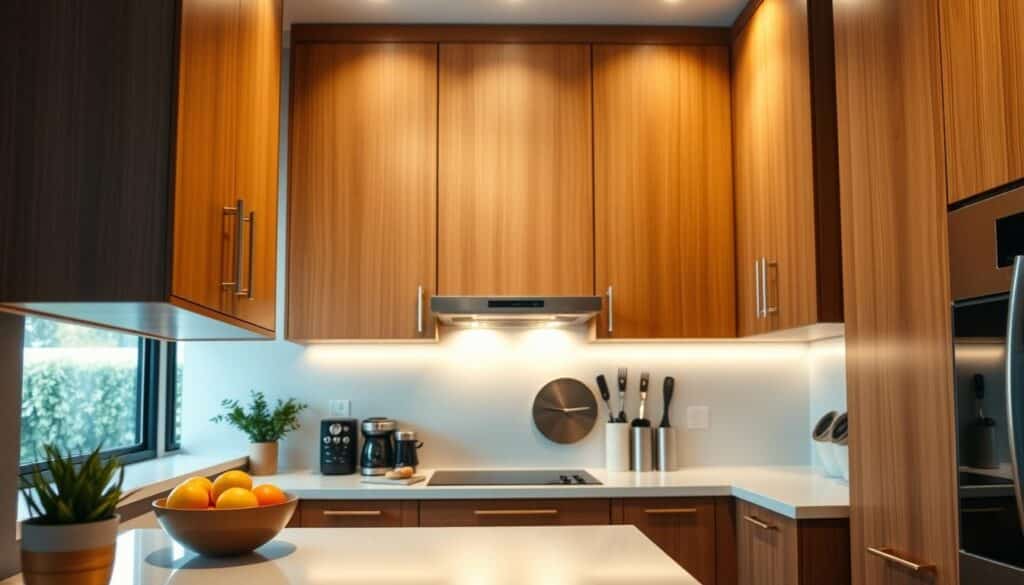
Full-height cabinets to capture rarely used items
We size cabinets precisely so each shelf holds intended items. This approach reduces dust-collecting soffits and gives a high ROI on remodels. Organize tops for rarely used gear and place everyday items at waist level.
Sliding library ladders for safe access in tall kitchens
A sliding library ladder on a rail offers safe access and smooth glide. Plan rail placement, clearances, and latch points. Choose a ladder when tall cabinetry outweighs a step stool for frequent reach needs.
Shorter uppers and custom heights to prevent a boxed-in look
We balance full-height runs with shorter uppers or transition zones to preserve openness. Ceiling-height cabinetry can make walls read taller while careful breaks keep sightlines airy. Homeowners decide where storage or light matters most.
- Why it pays: more storage, less dust, cleaner counters.
- How we arrange: daily items easy to reach; seasonal items up high.
- Safety: rail, clearance, and build quality guide ladder selection.
Use open shelving and floating shelves without losing function
Open shelving offers a way to show personality while keeping everyday items within reach. We recommend it when quick access and a curated look support your routine.
When open shelving works best
Open shelving shines for daily dishes, glassware, and prep tools you grab often. Floating shelves reduce visual weight on a busy wall and let light pass through. Choose shelves away from heavy splatter zones unless you commit to regular cleaning.
How to style shelves so they stay organized, not cluttered
Keep categories tight: repeat materials and limit types per shelf. Stack like with like and use matching containers to unify the look.
- Reserve prime shelf space for most-used items.
- Leave negative space so the wall breathes and the area feels calm.
- Mix closed cabinets below for messy storage and open shelves above for display.
We balance open and closed storage to add warmth without creating work. With clear rules and simple styling, shelving becomes a helpful, attractive part of a small kitchen.
Consider forgoing upper cabinets to expand the small kitchen feel
Ceding some upper cabinetry can dramatically open a room. We trade storage for clearer sightlines so the area reads larger and calmer.
How fewer uppers boost natural light and visual space: With fewer overhead fixtures, windows feel larger and natural light penetrates deeper. Reflective backsplashes and light finishes amplify that effect.
Where fewer uppers work best
- Kitchens with deep base cabinets, built-in pantries, or tall storage that carry the load.
- Rooms with an existing window or an opportunity to add one.
- Layouts that pair open shelving or a statement backsplash with smart concealed storage.
For paint and colors, choose cool whites or pale hues to help light travel and make a wall recede. We guide homeowners through a simple decision framework: keep daily storage within reach, relocate seldom-used items, and conceal bulky gear in tall units.
Result: a more custom, airy look that feels intentional—not trendy—while preserving practical storage where it matters.
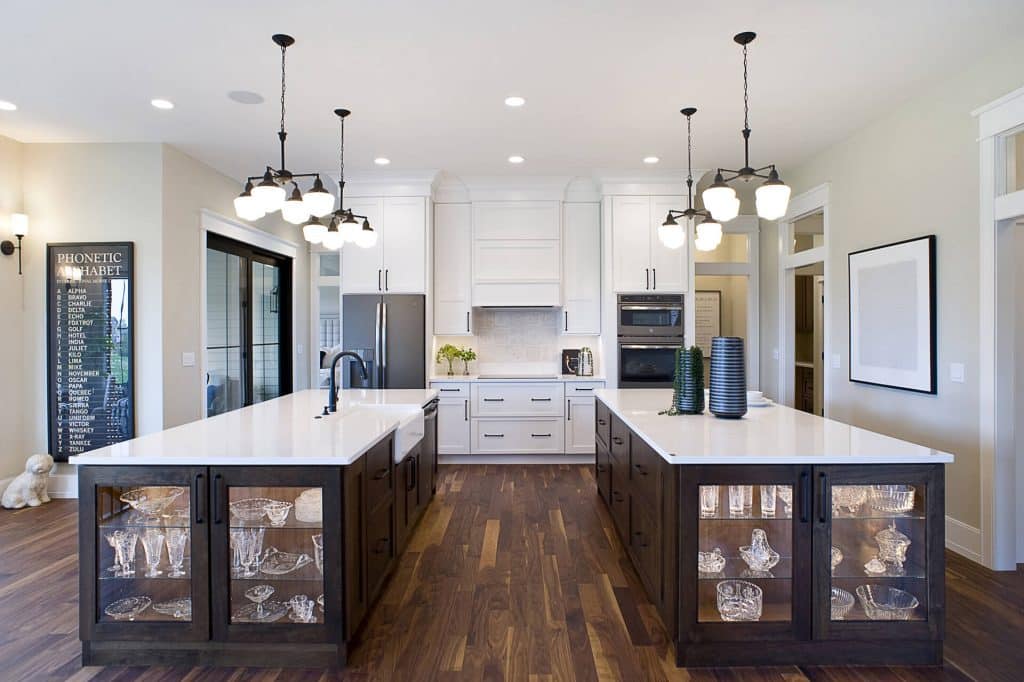
Build storage into the island or choose a peninsula instead
Make the island earn its keep with thoughtful shelving, or pick a peninsula when traffic is tight. We weigh clearances, daily routines, and sightlines before recommending either solution.
Inset shelving and island storage that works
Inset shelving keeps everyday items within reach and makes the island a true hub. Store bowls, cookbooks, and frequently used small appliances where they are easy to grab.
Peninsulas for counter space and casual seating
When an island won’t fit, a peninsula often frees a former galley and adds useful countertop real estate. It also creates a casual bar-style perch for quick meals and homework.
Curved islands to protect walkways
Curved islands soften corners and improve walking space in narrow rooms. The rounded form reduces collisions and keeps circulation pleasant during busy moments.
- We check aisle clearances first so movement stays comfortable.
- Reserve island storage for daily gear; keep bulk items in tall cabinetry.
- Always align the island or peninsula with the work triangle to preserve flow.
Create flexible prep space with a compact table or mobile cart
A well-chosen table or cart gives you on-demand countertop real estate without a full remodel. This approach keeps the room feeling open while adding real prep work when you need it.
Small dining tables that double as a food prep zone: A compact table serves for morning coffee, casual dining, and chopping or plating when counters are full. Pick a height that matches your counters and leave clear walkways so traffic flows smoothly.
Rolling islands and slim carts to maximize space when needed
Rolling islands and slim carts are ideal for baking days or meal prep sessions. Look for locking casters, a durable top, and open shelves or drawers for quick access. When guests arrive, tuck the unit into its parking spot to restore room to its dining use.
- Choose a table that fits two to four people and won’t block primary paths.
- Prioritize carts with locking wheels and solid surfaces for steady prep.
- Plan a home for the cart so it doesn’t become permanent visual clutter.
These flexible pieces let us expand usable space in a practical, budget-aware way. They offer a high-end feel through careful material choice and placement while avoiding a major remodel.
Disguise storage to keep countertops clear
A clear countertop changes how you use a room. We design concealed options so your prep space feels bigger and stays tidy.
Appliance garages that hide toasters, mixers, and coffee gear
Appliance garages sit within cabinetry near your prep zone so morning routines remain quick. We plan outlets, ventilation, and sliding or tambour doors so mixers and other appliances stay plugged in but out of sight.
Reach-in pantries with pocket doors for “everything disappears” calm
A reach-in pantry becomes a command center when fitted with adjustable shelves, labeled zones, and pocket or integrated doors. Close the door and bulk items, snacks, and small appliances vanish from view.
- Why clear counters matter: more prep room and a refined look.
- Appliance garage tips: measure appliances, add dedicated outlets, and allow cord routing.
- Pantry planning: mix open shelving for daily staples with concealed bins for bulk storage.
- Placement: ensure doors don’t conflict with traffic and align with work zones.
We design storage around what you actually own and use so your daily routine feels easier. Concealed solutions let the kitchen read as cabinetry-first and keep appliances out of sight without slowing you down.
Use the walls and ceiling for vertical organization
Walls and ceilings offer untapped storage that keeps counters clear and tools within reach. Thoughtful vertical solutions preserve floor space while making daily tasks faster.
Pot racks and rails to free up cabinets and counters
Pot racks and rails lift bulky pans, cutting boards, and herb bundles off counters and out of cabinets. A simple rail behind a cooktop or near a prep zone makes frequently used items easy to grab.
Knife mounts, pegboards, and hanging systems for tools
Knife mounts and pegboards free drawer space and keep sharp tools visible and safe. Place mounts at a comfortable height and away from high-traffic lines so access is quick but unobtrusive.
Built-in niches and thin nooks carved into walls
Thin nooks and recessed niches add shelving without eating depth from the room. Build these into a wall or between studs to hold oils, spices, or a small bar station while keeping walkways open.
- Why it works: vertical organization reclaims underused wall and ceiling space.
- Keep finishes consistent so rails and racks read as part of the cabinets and millwork.
- Align heights to create one tidy “organization zone” tied to workflow and prep areas.
We balance craftsmanship and planning so these systems feel integrated, safe, and purposeful. When tools live where we reach for them, the space functions with less friction and more calm.
Integrate and conceal appliances to reduce visual clutter
Seamless appliance integration turns busy sightlines into calm, furniture-like surfaces. We prioritize coordinated product choices so your space works without shouting for attention.
Panel-ready refrigerators that read like millwork
Panel-ready refrigerator units slide into a run of cabinetry and maintain continuous lines. This approach gives a cleaner look and helps the room feel larger by avoiding visual breaks.
Smart microwave locations for a custom feel
Tuck a microwave into a tall cabinet, pantry zone, or under-counter drawer to keep counters clear and focal points uninterrupted. Each option preserves prep surfaces and supports an uncluttered flow.
- Why integration helps: fewer visual breaks make the space calmer and more cohesive.
- Refrigerator benefits: symmetry, concealed hardware, and a cabinetry-forward look.
- Placement tip: keep major surfaces free for prep and sightlines clear for balance.
- Plan early: map power, ventilation, and service access before you finalize layouts.
High-quality appliances and careful planning create long-term value. With expert placement, a compact room gains function and a deliberate, refined look that supports daily life.
Layer lighting to brighten a small kitchen and improve task visibility
Thoughtful lighting turns compact spaces into welcoming, highly usable rooms. We treat illumination as both technical and emotional: it must make tasks easier and the room feel inviting.
Layered lighting works as three linked systems: ambient for overall even light, task over counters and cooktops, and accent for warmth and visual interest. Together they avoid harsh shadows and create depth.
Keep lighting simple with multiple small sources instead of one dominant fixture
Multiple small sources spread light evenly and prevent glare. They let you brighten specific zones without overwhelming a compact ceiling or sightline.
Under-cabinet lighting for countertops and cooking zones
Under-cabinet strips or puck lights boost visibility on counters and reduce eye strain while chopping. Place fixtures toward the front edge of cabinets so shadows fall behind your work.
Decorative fixtures, sconces, and warm glow choices for a refined look
Sconces and small pendants add personality without stealing surface space. Choose warm color temperatures and dimmers so the room switches from bright work mode to a softer evening glow.
- Placement tip: align task lights to your prep zones and avoid fixtures that cast shadows where you work.
- Controls: use layered switches or zones so lighting adapts to each activity.
- Finish: match accents and cabinet tones for a cohesive, curated result.
Increase space feel with natural light and reflective surfaces
Bring daylight into tight rooms to make them feel open, airy, and welcoming. We prioritize daylight because it instantly expands perceived space and improves mood while you work.
Reflective backsplash materials that bounce light safely
Choose a shiny tile or polished stone rather than mirror glass. Durable, easy-clean backsplashes near cooktops and sinks boost brightness without safety risks or maintenance headaches.
Window treatments and paint choices that help light travel
Skip heavy curtains. Opt for slim shades or sheer panels that preserve privacy but let daylight pass. Lighter paint colors amplify reflected light and help a room read larger.
- How natural light helps: it widens sightlines and improves your space feel.
- Backsplash tips: use grout colors that hide grease and finishes that wipe clean.
- Balance reflectivity: too much shine can feel busy, so pair glossy surfaces with matte accents.
Combine these choices with layered lighting so your kitchen stays bright from morning through evening. We aim for surfaces that look good and work hard.
Choose color and contrast that make small kitchens feel larger
Color and contrast guide the eye, stretching sightlines and lifting a room’s mood. We use this strategy to make compact areas feel airy without losing warmth.
Light wood tones and bright palettes to open up the room
Light wood and bright colors reflect light and add warmth. They help a space read larger while staying inviting.
Two-tone cabinetry to add depth without overwhelming
Pair pale uppers with slightly darker lower cabinetry or select a contrasting island. This approach creates depth and keeps sightlines calm.
Dark accents placed where shadows naturally fall for length and dimension
Use dark accents on toe kicks, lower trim, or island bases to elongate sightlines. Placing contrast where shadows occur adds subtle drama without crowding visual field.
- Why it works: contrast creates perceived depth and clarity.
- Color tips: test paint under real kitchen lighting before finalizing.
- Practical picks: forgiving finishes and easy-touch materials improve resale appeal.
We guide homeowners toward timeless choices that balance luxury and resale. Match palette to lighting so undertones stay true and your space remains cohesive for years.
Upgrade countertops, backsplash, and finishes for function and durability
A heads-up: finishes are the daily touchpoints in any kitchen, and they matter more in compact layouts where every detail shows. We favor materials that resist stains, wipe clean easily, and age with grace so you spend less time on upkeep and more time enjoying the room.
Full-height backsplash continuity for easier cleanup
Running the backsplash up to the underside of cabinets or to the ceiling creates visual flow and protects walls from splatters. A full-height backsplash in the same slab as the countertop reduces grout lines and wipes cleaner, making maintenance simple and quick.
High-quality hardware and faucets as “jewelry” that elevates daily use
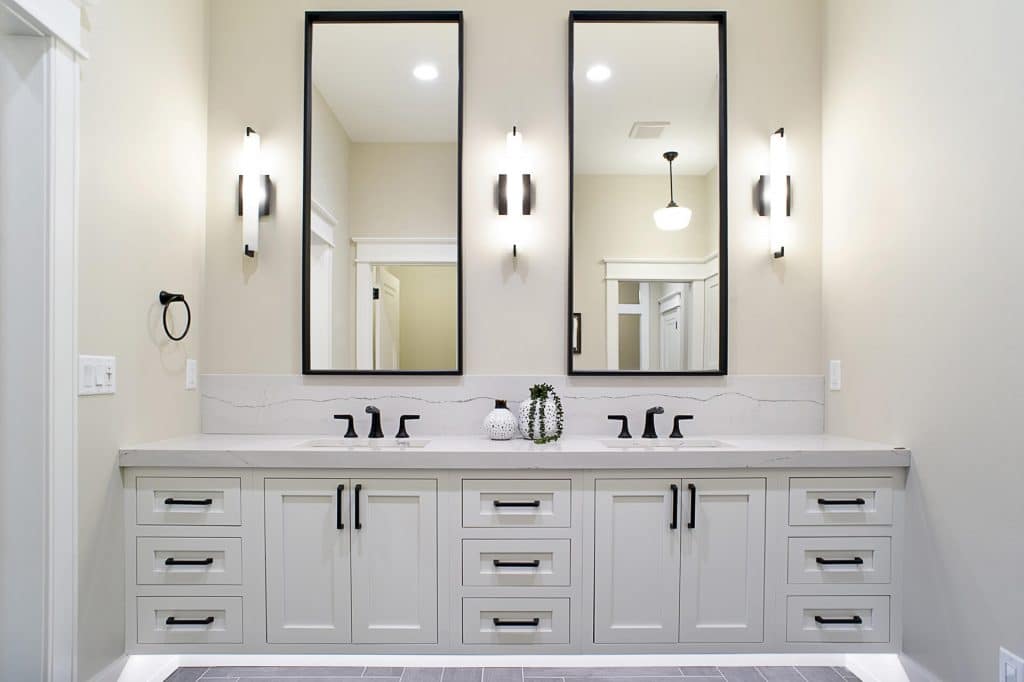
Hardware and faucets are small upgrades with big impact. Choose finishes that match cabinet tones, feel secure in the hand, and stand up to repeated use.
- Why invest: surfaces see heavy wear in a busy kitchen; quality pays back in longevity.
- Material tips: pick stain-resistant countertops and low-porosity backsplash materials for easy care.
- Selection notes: test grip comfort, check finish durability, and coordinate metals so cabinets and fixtures read cohesive.
We guide homeowners to finishes that balance beauty and practicality. The right countertop and backsplash choices protect your walls, simplify cleanup, and lift the room’s look for years to come.
Add one intentional statement feature without crowding the design
A single, well-chosen focal point gives a compact kitchen instant polish without visual noise. We favor one strong choice so the room reads purposeful and calm.
A considered range and custom hood as the focal point
A statement range and hood anchor a wall and create lasting presence. Keep surrounding cabinetry quieter so the appliance reads deliberate, not accidental.
Avoid placing the microwave over the range; it interrupts the sightline and weakens the focal wall. Tuck small appliances into nearby tall cabinetry or a pantry to protect visual flow.
Millwork details on an island for style with minimal footprint
Adding subtle millwork to an island adds craft and depth without changing layout. Fluted panels, inset trim, or a framed end give hands-on charm and extra interest.
Patterned backsplash or curated art for visual interest on the walls
A patterned backsplash or a single piece of curated art adds personality while the rest of the palette stays calm. Use scale and repeat to avoid busyness: one wall treatment, one pattern, one accent color.
- Rule of one: pick one focal feature and keep nearby surfaces neutral.
- Scale: match hood size to wall width; avoid oversized patterns in narrow spaces.
- Placement: center features on the main wall and align with sightlines from adjacent rooms.
Work with American Home’s expert kitchen design team in Greater Lansing
Partnering with a local team brings clarity and calm to even the tightest cooking spaces. At American Home we welcome homeowners who want kitchens and baths that are both beautiful and highly usable. Our shop complements American Flooring so selections for surfaces and cabinetry happen in one visit.
One-stop shopping: American Home and American Flooring coordinate finishes, counters, and flooring so your project stays consistent and on schedule.
Customer-focused kitchen & bath retail with deep experience
American Home has been a dream for several years, created to help customers realize their ideal home. We are 100% customer-focused: we listen first, then guide with value-minded options and clear recommendations.
Expert staff with 60+ years of combined experience
Our team brings more than six decades of combined experience to each project. That expertise helps us plan intentional layouts, hidden storage, and integrated solutions for elevated small kitchen outcomes.
Ready to start?
Call (517) 349-4690 or email info@americanhomekbdesign.com to schedule a consultation. Greater Lansing Area homeowners: let us help you plan a kitchen that feels luxurious, works smoothly, and is correct from day one.
- Plan right: thoughtful storage and concealment create calm, cohesive spaces.
- Coordinate: finishes, fixtures, and flooring in one place save time and stress.
- Partner: we guide each step so your project stays on track and on budget.
Conclusion
When choices are coordinated, even modest footprints deliver luxe, practical results.
We sum up the most impactful moves: a clear plan, smart vertical storage, tidy counters, integrated appliances, and layered lighting that brightens work zones without glare.
Cabinets, shelves, and hidden storage work together to keep the room calm while speeding everyday cooking. Placement matters—where the refrigerator sits, how a bar or peninsula is used, and where prep happens shape daily flow.
Color, reflectivity, and matched finishes stretch space and protect surfaces. Treat upgrades as a system so the final look feels intentional and built to last.
If you want tailored guidance, we’re ready to help at American Home in Greater Lansing. Call (517) 349-4690 or email info@americanhomekbdesign.com.