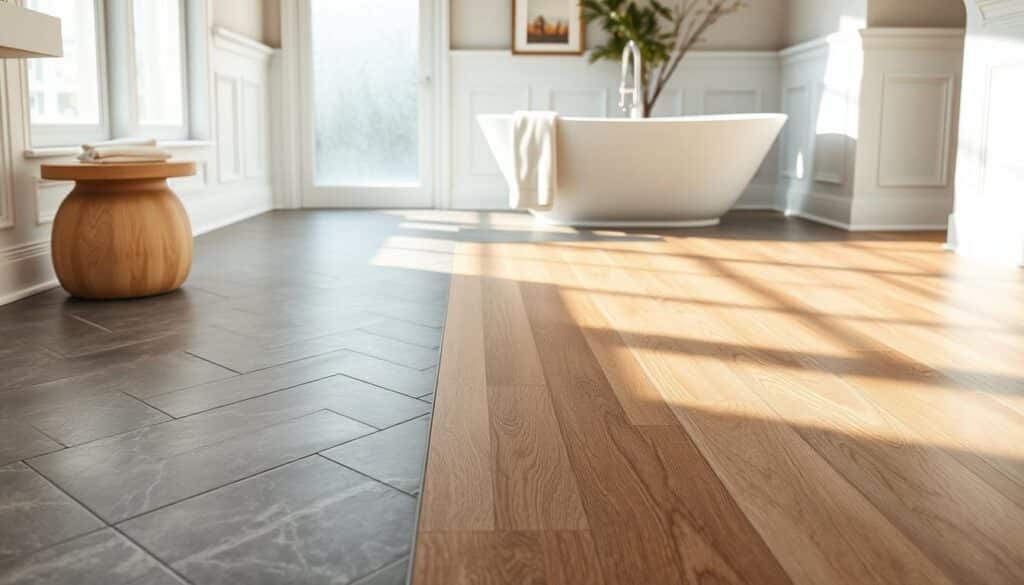
Can one floor handle daily splashes, humidity, and a busy family life without losing its style? What materials are best for bathroom flooring? We open with that challenge because choosing a floor is really about balancing performance and design.
Bathrooms are high-moisture rooms, so we focus on water resistance, slip safety, and long-term wear. Our team at American Home pairs design and technical know-how to give clear options and realistic trade-offs.
We’ll compare tile, vinyl, stone, and select eco/wood-based choices, and explain which fits your traffic, moisture load, and upkeep comfort. Expect straight answers to common questions like what is truly waterproof, what feels warm underfoot, and what stands up to dropped items.
If you want a curated shortlist for your remodel, call (517) 349-4690 or email info@americanhomekbdesign.com. We combine American Home and American Flooring to deliver a one-stop shopping experience backed by 60+ years of design expertise.
Key Takeaways
- Pick products that match your room’s moisture and traffic levels.
- Trade-offs exist between durability, warmth, and maintenance.
- Tile, vinyl, stone, and select wood options each suit different needs.
- Our team offers tailored guidance and a one-stop showroom experience.
- Contact us for a shortlist matched to your layout and budget.
How to choose the best bathroom flooring for your home
Choosing the right floor starts with how your household uses the room each day. We assess moisture levels, foot traffic, and your tolerance for upkeep before recommending finishes that fit your lifestyle and design goals.
Water resistance: We explain the real difference between water-resistant and waterproof products. High-moisture spaces benefit from floors that resist saturation and won’t warp or delaminate over time.
Durability & foot traffic: Daily wear shows as scratches, chips, and dulling. We match product density and finish to the expected traffic so your floor stays refined year after year.
Slip resistance & safety: Texture, finish choice, and tile format affect grip. Small-format mosaics or textured surfaces add traction in wet zones near tubs and showers.
Maintenance & regular cleaning: Different surfaces need different routines: stone often requires sealing, while vinyl and glazed tile are easier to clean and resist stains.
- We prioritize your must-haves, then balance budget and style.
- Our American Home team uses 60+ years of design experience to speed decisions and avoid costly trade-offs.
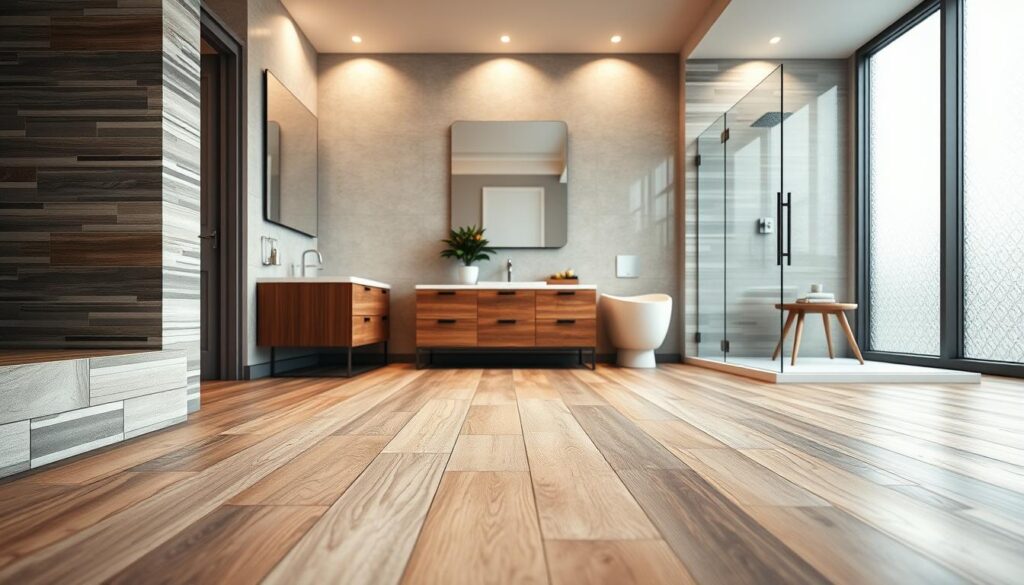
What materials are best for bathroom flooring
Picking a floor means weighing wear, moisture, and the look you want to live with. Below we summarize common surface choices, where they shine, and the compromises to expect.
Porcelain tiles: moisture resistance and durability
Porcelain tiles are dense and less porous, so they resist water and heavy use well. They handle dropped items and family traffic without showing wear. Installation and grout matter; proper sealing and a good subfloor make a long-lasting system.
Ceramic tiles: value and classic appeal
Ceramic provides classic style at lower cost. It’s a solid option for many baths when glazed finishes and correct installation are used. For most standard baths, ceramic is more than adequate when paired with sensible grout choices.
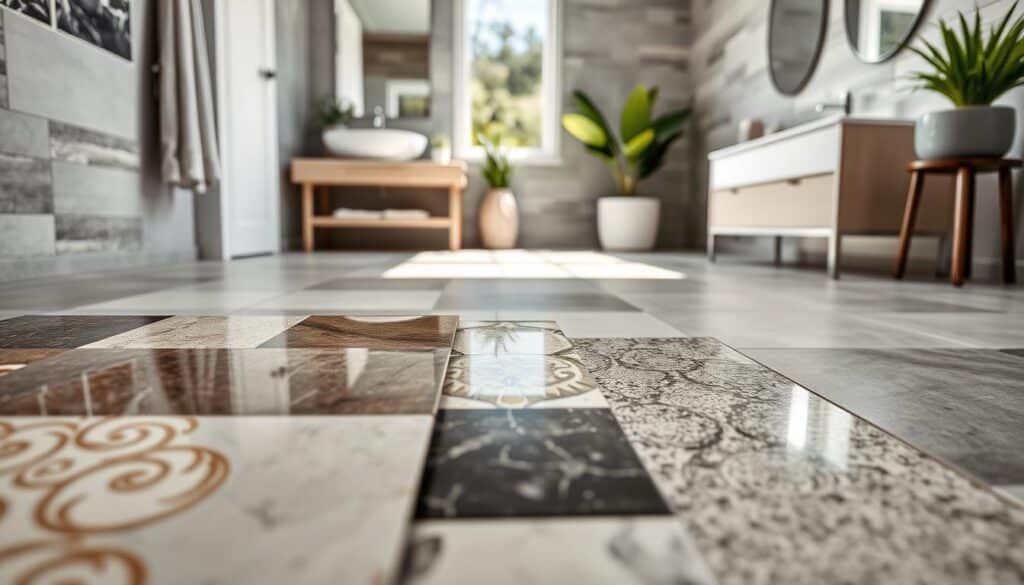
Vinyl options: fully waterproof choices
Vinyl flooring can be fully waterproof and feels warmer underfoot than tile. That comfort and resilience near tubs and toilets make vinyl a top practical pick. Choose seams and installation to match wet-area needs.
Natural stone: luxury patterns with care
Stone offers one-of-a-kind patterns and a premium look. Expect sealing and routine care to prevent stains and mildew. The visual payoff is high, but maintenance commitment is real.
Bamboo, cork, engineered wood and laminate
Bamboo and cork appeal to eco-minded homeowners, but they need proper topcoats and sealing to resist moisture.
Engineered wood performs better than solid planks in humid rooms. Laminate can resist scratches but risks damage when water pools. Use these only in lower-risk baths or with excellent ventilation and care.
- Quick guide: Porcelain for durability; ceramic for value; vinyl for waterproof comfort; stone for luxury; bamboo/cork and engineered products with strict sealing and caution.
- Visit American Home to see samples and get expert guidance tailored to your layout and walls.
Porcelain tiles vs ceramic tiles for bathroom floors
Not all tiles perform the same in wet rooms — the clay, firing, and finish matter more than the look alone. We explain the core differences so you can match product performance to household needs and style goals.
Porcelain density and moisture performance
Porcelain uses refined clay and higher firing temperatures, making it harder and denser. That lower porosity means better resistance to moisture, stains, and wear in busy, humid bathrooms.
For high-traffic powder rooms or family baths, porcelain delivers long-term durability and reduced risk of water damage.
Ceramic benefits, tradeoffs, and cost advantages
Ceramic tiles still offer strong resistance and classic style at a typically lower cost. They suit many bathroom projects where budget and design are priorities.
We guide clients when ceramic provides great value without sacrificing the look they want, especially in lower-moisture or well-ventilated spaces.
Choosing finishes that improve slip resistance
Finish matters as much as tile body. Textured or certified slip-resistant surfaces add traction, while grout lines and smaller tile sizes enhance grip in wet zones.
We help specify tile size, finish, and grout that balance safety, cleaning, and style so your bathroom floors perform and look great long-term.
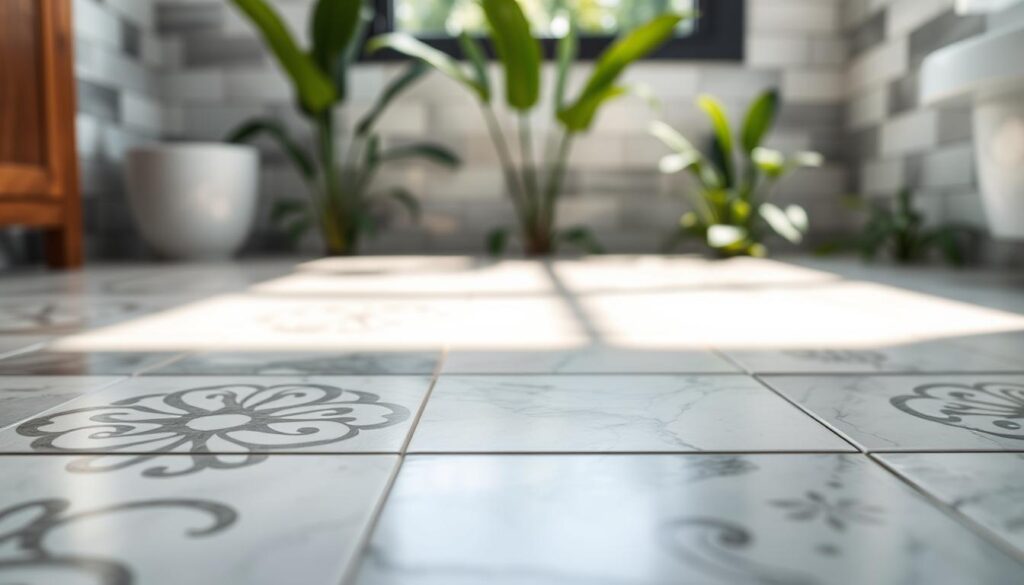
- Decision cue: Choose porcelain for high moisture and heavy use; choose ceramic for cost-conscious projects with good ventilation.
- We evaluate style, size, finish, and grout lines together to recommend the best long-term option for each layout.
Vinyl flooring in bathrooms: comfort, waterproofing, and value
Vinyl brings a practical balance of comfort, waterproof performance, and style to many home baths. It is cost-effective, easy to clean, and often feels warmer underfoot than tile. That combination makes vinyl a top choice where comfort and low upkeep matter.
Sheet vinyl, LVP, LVT and seams
Sheet vinyl has fewer seams, which improves water resistance and lowers the chance of leaks. LVP and LVT offer realistic wood and stone looks but rely on tight seams and quality installation. Proper edge details and installation process matter most to keep floors dry.
Underfoot feel and safety
Vinyl is softer and warmer than tile, which helps barefoot comfort and can reduce slipping in wet areas. Textured surfaces add traction in shower zones and high-traffic spots.
Drawbacks and how to reduce damage
Vinyl can gouge or tear from sharp edges or heavy appliances. Choose higher-grade products with a durable wear layer and protect vulnerable spots with pads. For kids’ baths, busy hall baths, or basements, vinyl often delivers the right balance of performance and value.
- Why we recommend it: Comfort, waterproof options, easy cleaning, and convincing looks.
- When to consider tile instead: If you need an ultra-rigid, long-life surface for heavy-duty use.
We guide homeowners at American Home to match product selection to lifestyle, budget, and room needs so you get confident results with minimal surprises.
Natural stone tile: premium looks with higher maintenance
Natural stone brings a level of depth and character that other surfaces rarely match. Marble, granite, and travertine each give a distinct style and a custom look that elevates a bathroom.
Marble, granite, and travertine: style and durability considerations
Marble reads as classic luxury but scratches and etches more easily. Granite offers long-term hardness and resists stains better.
Travertine gives warm texture and a softer aesthetic, yet it soaks liquids faster without sealing.
Sealing schedules, grout care, and preventing stains and mildew
Sealing protects stone and slows stains. We recommend a professional seal every 1–3 years depending on traffic and moisture.
Grout is part of the system: choose a stain-resistant grout and schedule regular cleaning to limit mold and mildew.
- Who should choose stone: homeowners who value a premium look and accept routine upkeep.
- Practical tip: pair good ventilation with weekly cleaning to reduce mold and mildew risk.
- Expectation: with proper care, stone can remain stunning for years while requiring more attention than tile or vinyl.
Tile size, grout lines, and design choices that affect cleaning and safety
Tile layout impacts both the room’s look and daily upkeep. Large tiles cut grout lines, which reduces places that trap dirt and mildew. Fewer grout lines also make a small bath feel more open.
Large-format tile needs a flat substrate and careful installation. When installed correctly it simplifies cleaning and gives a modern, seamless look.
Large-format tiles for fewer grout lines and an expanded room look
We recommend large-format tiles to minimize grout maintenance and visually expand tight rooms. The trade-off is precision: the subfloor must be level to avoid lippage and cracking.
Small tiles and mosaics for traction in showers and wet zones
Small tiles and mosaics add traction because more grout lines increase grip underfoot. They follow slopes well, so they suit shower floors and other wet areas where drainage and safety matter.
Grout color, patterns, and finishes that impact upkeep over time
Grout color changes cleaning time: light grout brightens but shows stains; mid-tone or dark grout hides wear longer. Textured tile can boost slip resistance yet requires deeper scrubbing.
- Tip: Match grout tone to the tile for a seamless look, or contrast for a deliberate pattern.
- Tip: Use sealed, stain-resistant grout to cut maintenance time.
- Tip: We coordinate tile, grout, and wall surfaces so the final design feels intentional and easy to care for.
Waterproofing and subfloor prep: the step that prevents mold and costly repairs
Hidden moisture and poor prep cause more bathroom failures than wrong tile choices. We treat waterproofing and subfloor work as the project backbone. That focus preserves durability and protects your home for years.
Why tile and grout aren’t truly waterproof on their own
Tile and grout shed surface water but do not stop migration. Water can pass through grout lines or hairline cracks and reach the subfloor.
If moisture reaches the structure, it creates rot and mold that damage floors and framing over time.
Level subfloors, proper underlayment, and uncoupling membranes
Subfloor prep means clean, level, and structurally sound decking. This prevents movement that cracks tiles and weakens adhesion.
Underlayment and uncoupling membranes manage movement, reduce cracking, and extend the life of your installation.
Drainage basics and curbless shower planning
Showers need correct slope to drain. Poor slope or missing waterproof layers causes pooling and hidden moisture in wet areas.
Curbless layouts require waterproofing across the entire wet room and careful transition planning so water never reaches the structure.
- Top risk: assuming tile and grout alone stop water—this leads to mold and costly repairs.
- Tip: ask contractors about membrane systems and slope verification during installation.
- Our promise: we guide you to durable assemblies that protect your investment and keep your bathroom fresh for years.
Materials to avoid in bathroom floors (and better alternatives)
Some popular options look great in the showroom but fail fast in humid home bathrooms. We want you to enjoy style without repeat repairs. Below we flag surfaces we usually advise against and suggest durable swaps that keep the look you want.
Carpet holds moisture, traps odors, and encourages mold growth around tubs and toilets. That leads to lingering smells and costly replacement rather than simple cleaning.
Solid hardwood can warp, cup, or buckle when exposed to steam or a small leak. Even short-term water exposure may damage planks and subflooring quickly.
- Avoid: carpet in wet areas and untreated solid wood in full baths.
- Swap to: waterproof vinyl that convincingly mimics wood or stone while resisting water and stains.
- Consider: engineered wood where a warmer wood look is essential—paired with good ventilation and careful installation.
We guide homeowners at American Home toward options that match durability and design needs in each area of the room. That way you keep the look you love without unexpected mold or water repairs.
Conclusion
The right surface meets your moisture risk, safety needs, and the cleaning routine you’ll actually follow.
Deciding what materials are best for bathroom flooring comes down to real use. Porcelain tiles deliver long-term performance, ceramic tiles give value, vinyl offers waterproof comfort, and stone brings premium style with sealing needs.
Pay attention to grout and grout lines, finish choice, and installation: those details often determine durability and cleaning time as much as the surface itself.
We built American Home to pair design and practical experience in one showroom. With 60+ years of combined experience, we help you weigh options and answer questions. Call (517) 349-4690 or email info@americanhomekbdesign.com to review options and move forward with confidence.