Curious which options will stand up to daily spills, steam, and heavy use while still looking great?
We wrote this buyer’s guide to help you compare popular cabinet choices and match a kitchen cabinet materials plan to your lifestyle, design goals, and budget.
Solid wood remains a top pick for durability and can be refinished. Engineered cores like plywood, MDF, and particleboard change structural strength. Decorative surfaces such as veneer, laminate, melamine, and thermofoil affect moisture and scratch resistance.
At American Home, we blend over 60 years of combined design experience with a customer-first approach. We guide you through finish, layout, and material trade-offs so your cabinet investment looks beautiful and performs well in your home.
Ready for tailored advice? Call (517) 349-4690 or email info@americanhomekbdesign.com to speak with our expert design staff.
Key Takeaways
- Different cores and surfaces create distinct durability and moisture performance.
- Wood can be refinished; engineered panels offer cost and stability benefits.
- Surface finishes matter as much as the core for long-term wear.
- Choose materials based on how you use the kitchen, not trends alone.
- Contact American Home for personalized guidance on finishes and layouts.
How to choose the right kitchen cabinet material for your home
Choose cabinet substrates that match how your household cooks, cleans, and lives each day. Start by listing daily tasks: heavy cooking, kids’ snacks, frequent entertaining, or light use. This simple step steers choices toward the right balance of durability, style, and budget.
Prioritize moisture resistance where spills and steam happen most: sink bases, dishwasher ends, and trash pull-outs. We explain which options handle wet zones and which need careful sealing or protection.
Match grain and finishes to your design goals. If natural wood grain matters, consider real wood or veneer. For flawless painted doors, MDF with a durable finish often wins. Remember: the finish affects performance nearly as much as the core.
- Assess daily wear to decide where to invest.
- Let budget guide—not dictate—so you avoid costly replacements later.
- Plan maintenance and expected lifespan before you buy.
With over 60 years of combined design experience, we help homeowners narrow the best option and coordinate one-stop solutions through American Home and American Flooring for a streamlined renovation.
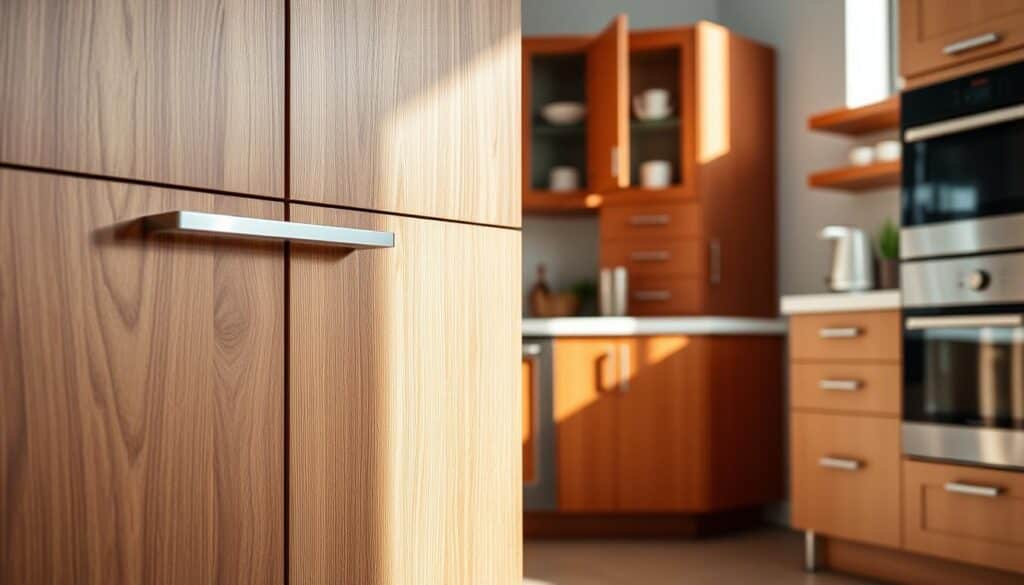
What materials are commonly used in kitchen cabinets
Here’s a homeowner-friendly map of core construction and surface finishes to simplify your selection process. We walk through the key options so you can weigh cost, appearance, and long-term quality.
Solid wood cabinets and popular species
Solid wood brings warmth and grain variation. Oak, maple, cherry, walnut, birch, and hickory each change the look and feel of a room. These species offer refinish potential and a premium appearance for wood cabinets.
Plywood boxes and engineered stability
Plywood is prized for cross-grain strength and screw-holding power. It keeps boxes square under heavy use and improves long-term performance where hardware matters most.
MDF for smooth painted doors
MDF gives a flawless, paint-ready surface. It performs well for flat, painted doors but needs careful edge sealing near sinks and dishwashers.
Veneer, laminate, and melamine surfaces
Veneer uses a thin slice of natural wood over a core to deliver real-wood appearance at lower cost. Laminate and HPL offer strong scratch resistance and evolving faux-grain patterns. Melamine is budget-friendly, easy to clean, and available in many patterns, though it can dent or sag under heavy loads.
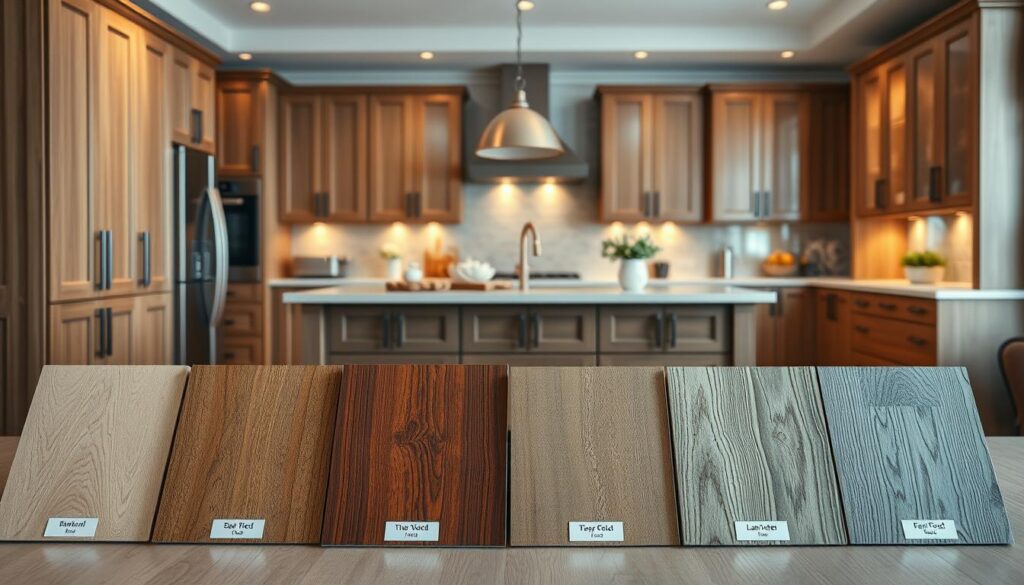
- We map cores (box construction) and surfaces (what you touch).
- Stop by American Home to compare these options hands-on with our design team.
- Choosing the right blend of core and finish gives the best balance of performance and appearance.
Solid wood kitchen cabinets: timeless appearance and long-term durability
Choosing solid wood gives cabinets a natural warmth and the option to renew surfaces instead of replace them. We guide homeowners toward practical expectations for appearance, movement, and care.
Why craftsmen and homeowners prize solid wood for strength and refinishing
Solid wood stands out for long-term durability and the ability to be sanded or refinished when scratches or wear appear. Hardwoods such as oak, maple, and cherry often last 50+ years with routine care.
Grain, natural variation, and light exposure
Each species shows unique grain patterns that shape final appearance. Oak’s pronounced grain differs from the tight grain of maple.
Natural wood will vary from board to board; that variation is part of its charm. Over time, sunlight can darken or shift tone, so we recommend consistent finish choices and planning for sun exposure.
Humidity movement, warping risk, and waterproof finishes
Wood expands and contracts with moisture and heat. Prolonged water exposure can cause warping or cracking if surfaces and clearances are not specified correctly.
Protective finishes and prompt spill cleanup reduce risk. Proper installation with allowance for movement also prevents stress on doors and frames.
- Why choose wood: strength, renewability, and premium appearance.
- Popular species: oak, maple, cherry, walnut, birch, hickory—each affects grain and tone.
- Best fit: homeowners planning long-term ownership or buyers seeking high quality and the option to refinish.
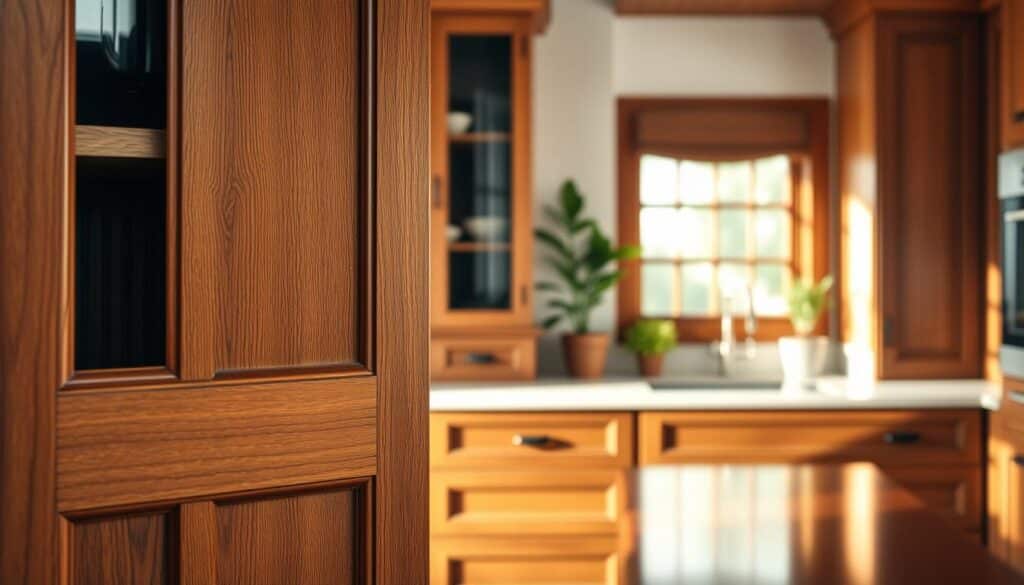
Engineered wood cabinet materials: plywood, MDF, and particleboard compared
We compare core options so you pick smart, not by accident. Choosing the right engineered core shapes how doors hang, how shelves hold cookware, and how cabinets stand up to steam and spills.
Plywood: cross-grain strength and hardware hold
Plywood is made of multiple thin layers with alternating grain. That cross-grain build improves stability and reduces warping compared with plain boards.
Plywood also offers excellent screw-holding power, so hinges and drawer slides stay tight over years of use.
MDF: smooth surface, paint-ready, edge care required
MDF gives an even, paint-friendly surface that avoids showing wood grain. It’s ideal for painted door styles.
However, MDF soaks up water at cut edges. Proper edge sealing prevents swelling and long-term damage.
Particleboard core: budget option with limits
Particleboard is cost-effective and works well where weight and moisture exposure are low.
It can sag under heavy shelves and swells faster when wet, so reserve it for light-duty zones.
- Shelf performance: choose stronger cores for heavy cookware to avoid sagging.
- Moisture warning signs: swelling at edges, bubbling under surfaces, and soft spots signal early damage.
- Smart spec: use plywood for box strength, MDF for painted doors, and particleboard only where budgets demand it.
Surface options that change performance: veneer, laminate, melamine, and thermofoil
Selecting the right surface balances visual style with real resistance to heat, steam, and knocks. The surface you choose sits over a core and often dictates long-term performance more than the panel beneath it.
Wood veneer
Veneer is a thin layer of real wood bonded to plywood, MDF, or particleboard. It gives a natural wood appearance and real wood grain at a lower cost than solid wood. Be candid: excessive moisture can cause bubbling or delamination, so seal edges near sinks and dishwashers.
Laminate (HPL)
Laminate or HPL uses layers of kraft and decorative paper saturated with resin and fused under high pressure. That process makes a hard, impact- and scratch-resistant surface well suited for busy kitchens.
Melamine and thermofoil
Melamine is heat-fused resin paper over pressed wood that offers many patterns and textures but has limits with scratches and dents. Thermofoil and high-gloss thermofoil use a vinyl film over a substrate for bright, easy-clean doors; they resist stains but can fail near direct heat or persistent moisture and are harder to repair.
- Design tip: use subtle wood grain for a timeless look and bold patterns as an island accent.
- Repairability: veneer and melamine may be refinished locally; thermofoil often needs panel replacement for significant damage.
- Choose by use: pick laminate where impact resistance matters and veneer when appearance and natural wood feel matter most.
Durability and resistance checklist for kitchen cabinets
Not all panels age the same—inspect for edge sealing, joinery, and finish thickness to predict longevity. Start with the zones that face the most stress: sink bases, dishwasher-adjacent units, and cabinets near the range. Those spots need better moisture and heat resistance.
Check for visible signs of water damage: swelling, bubbling, or soft spots. These often signal poor sealing or weak substrate choice and usually lead to replacement if left unchecked.
Scratches, dents, and impact resistance
Test door corners, trash pull-outs, and high-traffic aisles for surface toughness. Some finishes hide scratches; others chip or crack and are hard to repair.
Structural integrity and sag resistance
Measure shelf span and ask about reinforcement for heavy cookware like cast iron or stand mixers. Plywood boxes and robust joinery resist sagging longer than lighter cores.
Maintenance: repair versus replace
Solid wood and veneer can often be refinished. Laminate and melamine resist wear but may need panel replacement when delaminated or deeply chipped.
- Use this checklist during showroom visits to compare real-world performance.
- Prioritize upgrades for wet and hot zones where water and heat do the most damage.
- Ask about hardware fastenings and edge banding as quality indicators.
- Let our design staff guide choice and specs to avoid costly mistakes down the road.
Value-focused buying tips: getting the best cabinet materials for your budget
Prioritizing structural strength and reliable finishes gives you the most value per dollar. Spend where it matters: box construction and hardware deliver bigger returns than upgrading every visible surface. A well-spec’d box and good hinges reduce repairs and extend useful life.
We recommend a mix-and-match approach to balance performance and style. For example, pair plywood boxes with MDF painted doors for a clean, modern look that holds up. Use laminate or melamine on high-wear zones and reserve veneer or solid wood where grain and warmth matter most.
Where to invest: box, doors, hardware, and finish quality
Spend first on a strong box (plywood) and robust hardware. After that, choose door surfaces that match daily use and your budget. Quality finishes protect the system and save money long term.
Mix-and-match strategy for performance and style
Smart combinations include plywood boxes + MDF painted doors, or plywood boxes + veneer on visible runs with laminate at the sink. This keeps costs down while improving durability where you need it.
Choosing a durable finish
Catalyzed lacquer and conversion varnish are top choices for kitchens under heavy use. Polyurethane preserves natural wood character, and high-quality acrylic paint systems perform well for painted doors—when primers and edge sealing are done right.
- Tip: Think “total system” — core + surface + finish — when comparing options.
- Tip: Allocate budget to boxes and hardware before decorative upgrades.
- Tip: Consult our design staff at American Home for tailored choices that meet your design, timeline, and budget.
Conclusion
, A clear buying plan ties daily use, moisture exposure, and finish choice to lasting performance.
Match your kitchen’s wear and wet zones to a balanced system: a strong box, the right door surface, and a finish that fits your maintenance needs. Solid wood ranks highest for long-term durability and refinishability, while plywood gives stability and screw-holding. MDF works well for smooth painted looks but needs edge protection.
Remember: grain, tone, and lighting shape appearance over time, and hardware plus edge banding matter as much as surface choices for how cabinets feel year after year.
We help homeowners in the Greater Lansing area compare options and invest where it counts. Call American Home at (517) 349-4690 or email info@americanhomekbdesign.com to talk with our expert design staff and start planning quality, lasting results for your home.