Which materials are best for durable and stylish kitchen countertops

Which materials are best for durable and stylish kitchen countertops

Table of Contents

What if your next countertop could cut cleaning time, survive daily use, and still lift your room’s look? That tension between function and form drives every countertop decision we help customers make at American Home.

Countertops are some of the hardest-working surfaces in any kitchen: food prep, spills, heat, and family routines all test them daily. This buyer’s guide lays out clear comparisons so you can invest with confidence based on how you cook, clean, and live.

By “durable” we mean a mix of stain resistance, heat tolerance, scratch performance, and long-term wear. We preview stone, engineered surfaces, metal, wood, tile, concrete, and laminate, and explain why each option can be the right choice in the right zone.

We act as your design partner: offering expert insight to match cabinet finishes, flooring, and fixtures so the final result protects your budget and boosts daily enjoyment of your home.

Key Takeaways

  • Countertops must balance performance with visual appeal for real-life use.
  • Durability includes stain, heat, scratch, and wear resistance—not a single trait.
  • Different surfaces suit different cooking habits; mixing zones often makes sense.
  • American Home provides expert guidance to create a cohesive, long-lasting design.
  • The right selection reduces replacement risk and improves daily comfort in your home.

What “durable” really means for kitchen countertop materials

Durability means more than a pretty finish — it’s how a surface performs on real cooking days.
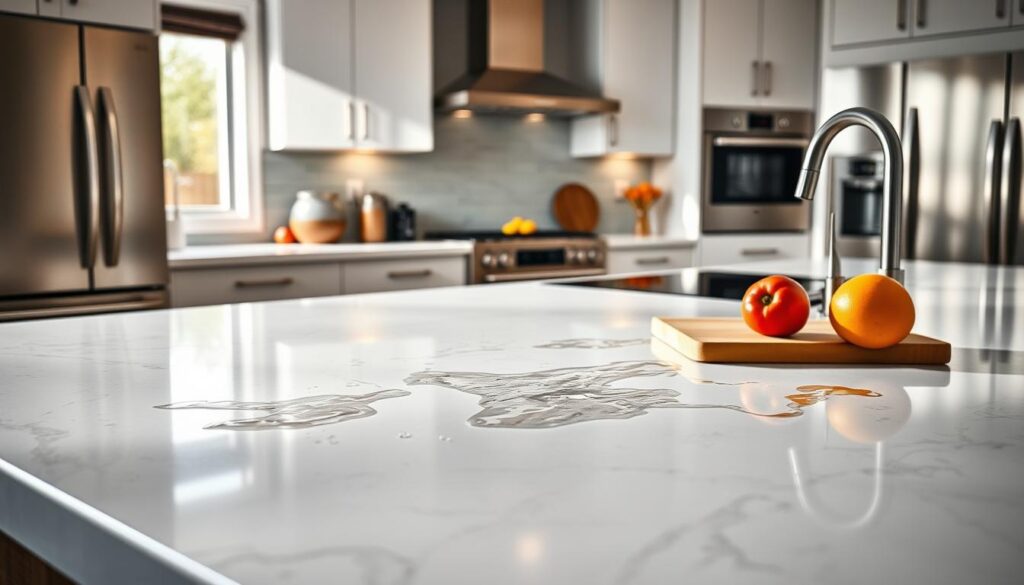
A modern kitchen centerpiece featuring a sleek, stain-resistant countertop made of polished quartz, showcasing its smooth surface with water and food spills effortlessly beading off. In the foreground, a few colorful fruits and a cutting board demonstrate the countertop's functionality. The middle ground displays elegant kitchen appliances and stylish cabinetry, enhancing the aesthetic appeal. The background features a sunlit window, casting warm, inviting natural light across the scene, accentuating the countertop’s shine. The angle is slightly elevated, focusing on the countertop's durability and style while creating an inviting, contemporary kitchen atmosphere. The mood is bright, clean, and sophisticated, emphasizing the attributes of stain resistance in kitchen materials.

Stain resistance for real-life cooking and spills

We test how common spills—coffee, wine, oil, tomato—behave on different surfaces. Porous stone needs sealing to guard against long-term stains, while non-porous options resist them naturally.

Heat resistance around cooktops, ovens, and hot pans

Heat tolerance varies: some slabs take quick contact, others show discoloration or thermal shock. We still recommend trivets and sensible spacing near burners.

Scratch, chip, abrasion, and impact performance

Hardness is not the same as toughness. A very hard slab can chip at edges; softer surfaces show scratches faster.

Maintenance needs: sealing, oiling, and daily cleaning

Maintenance plans differ: sealing natural stone, oiling wood, and gentle cleaners for resins keep a surface looking new over time.

Price, value, and long-term wear over time

  • Consumer testing focuses on stains, heat, cuts, abrasion, and impact.
  • Performance usually tracks by category rather than brand; pick the right material first.
  • Installed price reflects fabrication complexity and expected wear — choose what fits your routines in kitchens.

Which materials are best for durable and stylish kitchen countertops

A smart countertop selection balances real-world performance with the design that inspires you each day.
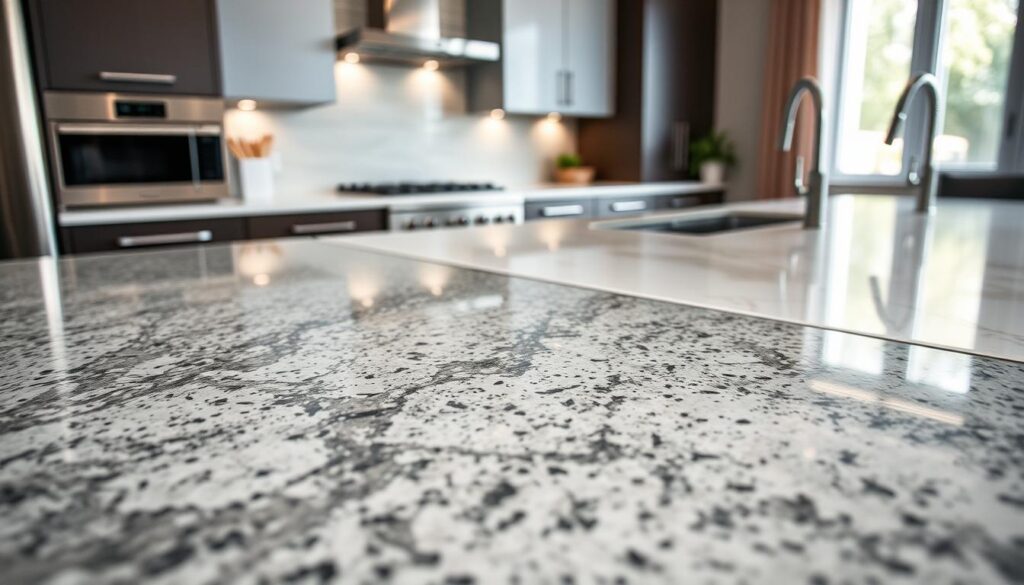
A stylish kitchen countertop showcasing a variety of durable materials such as granite, quartz, and marble, each with distinct textures and colors. In the foreground, focus on a polished granite surface with a subtle sheen, reflecting natural light. In the middle, feature the contrasting textures of a quartz countertop with delicate veining, paired with a soft-edged marble section for added elegance. The background should include modern kitchen elements, like sleek cabinetry and ambient lighting, creating an inviting atmosphere. Use soft, diffused lighting from a window to enhance the warmth of the space, captured from a low angle to emphasize the countertop's beauty. The mood should be sophisticated and contemporary, highlighting both style and functionality.

Granite

Granite is a true workhorse: Mohs ~6–7, good heat tolerance, and eye-catching patterns. It is porous, so periodic sealing helps prevent stains. Typical installed price: $80–150/sq ft.

Quartz

Quartz is engineered from crushed stone and resin. It is non-porous, easy to care for, and offers consistent colors. No sealing is required, but avoid harsh cleaners. Installed cost ranges $50–200/sq ft.

Soapstone, Stainless Steel, Marble

Soapstone handles heat and resists stains, ages to a soft patina and may need occasional oil.

Stainless steel suits pros: high heat tolerance and hygienic surface, yet it shows smudges and fine scratches.

Marble lends timeless elegance but etches and stains more easily; it suits owners who accept a lived-in look.

Quartzite, Butcher Block, Tile, Concrete, Laminate

Quartzite mimics marble with stronger toughness. Butcher block brings warm wood tones and requires regular oiling. Tile allows custom colors and glass accents but needs grout upkeep.

Concrete gives bold, modern finish options yet needs sealing and periodic care. Laminate offers budget-friendly patterns at lower resistance to heat and scratches.

  • Our takeaway: Match surface choice to how you cook and clean to get the best value and lasting look.

How to match countertop material to your kitchen style and daily routine

We help homeowners pair performance with a room’s look so daily life and design work together. Our team considers cabinets, flooring, and how the space is used to guide every choice.
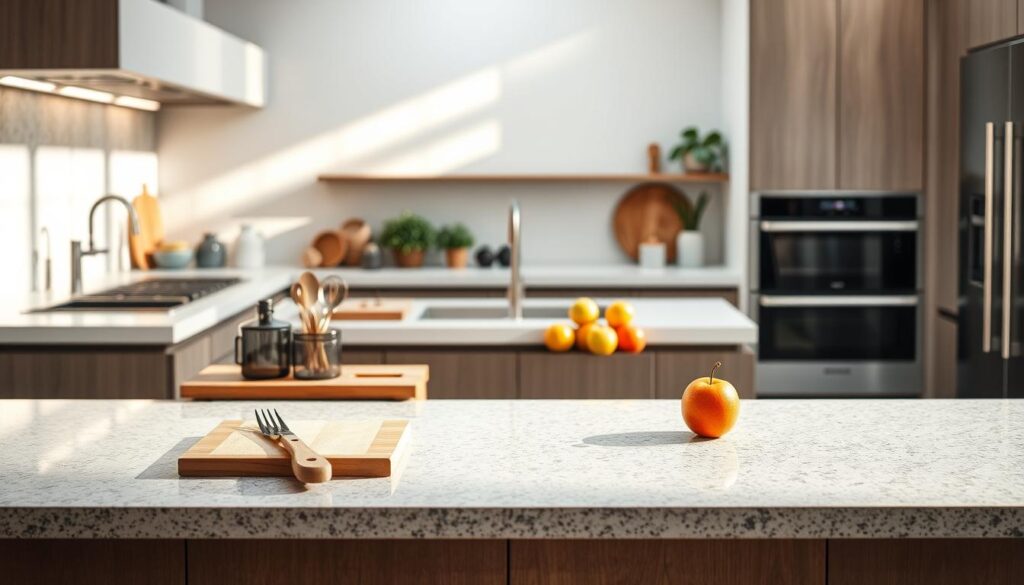
A stylish kitchen countertop that harmonizes with various styles, featuring a mix of materials such as quartz and granite, displaying both sleek, modern lines and rustic textures. In the foreground, there are elegant kitchen accessories, such as a chic cutting board, a set of neatly arranged utensils, and vibrant fruits. The middle ground includes the countertop itself, with a polished surface reflecting soft sunlight, enhancing its sheen. In the background, a well-designed kitchen layout is visible, with contemporary cabinetry and subtle decorative elements to create a warm atmosphere. The lighting should be natural and bright, emphasizing the countertop’s durability and style. Capture this scene with a slight angle from above to convey depth and perspective, evoking a sense of inspiration for potential kitchen designs.

Best choices for busy family kitchens and heavy food prep

Quartz and granite often top the list for heavy use. They resist spills and wipe down quickly, so messy prep days stay manageable.

Place resilient stone near the sink and range to handle water, heat, and traffic.

Best choices for modern, minimalist, and contemporary design

For a clean-lined look, choose consistent quartz colors or streamlined stainless steel. Polished concrete and honed finishes add a modern edge while keeping surfaces simple and intentional.

Mix-and-match by zone for performance and style

Use stone on perimeter counters, butcher block or wood at a prep island, and tile or glass as a focal accent. This strategy balances care needs and elevates the overall look.

  • Practical tip: Match pattern movement to cabinet and floor tones to avoid visual clutter.
  • Design tip: Edge profiles and finish sheen shape the final look more than material name alone.

Maintenance and protection tips to keep countertops looking new

A few routine steps extend lifespan and preserve the finish of every countertop type.

We offer a simple protection playbook so surfaces stay crisp through daily food prep and entertaining.

Sealing natural stone and grout to reduce stains

Granite and other natural stone benefit from periodic sealing to slow stains. Seal tile grout too, since grout is the weak point for absorption.

Preventing heat damage, scratches, and dull finishes

Use trivets for hot pans and avoid dragging cookware across a counter. Laminate and wood need more care near heat sources; steel and soapstone will show honest wear that can be buffed or oiled.

Food-safe cleaning habits by surface type

  • Quartz: non-porous—wipe with mild cleaner; avoid harsh chemicals.
  • Wood: oil regularly, dry spills quickly, sand small marks when needed.
  • Concrete & tile: reseal on schedule to reduce stains and protect the finish.

We guide homeowners with clear routines, so your countertop investment performs well over time and looks great every day.

Cost and value guide for kitchen countertops in the United States

Knowing where costs come from helps you get the most value from a countertop project. We outline the price drivers so homeowners can budget with confidence and choose wisely.

Several factors shape installed price beyond the slab: thickness, edge profile, sink and cooktop cutouts, seam placement, and fabrication complexity. Site access and installation time also add to labor costs.

Typical installed ranges in the U.S. help anchor expectations:

  • Granite: ~$80–150/sq ft
  • Quartz: ~$50–200/sq ft
  • Soapstone: ~$70–100/sq ft; Stainless steel: ~$70–225/sq ft
  • Butcher block: ~$30–40/sq ft; Concrete: ~ $100/sq ft
  • Laminate countertops: ~$10–35/sq ft; tile: varies by finish

Spend where you need lasting performance: perimeter runs, large islands, and surfaces near sinks and ranges. Save in secondary zones like mudrooms or short-term updates—laminate or tile can reduce upfront cost without spoiling overall design.

Consumer testing shows performance tracks by category more than brand. Focus on the right countertop material choice, then compare bids and available slabs. The best outcome balances price with long-term value, daily use, and your home’s design goals.

Plan your countertop project with American Home kitchen & bath design

Begin with decisions that tie material performance to how your household really cooks and lives. We guide homeowners from inspiration to install, so every surface fits layout, storage, lighting, and traffic.

Expert guidance from a customer-focused design team

We narrow choices based on how you cook, compare samples side-by-side, and weigh durability, maintenance, and aesthetics. Our Expert Design Staff bring over 60 years of combined design experience.

One-stop shopping with American Home & American Flooring

American Home began as a long-held dream to complement American Flooring. The result is a coordinated, seamless path to a finished home with fewer handoffs and better timing.

  • Practical planning: Mix materials by zone when it makes sense.
  • Trusted value: We offer top products at great value, focused on lasting satisfaction.
  • Hands-on review: Compare granite quartz and other countertop materials in person to judge lighting and texture.

Contact American Home

Ready to turn research into a plan? Call (517) 349-4690 or email info@americanhomekbdesign.com to start your kitchen countertop project with trusted local experts.

Conclusion

Let practical habits guide your surface choice so the space stays beautiful and useful.

Our key takeaway: the best countertop choice matches your kitchen routine—spills, heat, prep intensity—and the look you want, not a trend or single feature.

Use a simple durability checklist when you compare countertop materials: resistance to stains, heat tolerance, scratch and impact performance, plus realistic maintenance over time.

Think style-first without regret: pick finishes and edges you’ll enjoy every day. Consider price versus long-term value—spend where heavy use demands strength and save in secondary zones.

Bring inspiration photos, color notes, and must-have performance needs to our store. We’ll help turn them into a clear plan that balances durability, maintenance, and style.

We’re committed to guiding homeowners toward Kitchen & Bath spaces that feel intentional, functional, and welcoming—visit American Home to get started.
FAQ

What does "durable" really mean when choosing a countertop material?

Durable means a surface resists stains, heat, scratches, chips, and daily wear while needing reasonable upkeep. It also covers long-term performance: how the finish ages, whether sealing or oiling is required, and the cost to repair or replace. We consider real cooking habits, traffic, and cleaning routines when recommending options.

How important is stain resistance in everyday kitchens?

Very important. Non-porous surfaces such as quartz and stainless steel resist wine, oil, and acidic foods without staining. Natural stone like granite or quartzite needs sealing to protect against spills. Soapstone darkens with oil and develops a patina but rarely stains deeply. Proper sealing and prompt cleanup cut staining risk across most surfaces.

Which surfaces handle heat best around cooktops and hot pans?

Soapstone and quartzite tolerate hot pans well; granite also performs strongly. Stainless steel is excellent for heat but can dent. Quartz resins can discolor or crack with prolonged direct heat, so we recommend trivets. Concrete and tile handle heat but need sealing to avoid thermal stress or stains.

How do different tops stand up to scratches, chips, and impact?

Stainless steel resists impact but shows surface scratches. Granite and quartzite are hard and chip-resistant but can crack under severe impact. Quartz resists scratches well but can chip at edges. Wood butcher block dents and scratches but can be sanded out; laminate and tile are more prone to surface damage over time.

What maintenance is required for sealing, oiling, and daily cleaning?

Quartz requires minimal daily care with mild soap. Granite and quartzite need periodic sealing—typically yearly to every few years depending on use. Soapstone benefits from mineral oil to deepen color. Butcher block requires regular oiling and occasional sanding. Stainless steel and laminate need simple wipe-downs; concrete and tile need resealing on a schedule.

How should price and long-term wear influence my selection?

Consider installed price, expected lifespan, and repair costs. Premium stones and custom concrete cost more upfront but can last decades. Quartz offers low maintenance and predictable color at mid-to-high price points. Laminate and some tiles are budget-friendly but show wear sooner. We weigh initial cost against upkeep and resale value.

What makes granite a strong choice for patterns and durability?

Granite is a natural stone with unique veining and high hardness. It resists heat and scratches better than many materials. Proper sealing reduces staining risk. We recommend granite for homeowners who want bold, natural patterns and long-term resilience.

Why choose quartz for a consistent, low-maintenance surface?

Engineered quartz is non-porous, so it resists stains without sealing. It offers a wide range of colors and patterns and a uniform look that pairs well with modern cabinetry. Quartz is ideal for busy kitchens that need easy cleaning and strong stain resistance.

What are the benefits and trade-offs of soapstone countertops?

Soapstone is dense and naturally heat-resistant, developing a soft, dark patina with oiling. It resists many stains and acids but scratches more easily than granite; scratches can be sanded out. We recommend soapstone for a warm, antique look and high-heat zones.

Are stainless steel countertops practical for home kitchens?

Yes. Stainless steel is hygienic, heat-resistant, and used in professional kitchens. It pairs well with modern or industrial styles. Expect surface scratches and possible fingerprints; choose brushed finishes to minimize visible wear. It’s a durable choice for heavy-use cooking areas.

How does marble perform versus other stones?

Marble offers timeless elegance with soft veining but is more prone to etching and staining from acids and oils. It requires careful maintenance and sealing. We suggest marble in areas with lighter use or as an accent where aesthetics outrank heavy durability needs.

What makes quartzite a compelling natural stone option?

Quartzite combines the look of marble with the hardness of granite. It resists heat and scratching well but often needs sealing to prevent stains. Quartzite is a strong choice when you want natural stone beauty with higher durability.

Is butcher block a practical countertop surface?

Butcher block adds warmth and can be restored by sanding and oiling. It’s susceptible to scratches, water damage, and stains if not cared for. We recommend it for prep zones or islands where a warm, tactile surface is desired and maintenance is acceptable.

How do tile countertops compare in customization and upkeep?

Tile offers endless colors and patterns and good heat resistance. Grout lines require maintenance and sealing to avoid staining and moisture penetration. Tiles can chip at edges; choose durable glazed tiles and maintain grout regularly for best results.

What should I know about concrete countertops?

Concrete provides a bold, custom look and can be cast with integrated sinks and unique finishes. It must be sealed to prevent stains and can develop hairline cracks over time. Concrete is well suited to modern and industrial designs when properly specified and sealed.

Are laminate countertops still a viable budget option?

Laminate gives many colors and patterns at a lower cost and is easy to clean. It resists stains but has limited heat and scratch resistance compared with stone or stainless steel. For tight budgets or temporary solutions, laminate remains practical.

Which tops work best in busy family kitchens with heavy food prep?

Quartz, granite, and stainless steel perform well under frequent use: they resist stains and handle regular cleaning. Butcher block works for cutting zones if maintained. We often recommend mixing surfaces—durable stone for prep and wood for serving areas.

What suits modern, minimalist, or contemporary designs?

Quartz, concrete, and stainless steel complement sleek, minimalist kitchens with clean lines and consistent colors. Honed stone or large-format materials create seamless surfaces that match contemporary cabinetry and fixtures.

Can I mix countertop materials by zone to balance performance and style?

Absolutely. Many homeowners choose durable quartz or granite at prep zones and butcher block or marble on islands for warmth and visual contrast. Zoning lets you prioritize function where needed and style where it shows.

How should I seal stone and grout to reduce stains?

Use a penetrating sealer recommended for the specific stone or grout and follow manufacturer timing—typically yearly or every few years. Test absorption to judge frequency. Prompt cleanup of spills and routine resealing protect porous surfaces best.

What are practical steps to prevent heat damage and scratches?

Use trivets for hot cookware, cutting boards for chopping, and soft pads for heavy appliances. Choose edge profiles that resist chipping and avoid dragging heavy pots across surfaces. Regular maintenance and using protective products extend lifespan.

How do cleaning habits differ by surface to stay food-safe?

Non-porous surfaces like quartz and stainless steel need mild detergent and sanitizing wipes. Natural stone needs gentle cleaners and periodic sealing. Wood requires food-safe mineral oil and immediate drying. Avoid harsh acids on marble and abrasive pads on polished finishes.

What factors drive installed price for countertops in the U.S.?

Price depends on material type, slab grade, thickness, edge profile, fabrication complexity, cutouts, and installation labor. Shipping distances and local demand also affect cost. Custom finishes, inlays, and integrated sinks raise the price further.

Where should I spend more and where can I save when budgeting?

Invest in durable slabs, good fabrication, and proper installation—these reduce long-term repair costs. Save on edges and smaller islands by choosing simpler profiles or laminates. Prioritize performance in high-use zones and aesthetics where they matter most.

How can American Home kitchen & bath design guide my countertop project?

We provide expert design consultations, material selection, and installation coordination. Our team helps match surface choices to lifestyle and style goals, balancing durability, maintenance, and budget to create a cohesive kitchen.

Does American Home offer one-stop shopping with flooring and other services?

Yes. We coordinate with American Flooring and other partners to streamline selections for countertops, cabinetry, and floors, ensuring cohesive materials, colors, and timelines across your renovation.

How do I contact American Home about a countertop project?

Call (517) 349-4690 or email info@americanhomekbdesign.com to schedule a consultation. Our team will discuss measurements, samples, pricing, and timelines to get your project started.

Explore the Possibilities…

Kitchen 5 - Contact

Kitchens

The heart of the home and the foundation of our company

Bathroom 6

Bathrooms

Essential to the home and the perfect places to create unique spaces

American Home Slide 2

More

Built-ins, laundry rooms and mud rooms are among the possibilities